In face-to-face fundraising, confidence is often seen as the defining trait of success.
The ability to approach strangers.
To speak clearly.
To hold attention.
To handle rejection without hesitation.
It looks powerful.
And for a long time, I believed the same thing:
If I were more confident, I would perform better.
But the field has a way of challenging what we think we know.
Because over time, something becomes clear:
Confidence is visible.
But competence is what delivers results.
The Confidence Illusion
Confidence can be convincing.
A confident fundraiser walks with certainty.
Speaks smoothly.
Approaches without hesitation.
From the outside, it looks like they have everything under control.
But confidence can sometimes create a false sense of effectiveness.
Because being confident doesn’t always mean:
- You’re listening
- You’re adapting
- You’re connecting
It simply means you’re comfortable expressing yourself.
And in fundraising, expression is only part of the work.
What Competence Really Looks Like
Competence is quieter.
It doesn’t always stand out immediately.
But it shows up in the way a fundraiser:
- Reads body language
- Adjusts their approach
- Listens more than they speak
- Knows when to pause
- Respects when someone isn’t ready
A competent fundraiser understands that every interaction is different.
They don’t rely on one script.
They respond to the moment.
And that’s where real connection happens.
A Lesson From the Field
I remember a period where I focused heavily on sounding confident.
I worked on my tone.
My delivery.
My approach.
And while it helped me start more conversations, something felt off.
Some interactions didn’t go beyond the surface.
People listened — but they didn’t engage.
That’s when I realised:
I was focused on how I sounded,
not on how the interaction felt.
So I shifted.
I started listening more.
Observing more.
Adjusting more.
And slowly, the quality of my conversations changed.
Not because I became more confident —
but because I became more aware.
How Confidence Is Actually Built
Here’s the irony:
Confidence doesn’t come first.
It’s built through competence.
Through:
- Repeated conversations
- Missed opportunities
- Learning what works — and what doesn’t
- Sitting with discomfort instead of avoiding it
Real confidence is not loud.
It’s steady.
It comes from knowing:
I may not control the outcome, but I understand the process.
When Confidence Isn’t Enough
There are moments in the field where confidence alone falls short.
When someone challenges you.
When a conversation becomes emotional.
When someone hesitates or pushes back.
In those moments, confidence without competence can feel empty.
But competence gives you something to rely on:
- Awareness
- Patience
- Adaptability
It allows you to stay grounded, even when the interaction is uncertain.
The Balance That Matters
This is not about choosing one over the other.
The best fundraisers develop both.
Confidence helps you start.
Competence helps you continue.
Confidence opens the door.
Competence builds the connection.
And over time, they begin to support each other.
Beyond Fundraising
This lesson doesn’t stay in the field.
In the workplace
Confidence may get attention — but competence earns trust.
In leadership
People don’t follow confidence alone — they follow consistency and understanding.
In everyday life
How you engage matters more than how you appear.
A Quick Reflection
Take a moment to think about your own experience:
- Have you ever felt confident but struggled to connect?
- Have you ever doubted yourself but still handled a situation well?
- What do you rely on more — how you present, or how you understand?
These questions can reveal where your real strength lies.
The Real Work
Face-to-face fundraising teaches you something many environments don’t:
Being good with people is not about performance.
It’s about awareness.
It’s about being present enough to respond, not just react.
Confidence may draw people in.
But competence is what makes the interaction meaningful.
Final Thought
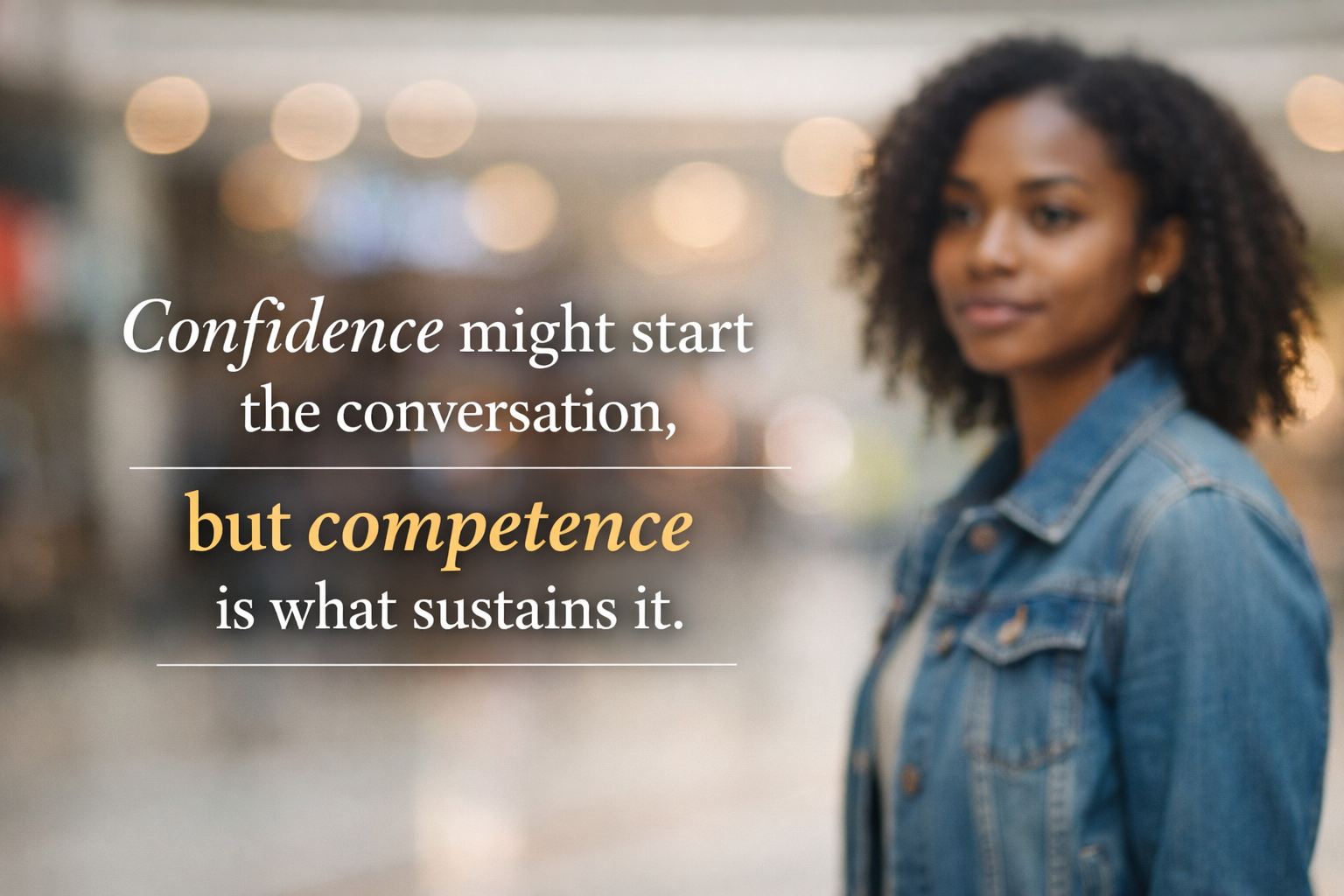
Confidence might start the conversation.
But competence is what sustains it.
And in a space where human connection matters, that difference is everything.
📘 Continue the Conversation
If this resonates with you, these human-centered lessons are explored more deeply in my ebook:
Beyond the Pitch: The Human Art of Face-to-Face Fundraising
👉 Explore my books here:
https://www.amazon.com/author/kgalalelontumelang
If you enjoy reflections on communication, confidence, and the psychology behind human interaction, consider subscribing to the blog so you don’t miss future posts.
And I’d love to hear from you:
Do you think confidence or competence has shaped your journey more?
Share your experience in the comments — your perspective might help someone else see their own growth differently.
LELO
Leave a Reply