Tag: Radio Broadcasting

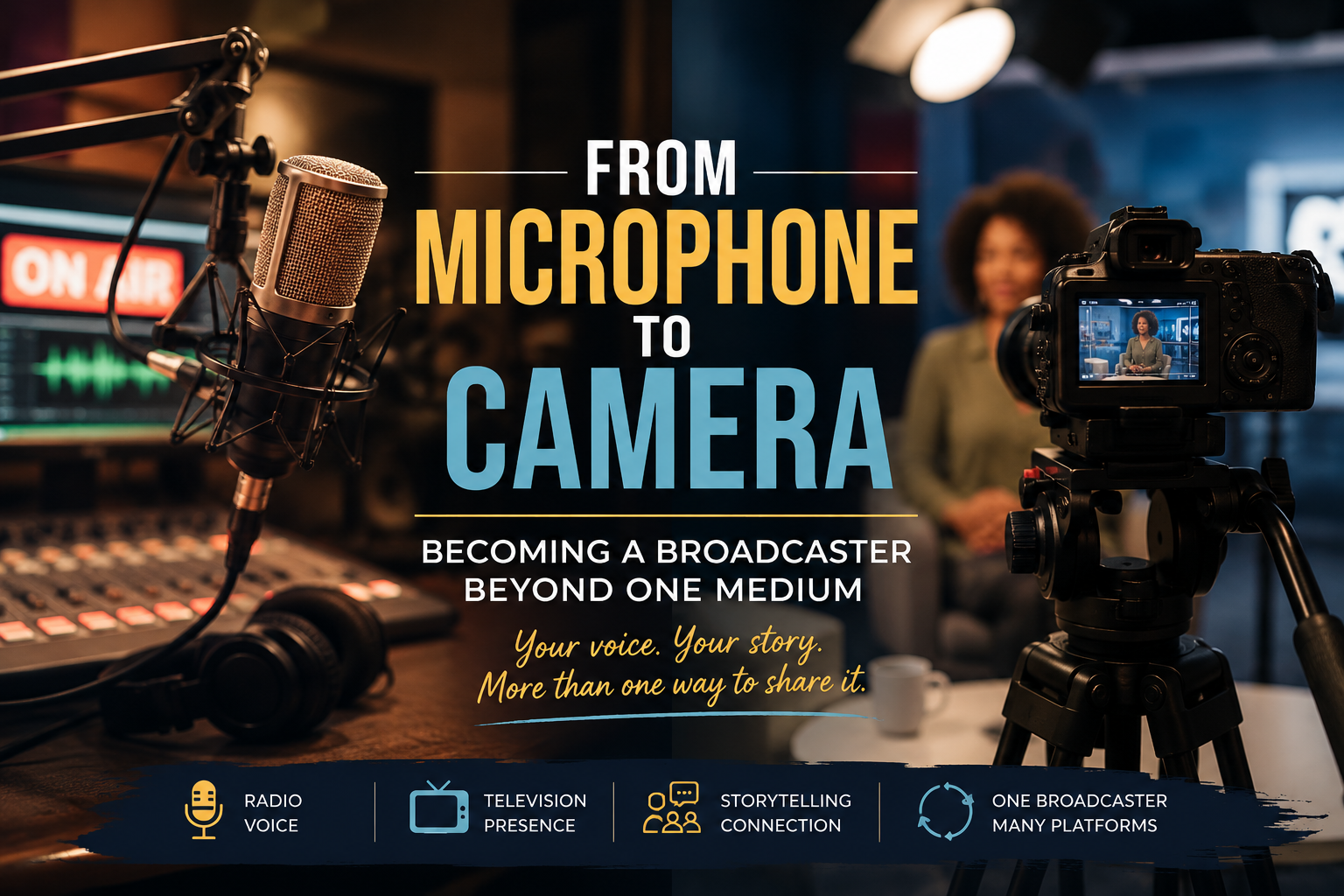
  • From Microphone to Camera: Becoming a Broadcaster Beyond One Medium

    From Microphone to Camera: Becoming a Broadcaster Beyond One Medium

    You may fall in love with radio first. You may dream of television. But in today’s changing media landscape, perhaps the bigger opportunity is learning how to become comfortable in both.

    There is something special about radio. You sit behind a microphone, put on your headphones and speak to people you cannot see. They don’t know what you’re wearing, what you’re doing with your hands or whether you glanced at your notes halfway through a sentence. All they have is your voice, and somehow you learn to use it to create pictures.

    For many aspiring broadcasters, that’s where the dream begins. They imagine themselves hosting a radio show, interviewing guests, introducing music and building a relationship with listeners. For others, the dream has always been television: the studio, the camera, the interviews and the opportunity to communicate with an audience that can both see and hear them.

    For a long time, we have treated these as fairly separate broadcasting paths. But the media landscape around us is changing, and perhaps the lines aren’t as clear as they once were.

    When Radio Meets Television

    Today, a radio interview can become a video clip. A television presenter can host a podcast. A radio personality may be expected to speak to followers through a phone camera, while a podcast can exist simultaneously as an audio programme and a video show.

    That doesn’t mean every broadcaster must do everything. There are exceptional radio broadcasters who may never want television, just as there are television presenters who have no desire to sit behind a radio microphone.

    But for an aspiring broadcaster, there is value in asking a slightly different question. Instead of only asking, “Do I want to work in radio or television?”, perhaps we should also ask:

    “How comfortable am I communicating when the medium changes?”

    Because being comfortable behind a microphone doesn’t automatically mean you’ll feel comfortable in front of a camera.

    I know that personally.

    When the Camera Comes On

    Give me a microphone, and I can talk. Audio feels familiar to me. I can concentrate on the conversation, the story and the person on the other side without thinking too much about myself.

    Put a camera in front of me, however, and something changes. Suddenly I become aware of where I’m looking, what I’m doing with my hands, how I’m sitting and what my face is doing. The communication hasn’t disappeared, but my awareness of being seen changes the experience completely.

    Ironically, being in front of the camera is exactly where I now want to grow. I want to talk about my projects visually. I want to explore video podcasting and become as comfortable communicating through a camera as I am through a microphone.

    And perhaps there is an important lesson in that:

    Experience in one medium doesn’t automatically remove the fear of another.

    Sometimes even an experienced broadcaster has to become a beginner again.

    Two Mediums, Different Muscles

    Radio asks you to create something the listener cannot see. Voice, tone, timing, listening and storytelling carry much of the experience. Television introduces another dimension because the audience can now see the communication happening.

    The skills aren’t completely separate, but neither are they identical.

    And this is where the changing media environment becomes interesting for anyone trying to enter broadcasting today. You may begin in community radio, online radio, television, podcasting, digital video or somewhere else entirely. Your first opportunity doesn’t necessarily have to determine the kind of broadcaster you eventually become.

    Perhaps the goal isn’t to master every platform.

    Perhaps it’s to become willing to stretch beyond the one that feels safest.

    Beyond the Platform

    There is something liberating about looking at broadcasting this way.

    If radio is where you feel at home, you don’t have to abandon it simply because video has become important. And if television is where you naturally shine, there may still be something valuable in discovering what happens when the pictures disappear and your voice has to carry the story.

    The point isn’t that one medium is better than the other.

    It’s that each one asks something different from the person communicating through it.

    And as radio, television, podcasting and digital content continue to overlap, versatility may become an increasingly valuable part of a broadcaster’s toolkit.

    For me, that means there is still another broadcasting challenge waiting.

    The camera.

    I’ve spent enough time being comfortable behind the microphone. Perhaps it’s time to discover what happens when I stop hiding behind it.

    And I suspect I’m not the only broadcaster who feels that way.

    The microphone and the camera may require different kinds of confidence, but perhaps becoming comfortable with both is a journey worth exploring.

    And that conversation?

    We’re only getting started.


    Continue the Conversation

    Are you more comfortable behind a microphone or in front of a camera?

    And if you’re a broadcaster who has successfully moved between radio, television, podcasting or digital video, what helped you become comfortable in a new medium?

    I’d love to hear your experience in the comments.

    If you enjoy reflections on broadcasting, career growth and navigating a changing media industry, subscribe to Reflections in Motion for new articles every Wednesday.

    Ready to Build Beyond the Microphone?

    If you’re beginning to think about how your broadcasting experience can create opportunities beyond one platform, my book From Broadcaster to Brand explores that journey—from professional identity and visibility to building something you own.

    📘 Explore From Broadcaster to Brand on Amazon:
    https://www.amazon.com/author/kgalalelontumelang

    And if podcasting is part of your next chapter, From Microphone to Money is a practical building guide, launching and monetising your podcast.

    🌐 Visit Reflections in Motion:
    https://reflectionsinmotion.blog

    Work With Me

    If you’d like to work with me around broadcasting, podcasting, content development, media training or communication, get in touch.

    📧 Email: lelon@reflectionsinmotion.blog
    🌐 Website: https://reflectionsinmotion.blog


  • From Broadcaster to Brand: Podcasting — Part 1

    From Broadcaster to Brand: Podcasting — Part 1

    So, You Want to Start a Podcast? A Broadcaster’s Guide to Getting Started


    There was a time when being a broadcaster meant having access to a radio station.

    If you wanted to speak to thousands of people, you needed airtime.

    If you wanted to interview someone, you needed a programme.

    And if you wanted to build an audience, you needed someone else to give you access to theirs.

    Podcasting has changed that.

    Today, broadcasters can create their own shows, build their own audiences and develop their own platforms without waiting for a traditional media organisation to give them a microphone.

    And that is exciting.

    But before you rush out to buy equipment, there is a more important question:

    Why do you want to start a podcast?


    Podcasting Starts With an Idea

    One of the easiest mistakes beginners make is starting with equipment.

    They research microphones.

    They buy headphones.

    They download editing software.

    They create artwork.

    And then they sit down and ask:

    “What am I actually going to talk about?”

    Your equipment matters.

    But your idea matters more.

    A podcast needs a reason to exist.

    It needs something worth saying and an audience that has a reason to listen.

    So before you press record, ask yourself:

    What do I want my podcast to be about?


    Broadcasters Already Have an Advantage

    If you’ve worked in radio or broadcasting, you’re not starting from zero.

    You’ve probably already learned how to:

    • interview people
    • ask questions
    • tell stories
    • research
    • write
    • communicate clearly
    • engage an audience
    • work with your voice
    • structure conversations

    These are podcasting skills.

    The difference is that instead of using those skills on someone else’s platform, you can begin using them to build something of your own.

    That shift is powerful.


    You Don’t Have to Be on Camera

    This is especially important for radio broadcasters.

    The digital world can sometimes make it seem as though everyone needs to be on YouTube, TikTok or Instagram Reels.

    But podcasting began with something broadcasters already understand:

    audio.

    You don’t have to become a video personality overnight.

    Your voice can still be your greatest asset.

    If you’re comfortable behind the microphone, start there.

    You can always explore video later as your confidence and strategy develop.

    Don’t let the fear of being on camera stop you from building something valuable.


    Who Are You Talking To?

    A podcast becomes much stronger when you know who you’re speaking to.

    Instead of saying:

    “My podcast is about life.”

    Ask:

    Who do I want listening?

    Maybe you’re speaking to young broadcasters trying to enter the industry.

    Maybe you’re talking to entrepreneurs.

    Maybe you’re interviewing people about relationships, careers, parenting or personal growth.

    The possibilities are endless.

    But the more clearly you understand your audience, the easier it becomes to decide what conversations belong on your podcast.


    Your Podcast Can Become More Than a Podcast

    This is where things get interesting for broadcasters.

    Your podcast doesn’t necessarily have to make money directly.

    It can become a platform that creates other opportunities.

    For example, your podcast could help you:

    • promote your expertise
    • build your personal brand
    • attract speaking opportunities
    • promote a book
    • introduce coaching services
    • connect with potential clients
    • grow an online community
    • create opportunities for partnerships

    The podcast becomes part of a bigger picture.

    You’re not simply creating episodes.

    You’re building visibility, credibility and relationships.


    Don’t Wait for Perfect

    Perhaps the biggest obstacle isn’t equipment.

    It’s fear.

    “What if nobody listens?”

    “What if I’m not good enough?”

    “What if my first episode is terrible?”

    Your first episode probably won’t sound like your hundredth.

    And that’s okay.

    You are allowed to learn.

    You are allowed to improve.

    You are allowed to start small.

    The goal isn’t to create a perfect podcast on day one.

    The goal is to create something worth improving.


    Before You Press Record

    Before launching your podcast, answer these five questions:

    1. Why am I starting this podcast?

    2. Who am I creating it for?

    3. What will listeners get from it?

    4. Why am I the right person to have these conversations?

    5. What do I ultimately want this podcast to help me build?

    Your answers will shape everything that comes next.


    Your Voice Can Build More Than an Audience

    For broadcasters, podcasting is more than another content trend.

    It is an opportunity to take skills developed behind the microphone and use them to build something you own.

    You already know how to communicate.

    You already understand audiences.

    You already know how to tell stories.

    Now you have an opportunity to take those skills beyond traditional broadcasting.

    But deciding to start a podcast is only the beginning.

    What equipment do you actually need?

    How do you structure your first episodes?

    Where should you publish?

    How do you get people to listen?

    And perhaps the question every broadcaster eventually asks:

    How can a podcast actually make money?

    That’s where we go next.


    Coming in Part 2

    From Microphone to Money: How to Build, Launch and Monetise Your Podcast

    In Part 2, we’ll move from the idea to the practical side of podcasting.

    We’ll explore:

    • choosing your podcast format
    • the equipment you actually need
    • planning your first episodes
    • recording and editing
    • publishing your podcast
    • promoting your show
    • finding your first listeners
    • building an audience
    • creating multiple income opportunities
    • finding sponsors and partnerships
    • using your podcast to build a personal brand
    • turning your broadcasting skills into a sustainable creative business

    Part 1 is about deciding to start.

    Part 2 is about building it.


    A Quiet Reminder

    You don’t need to become someone else to become a podcaster.

    You don’t need a television studio.

    You don’t need thousands of followers.

    And you don’t need to be perfect.

    You need a voice.

    You need an idea.

    And you need the courage to press record.

    The microphone that helped you build your broadcasting career can become the microphone that helps you build something of your own.


    Continue the Conversation

    Are you a broadcaster thinking about starting a podcast?

    What’s stopping you?

    Is it the equipment, finding an idea, fear of starting, building an audience—or something else?

    I’d love to hear from you in the comments.

    If you’re enjoying From Broadcaster to Brand, subscribe to Reflections in Motion for more practical reflections on broadcasting, personal branding and building a career beyond traditional media.


    📘 Take Your Broadcasting Career Beyond the Microphone

    My book, From Broadcaster to Brand: Turning Your Skills into a Creative Business, explores how broadcasters can turn their experience and communication skills into new opportunities, build personal brands and create additional income streams.

    👉🏽 Explore my books on Amazon


    🤝 Work With Me

    Are you looking for support with podcasting, broadcasting, communication, content creation or building your professional brand?

    I’d love to hear about what you’re working on.

    📧 Email: lelon@reflectionsinmotion.blog

    🌐 Website: Reflections in Motion

    Let’s talk about what you’re building.

    LELO

  • Do Radio Broadcasters Need to Be on Camera to Build a Successful Brand?

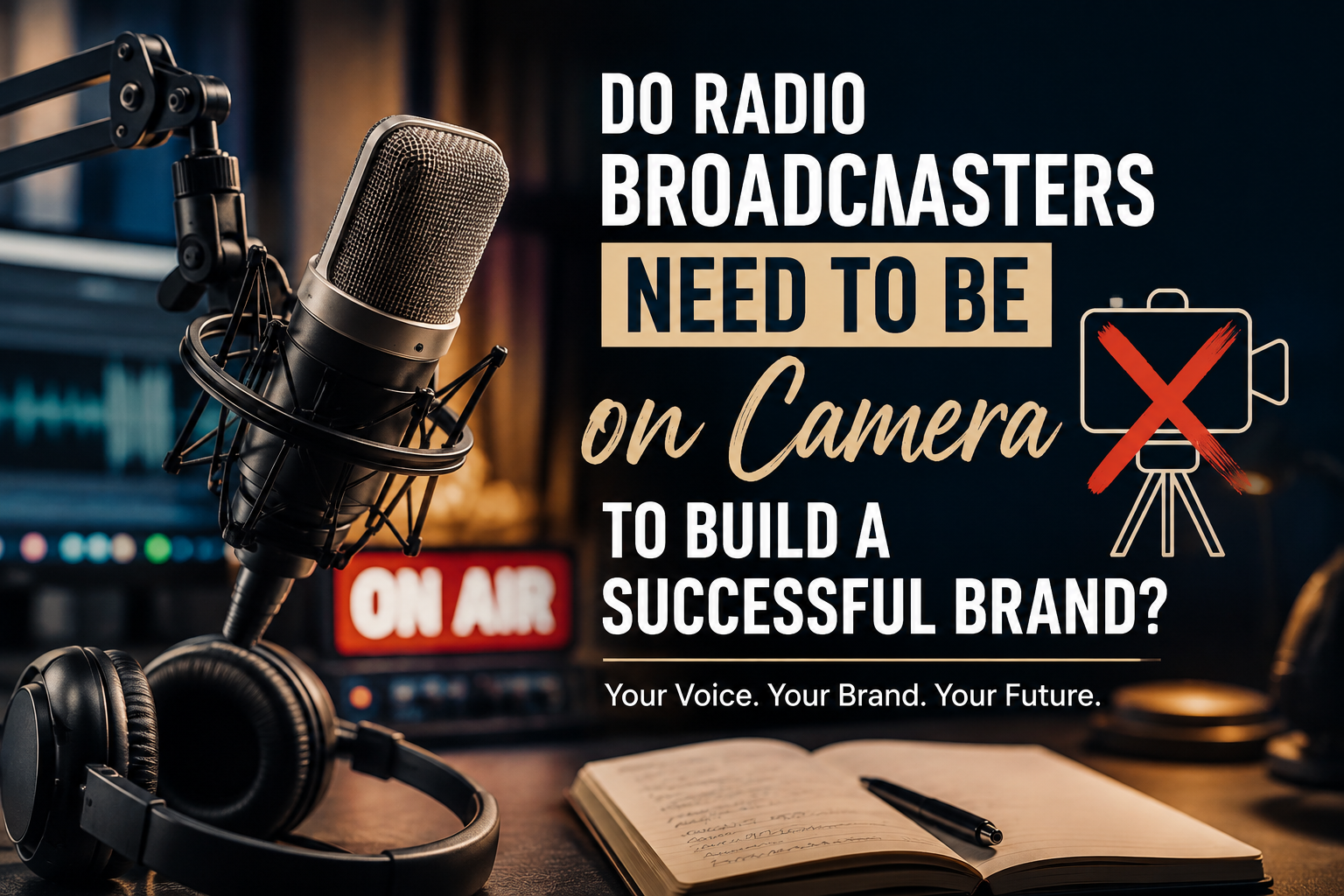
    Do Radio Broadcasters Need to Be on Camera to Build a Successful Brand?


    A Personal Reflection

    One of the biggest misconceptions about radio is that if you’re confident behind a microphone, you’ll naturally be confident in front of a camera.

    The truth is often very different.

    Many radio broadcasters are comfortable speaking to thousands of listeners every day, yet the moment a camera starts recording, their confidence disappears.

    For years, radio has been about imagination. Your audience hears your voice but never sees your face. You learn to paint pictures with words, connect through sound, and build relationships without ever stepping into the spotlight.

    Today’s digital world, however, seems to send a different message.

    “If you’re not on camera, you’re falling behind.”

    For many broadcasters, that’s an intimidating thought.

    It raises an important question:

    Can a radio broadcaster still build a successful brand without becoming a video personality?

    I believe the answer is yes.

    But like many things in broadcasting, the answer requires a shift in perspective.


    The Pressure to Be Seen

    Social media has changed the way audiences consume content.

    Everywhere you look, someone is encouraging creators to:

    • Start a YouTube channel.
    • Record video podcasts.
    • Go live on social media.
    • Post daily reels.
    • Share behind-the-scenes videos.

    It’s easy to conclude that video is now the only path to success.

    As a result, many talented radio broadcasters begin questioning themselves.

    “Maybe my career has reached its limit because I don’t enjoy being on camera.”

    That thought has stopped many people from sharing their expertise.

    Not because they lack talent.

    But because they believe they must become someone they’re not.


    Radio Has Always Been About Connection

    One of radio’s greatest strengths has never been the camera.

    It has always been connection.

    Listeners don’t return every day because they admire a broadcaster’s appearance.

    They return because they trust the voice.

    They feel understood.

    They enjoy the conversations.

    They value the stories.

    That ability to build trust through voice alone is a skill that many digital creators spend years trying to develop.

    Radio broadcasters already possess it.

    The challenge is learning how to use that strength beyond traditional broadcasting.


    Podcasts: A Natural Home for Radio Broadcasters

    If you’re a radio broadcaster who feels uncomfortable on camera, podcasting may be one of the most natural ways to expand your career.

    Podcasting allows you to build on the skills you’ve already developed:

    • interviewing
    • storytelling
    • scripting
    • active listening
    • audience engagement
    • voice presentation

    The format may be different, but the core skills remain the same.

    More importantly, podcasting gives you ownership.

    Unlike traditional broadcasting, where airtime belongs to an organisation, your podcast belongs to you.

    You choose the topics.

    You decide the format.

    You build the audience.

    And over time, you create an asset that continues to represent your expertise.


    Can You Really Make Money Without Being on Camera?

    This is one of the biggest questions broadcasters ask.

    The answer is yes—but perhaps not in the way many people imagine.

    A podcast doesn’t have to generate income directly to become financially valuable.

    Instead, it can become a platform that creates opportunities.

    Your podcast can help you:

    • attract speaking engagements
    • promote your books
    • introduce your coaching services
    • market training workshops
    • build trust with potential clients
    • grow an email newsletter
    • drive readers to your blog
    • create opportunities for sponsorships and partnerships

    In other words, your podcast becomes part of a larger personal brand.

    Sometimes the greatest value of a podcast isn’t the advertising revenue.

    It’s the credibility it builds.


    You Don’t Have to Choose Between Audio and Video

    One of the biggest mistakes creators make is believing they must choose one format forever.

    You don’t.

    Perhaps today your confidence lies behind the microphone.

    That’s perfectly acceptable.

    As your confidence grows, you might decide to record short video clips.

    Share behind-the-scenes moments.

    Film interviews.

    Or create educational content for social media.

    Growth doesn’t require abandoning your strengths.

    It requires building on them.


    Don’t Let Fear Make the Decision

    There is an important difference between making a strategic decision and making a fearful one.

    If audio is your preferred format because it aligns with your goals and your audience, that’s a strategic choice.

    If you’re avoiding every opportunity simply because you’re afraid of the camera, it may be worth asking yourself what is holding you back.

    Confidence isn’t built by waiting.

    It’s built by taking small, consistent steps outside your comfort zone.

    You don’t have to become a television presenter overnight.

    But you also don’t have to let fear decide the future of your career.


    Your Voice Is Still Your Greatest Asset

    Technology changes.

    Platforms evolve.

    Algorithms come and go.

    But one thing remains constant.

    People are drawn to authentic communication.

    As a broadcaster, your voice has always been more than a tool.

    It is how you educate.

    Encourage.

    Challenge.

    Inspire.

    Whether you use it on radio, in a podcast, on stage, or in a training room, your voice continues to have value.

    Never underestimate what years behind the microphone have taught you.


    A Quiet Reminder

    You don’t need to become someone else to build a successful broadcasting brand.

    The microphone that helped you connect with listeners yesterday can still help you build opportunities tomorrow.

    Your voice is not becoming less valuable. It simply has more places where it can be heard.


    Reflections in Motion

    Broadcasting is changing—but great communication never goes out of style.

    Through Reflections in Motion, I explore the lessons, challenges, and opportunities facing today’s broadcasters while encouraging professionals to build careers that extend beyond traditional media.


    Continue the Conversation

    If this reflection resonated with you, perhaps it’s time to start thinking beyond the microphone.

    My book, From Broadcaster to Brand, explores how broadcasters can transform their experience into sustainable opportunities by building a personal brand, creating multiple income streams, and taking ownership of their careers.

    📘 Get your copy on Amazon:
    https://www.amazon.com/author/kgalalelontumelang


    Work With Me

    If you’re a broadcaster, podcaster, media professional, or aspiring content creator looking to build your personal brand or create new opportunities beyond traditional broadcasting, I’d love to work with you.

    I offer:

    • 🎙️ Podcast coaching and launch guidance
    • 📻 Broadcasting and media career coaching
    • ✍🏽 Content writing and editing
    • 🎤 Voice-over services
    • 📚 Personal brand development for broadcasters

    🌐 Website: https://reflectionsinmotion.blog
    📧 Email: lelon@reflectionsinmotion.blog

    Let’s explore how your voice can become more than a career—it can become a brand.


    If you’ve enjoyed this article, subscribe to Reflections in Motion for weekly insights on broadcasting, personal branding, podcasting, and building a sustainable career beyond the microphone.

    💬 I’d love to hear your thoughts:

    If you’re a radio broadcaster, have you ever felt nervous about being on camera?

    Do you think podcasts give broadcasters a meaningful way to build their personal brands without relying entirely on video?

    Let’s continue the conversation in the comments.


    LELO