Tag: media careers

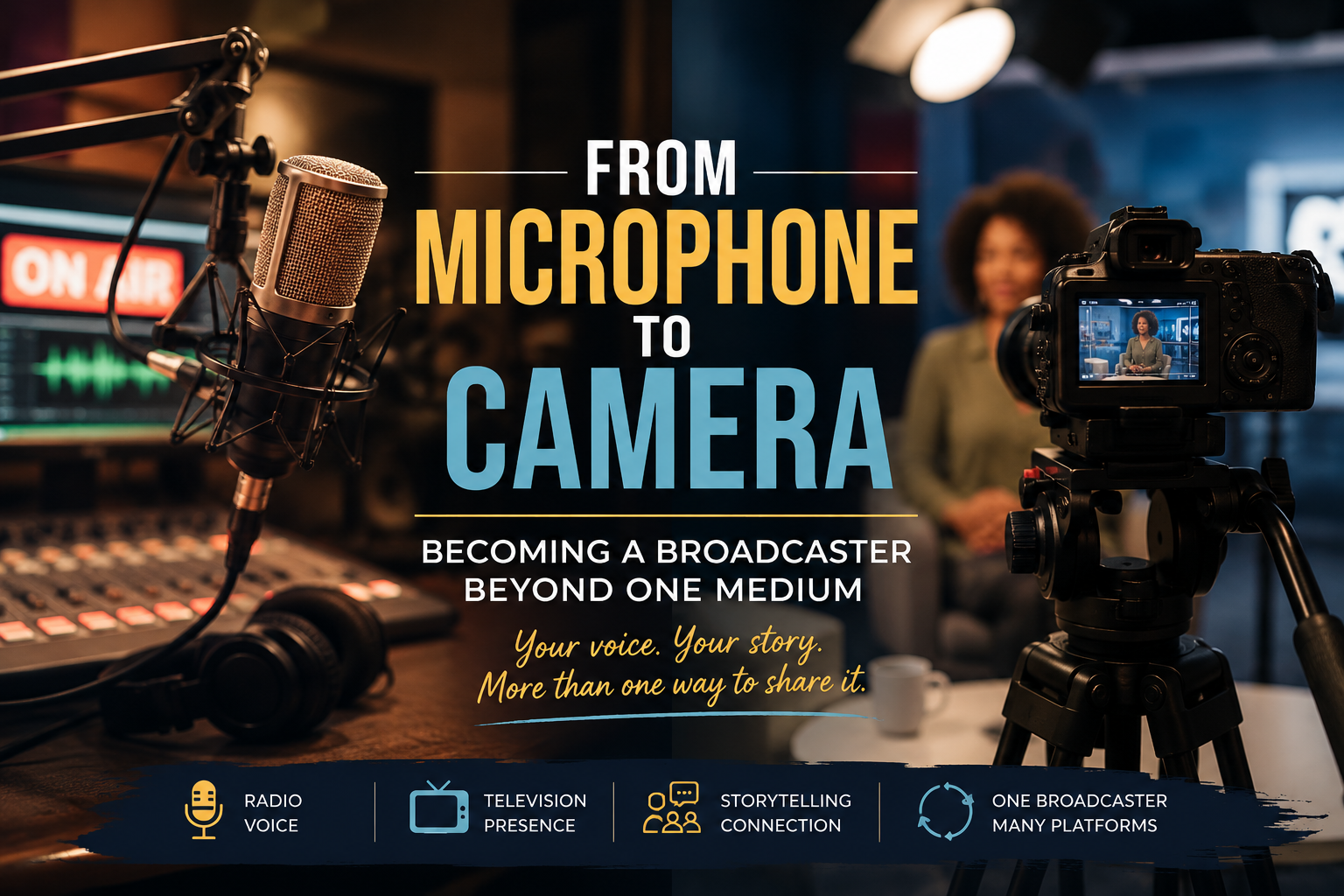
  • From Microphone to Camera: Becoming a Broadcaster Beyond One Medium

    From Microphone to Camera: Becoming a Broadcaster Beyond One Medium

    You may fall in love with radio first. You may dream of television. But in today’s changing media landscape, perhaps the bigger opportunity is learning how to become comfortable in both.

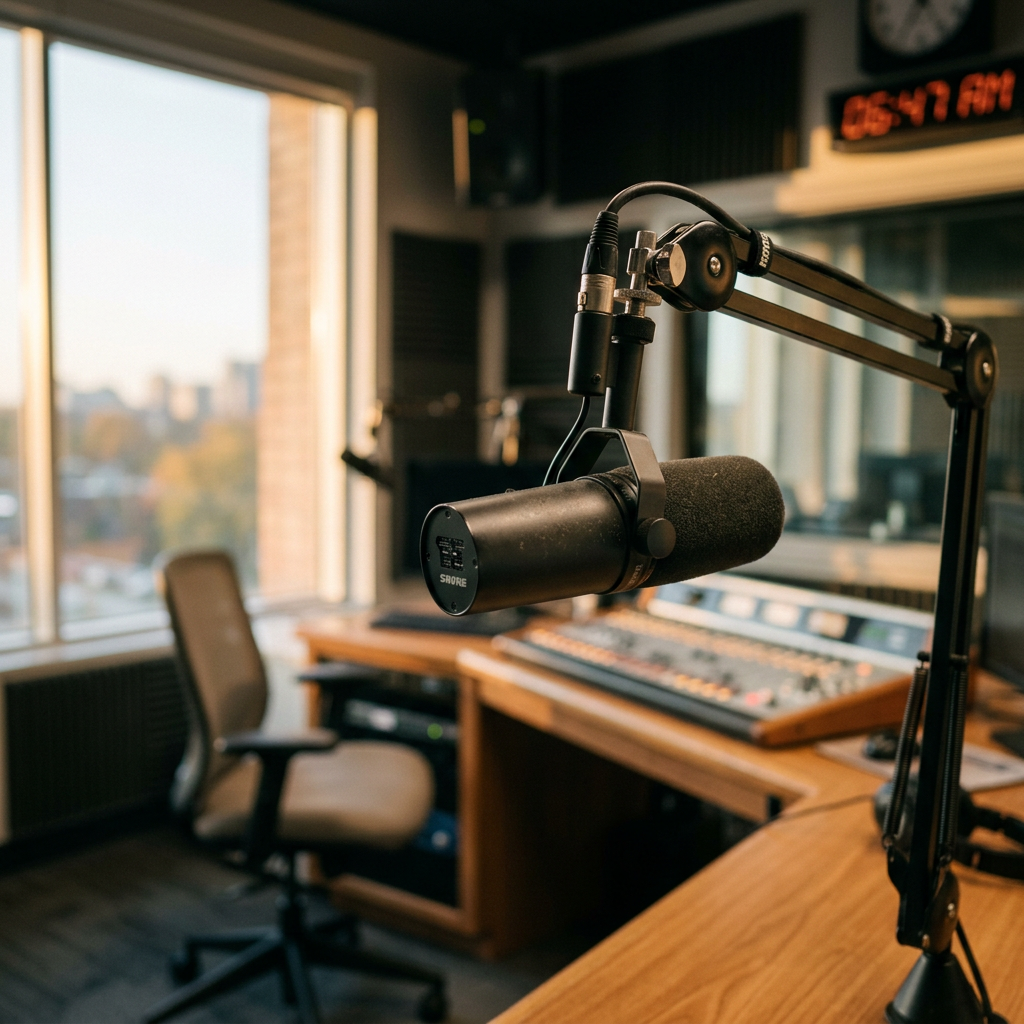
    There is something special about radio. You sit behind a microphone, put on your headphones and speak to people you cannot see. They don’t know what you’re wearing, what you’re doing with your hands or whether you glanced at your notes halfway through a sentence. All they have is your voice, and somehow you learn to use it to create pictures.

    For many aspiring broadcasters, that’s where the dream begins. They imagine themselves hosting a radio show, interviewing guests, introducing music and building a relationship with listeners. For others, the dream has always been television: the studio, the camera, the interviews and the opportunity to communicate with an audience that can both see and hear them.

    For a long time, we have treated these as fairly separate broadcasting paths. But the media landscape around us is changing, and perhaps the lines aren’t as clear as they once were.

    When Radio Meets Television

    Today, a radio interview can become a video clip. A television presenter can host a podcast. A radio personality may be expected to speak to followers through a phone camera, while a podcast can exist simultaneously as an audio programme and a video show.

    That doesn’t mean every broadcaster must do everything. There are exceptional radio broadcasters who may never want television, just as there are television presenters who have no desire to sit behind a radio microphone.

    But for an aspiring broadcaster, there is value in asking a slightly different question. Instead of only asking, “Do I want to work in radio or television?”, perhaps we should also ask:

    “How comfortable am I communicating when the medium changes?”

    Because being comfortable behind a microphone doesn’t automatically mean you’ll feel comfortable in front of a camera.

    I know that personally.

    When the Camera Comes On

    Give me a microphone, and I can talk. Audio feels familiar to me. I can concentrate on the conversation, the story and the person on the other side without thinking too much about myself.

    Put a camera in front of me, however, and something changes. Suddenly I become aware of where I’m looking, what I’m doing with my hands, how I’m sitting and what my face is doing. The communication hasn’t disappeared, but my awareness of being seen changes the experience completely.

    Ironically, being in front of the camera is exactly where I now want to grow. I want to talk about my projects visually. I want to explore video podcasting and become as comfortable communicating through a camera as I am through a microphone.

    And perhaps there is an important lesson in that:

    Experience in one medium doesn’t automatically remove the fear of another.

    Sometimes even an experienced broadcaster has to become a beginner again.

    Two Mediums, Different Muscles

    Radio asks you to create something the listener cannot see. Voice, tone, timing, listening and storytelling carry much of the experience. Television introduces another dimension because the audience can now see the communication happening.

    The skills aren’t completely separate, but neither are they identical.

    And this is where the changing media environment becomes interesting for anyone trying to enter broadcasting today. You may begin in community radio, online radio, television, podcasting, digital video or somewhere else entirely. Your first opportunity doesn’t necessarily have to determine the kind of broadcaster you eventually become.

    Perhaps the goal isn’t to master every platform.

    Perhaps it’s to become willing to stretch beyond the one that feels safest.

    Beyond the Platform

    There is something liberating about looking at broadcasting this way.

    If radio is where you feel at home, you don’t have to abandon it simply because video has become important. And if television is where you naturally shine, there may still be something valuable in discovering what happens when the pictures disappear and your voice has to carry the story.

    The point isn’t that one medium is better than the other.

    It’s that each one asks something different from the person communicating through it.

    And as radio, television, podcasting and digital content continue to overlap, versatility may become an increasingly valuable part of a broadcaster’s toolkit.

    For me, that means there is still another broadcasting challenge waiting.

    The camera.

    I’ve spent enough time being comfortable behind the microphone. Perhaps it’s time to discover what happens when I stop hiding behind it.

    And I suspect I’m not the only broadcaster who feels that way.

    The microphone and the camera may require different kinds of confidence, but perhaps becoming comfortable with both is a journey worth exploring.

    And that conversation?

    We’re only getting started.


    Continue the Conversation

    Are you more comfortable behind a microphone or in front of a camera?

    And if you’re a broadcaster who has successfully moved between radio, television, podcasting or digital video, what helped you become comfortable in a new medium?

    I’d love to hear your experience in the comments.

    If you enjoy reflections on broadcasting, career growth and navigating a changing media industry, subscribe to Reflections in Motion for new articles every Wednesday.

    Ready to Build Beyond the Microphone?

    If you’re beginning to think about how your broadcasting experience can create opportunities beyond one platform, my book From Broadcaster to Brand explores that journey—from professional identity and visibility to building something you own.

    📘 Explore From Broadcaster to Brand on Amazon:
    https://www.amazon.com/author/kgalalelontumelang

    And if podcasting is part of your next chapter, From Microphone to Money is a practical building guide, launching and monetising your podcast.

    🌐 Visit Reflections in Motion:
    https://reflectionsinmotion.blog

    Work With Me

    If you’d like to work with me around broadcasting, podcasting, content development, media training or communication, get in touch.

    📧 Email: lelon@reflectionsinmotion.blog
    🌐 Website: https://reflectionsinmotion.blog


  • From Broadcaster to Brand: Podcasting — Part 1

    From Broadcaster to Brand: Podcasting — Part 1

    So, You Want to Start a Podcast? A Broadcaster’s Guide to Getting Started


    There was a time when being a broadcaster meant having access to a radio station.

    If you wanted to speak to thousands of people, you needed airtime.

    If you wanted to interview someone, you needed a programme.

    And if you wanted to build an audience, you needed someone else to give you access to theirs.

    Podcasting has changed that.

    Today, broadcasters can create their own shows, build their own audiences and develop their own platforms without waiting for a traditional media organisation to give them a microphone.

    And that is exciting.

    But before you rush out to buy equipment, there is a more important question:

    Why do you want to start a podcast?


    Podcasting Starts With an Idea

    One of the easiest mistakes beginners make is starting with equipment.

    They research microphones.

    They buy headphones.

    They download editing software.

    They create artwork.

    And then they sit down and ask:

    “What am I actually going to talk about?”

    Your equipment matters.

    But your idea matters more.

    A podcast needs a reason to exist.

    It needs something worth saying and an audience that has a reason to listen.

    So before you press record, ask yourself:

    What do I want my podcast to be about?


    Broadcasters Already Have an Advantage

    If you’ve worked in radio or broadcasting, you’re not starting from zero.

    You’ve probably already learned how to:

    • interview people
    • ask questions
    • tell stories
    • research
    • write
    • communicate clearly
    • engage an audience
    • work with your voice
    • structure conversations

    These are podcasting skills.

    The difference is that instead of using those skills on someone else’s platform, you can begin using them to build something of your own.

    That shift is powerful.


    You Don’t Have to Be on Camera

    This is especially important for radio broadcasters.

    The digital world can sometimes make it seem as though everyone needs to be on YouTube, TikTok or Instagram Reels.

    But podcasting began with something broadcasters already understand:

    audio.

    You don’t have to become a video personality overnight.

    Your voice can still be your greatest asset.

    If you’re comfortable behind the microphone, start there.

    You can always explore video later as your confidence and strategy develop.

    Don’t let the fear of being on camera stop you from building something valuable.


    Who Are You Talking To?

    A podcast becomes much stronger when you know who you’re speaking to.

    Instead of saying:

    “My podcast is about life.”

    Ask:

    Who do I want listening?

    Maybe you’re speaking to young broadcasters trying to enter the industry.

    Maybe you’re talking to entrepreneurs.

    Maybe you’re interviewing people about relationships, careers, parenting or personal growth.

    The possibilities are endless.

    But the more clearly you understand your audience, the easier it becomes to decide what conversations belong on your podcast.


    Your Podcast Can Become More Than a Podcast

    This is where things get interesting for broadcasters.

    Your podcast doesn’t necessarily have to make money directly.

    It can become a platform that creates other opportunities.

    For example, your podcast could help you:

    • promote your expertise
    • build your personal brand
    • attract speaking opportunities
    • promote a book
    • introduce coaching services
    • connect with potential clients
    • grow an online community
    • create opportunities for partnerships

    The podcast becomes part of a bigger picture.

    You’re not simply creating episodes.

    You’re building visibility, credibility and relationships.


    Don’t Wait for Perfect

    Perhaps the biggest obstacle isn’t equipment.

    It’s fear.

    “What if nobody listens?”

    “What if I’m not good enough?”

    “What if my first episode is terrible?”

    Your first episode probably won’t sound like your hundredth.

    And that’s okay.

    You are allowed to learn.

    You are allowed to improve.

    You are allowed to start small.

    The goal isn’t to create a perfect podcast on day one.

    The goal is to create something worth improving.


    Before You Press Record

    Before launching your podcast, answer these five questions:

    1. Why am I starting this podcast?

    2. Who am I creating it for?

    3. What will listeners get from it?

    4. Why am I the right person to have these conversations?

    5. What do I ultimately want this podcast to help me build?

    Your answers will shape everything that comes next.


    Your Voice Can Build More Than an Audience

    For broadcasters, podcasting is more than another content trend.

    It is an opportunity to take skills developed behind the microphone and use them to build something you own.

    You already know how to communicate.

    You already understand audiences.

    You already know how to tell stories.

    Now you have an opportunity to take those skills beyond traditional broadcasting.

    But deciding to start a podcast is only the beginning.

    What equipment do you actually need?

    How do you structure your first episodes?

    Where should you publish?

    How do you get people to listen?

    And perhaps the question every broadcaster eventually asks:

    How can a podcast actually make money?

    That’s where we go next.


    Coming in Part 2

    From Microphone to Money: How to Build, Launch and Monetise Your Podcast

    In Part 2, we’ll move from the idea to the practical side of podcasting.

    We’ll explore:

    • choosing your podcast format
    • the equipment you actually need
    • planning your first episodes
    • recording and editing
    • publishing your podcast
    • promoting your show
    • finding your first listeners
    • building an audience
    • creating multiple income opportunities
    • finding sponsors and partnerships
    • using your podcast to build a personal brand
    • turning your broadcasting skills into a sustainable creative business

    Part 1 is about deciding to start.

    Part 2 is about building it.


    A Quiet Reminder

    You don’t need to become someone else to become a podcaster.

    You don’t need a television studio.

    You don’t need thousands of followers.

    And you don’t need to be perfect.

    You need a voice.

    You need an idea.

    And you need the courage to press record.

    The microphone that helped you build your broadcasting career can become the microphone that helps you build something of your own.


    Continue the Conversation

    Are you a broadcaster thinking about starting a podcast?

    What’s stopping you?

    Is it the equipment, finding an idea, fear of starting, building an audience—or something else?

    I’d love to hear from you in the comments.

    If you’re enjoying From Broadcaster to Brand, subscribe to Reflections in Motion for more practical reflections on broadcasting, personal branding and building a career beyond traditional media.


    📘 Take Your Broadcasting Career Beyond the Microphone

    My book, From Broadcaster to Brand: Turning Your Skills into a Creative Business, explores how broadcasters can turn their experience and communication skills into new opportunities, build personal brands and create additional income streams.

    👉🏽 Explore my books on Amazon


    🤝 Work With Me

    Are you looking for support with podcasting, broadcasting, communication, content creation or building your professional brand?

    I’d love to hear about what you’re working on.

    📧 Email: lelon@reflectionsinmotion.blog

    🌐 Website: Reflections in Motion

    Let’s talk about what you’re building.

    LELO

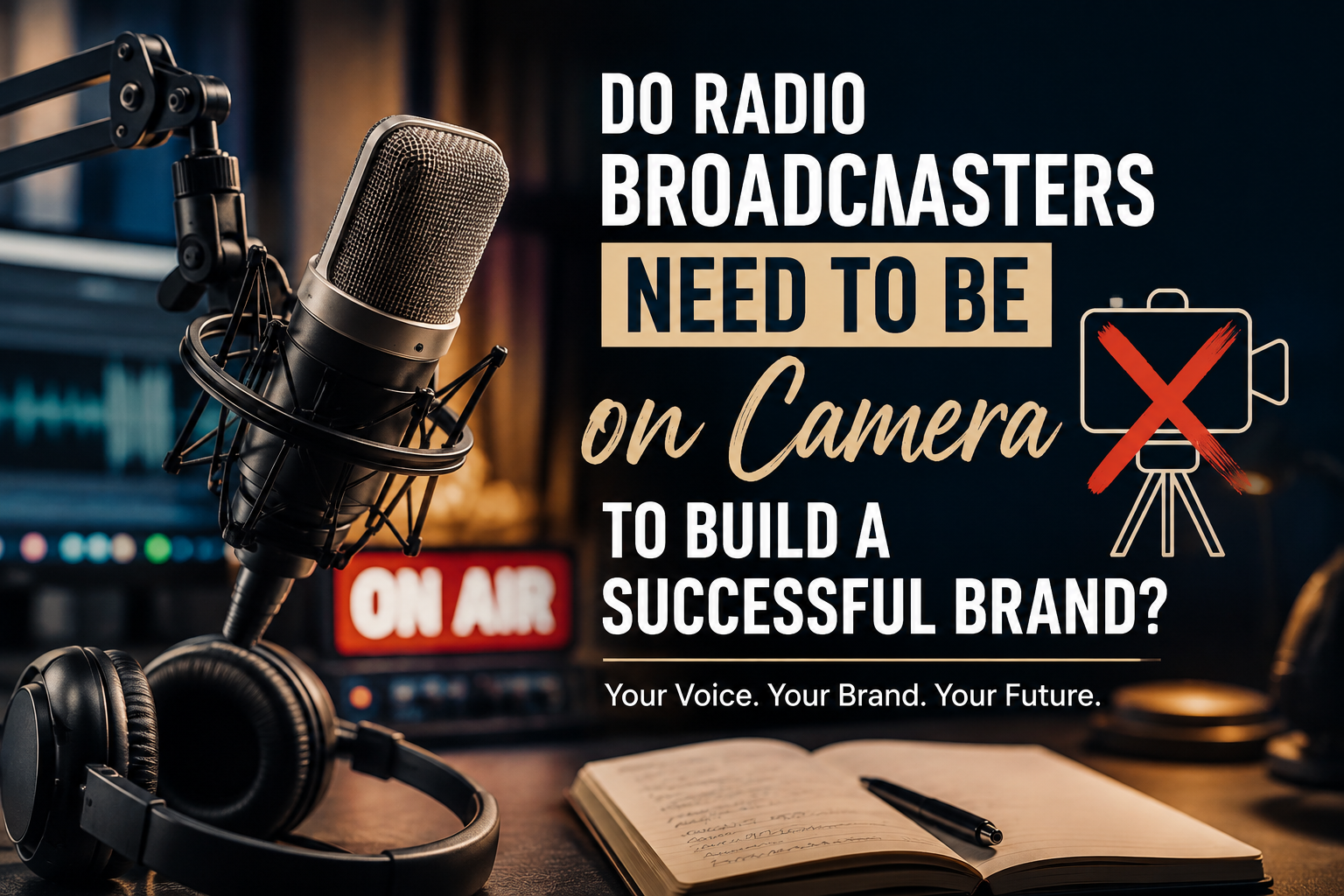
  • Do Radio Broadcasters Need to Be on Camera to Build a Successful Brand?

    Do Radio Broadcasters Need to Be on Camera to Build a Successful Brand?


    A Personal Reflection

    One of the biggest misconceptions about radio is that if you’re confident behind a microphone, you’ll naturally be confident in front of a camera.

    The truth is often very different.

    Many radio broadcasters are comfortable speaking to thousands of listeners every day, yet the moment a camera starts recording, their confidence disappears.

    For years, radio has been about imagination. Your audience hears your voice but never sees your face. You learn to paint pictures with words, connect through sound, and build relationships without ever stepping into the spotlight.

    Today’s digital world, however, seems to send a different message.

    “If you’re not on camera, you’re falling behind.”

    For many broadcasters, that’s an intimidating thought.

    It raises an important question:

    Can a radio broadcaster still build a successful brand without becoming a video personality?

    I believe the answer is yes.

    But like many things in broadcasting, the answer requires a shift in perspective.


    The Pressure to Be Seen

    Social media has changed the way audiences consume content.

    Everywhere you look, someone is encouraging creators to:

    • Start a YouTube channel.
    • Record video podcasts.
    • Go live on social media.
    • Post daily reels.
    • Share behind-the-scenes videos.

    It’s easy to conclude that video is now the only path to success.

    As a result, many talented radio broadcasters begin questioning themselves.

    “Maybe my career has reached its limit because I don’t enjoy being on camera.”

    That thought has stopped many people from sharing their expertise.

    Not because they lack talent.

    But because they believe they must become someone they’re not.


    Radio Has Always Been About Connection

    One of radio’s greatest strengths has never been the camera.

    It has always been connection.

    Listeners don’t return every day because they admire a broadcaster’s appearance.

    They return because they trust the voice.

    They feel understood.

    They enjoy the conversations.

    They value the stories.

    That ability to build trust through voice alone is a skill that many digital creators spend years trying to develop.

    Radio broadcasters already possess it.

    The challenge is learning how to use that strength beyond traditional broadcasting.


    Podcasts: A Natural Home for Radio Broadcasters

    If you’re a radio broadcaster who feels uncomfortable on camera, podcasting may be one of the most natural ways to expand your career.

    Podcasting allows you to build on the skills you’ve already developed:

    • interviewing
    • storytelling
    • scripting
    • active listening
    • audience engagement
    • voice presentation

    The format may be different, but the core skills remain the same.

    More importantly, podcasting gives you ownership.

    Unlike traditional broadcasting, where airtime belongs to an organisation, your podcast belongs to you.

    You choose the topics.

    You decide the format.

    You build the audience.

    And over time, you create an asset that continues to represent your expertise.


    Can You Really Make Money Without Being on Camera?

    This is one of the biggest questions broadcasters ask.

    The answer is yes—but perhaps not in the way many people imagine.

    A podcast doesn’t have to generate income directly to become financially valuable.

    Instead, it can become a platform that creates opportunities.

    Your podcast can help you:

    • attract speaking engagements
    • promote your books
    • introduce your coaching services
    • market training workshops
    • build trust with potential clients
    • grow an email newsletter
    • drive readers to your blog
    • create opportunities for sponsorships and partnerships

    In other words, your podcast becomes part of a larger personal brand.

    Sometimes the greatest value of a podcast isn’t the advertising revenue.

    It’s the credibility it builds.


    You Don’t Have to Choose Between Audio and Video

    One of the biggest mistakes creators make is believing they must choose one format forever.

    You don’t.

    Perhaps today your confidence lies behind the microphone.

    That’s perfectly acceptable.

    As your confidence grows, you might decide to record short video clips.

    Share behind-the-scenes moments.

    Film interviews.

    Or create educational content for social media.

    Growth doesn’t require abandoning your strengths.

    It requires building on them.


    Don’t Let Fear Make the Decision

    There is an important difference between making a strategic decision and making a fearful one.

    If audio is your preferred format because it aligns with your goals and your audience, that’s a strategic choice.

    If you’re avoiding every opportunity simply because you’re afraid of the camera, it may be worth asking yourself what is holding you back.

    Confidence isn’t built by waiting.

    It’s built by taking small, consistent steps outside your comfort zone.

    You don’t have to become a television presenter overnight.

    But you also don’t have to let fear decide the future of your career.


    Your Voice Is Still Your Greatest Asset

    Technology changes.

    Platforms evolve.

    Algorithms come and go.

    But one thing remains constant.

    People are drawn to authentic communication.

    As a broadcaster, your voice has always been more than a tool.

    It is how you educate.

    Encourage.

    Challenge.

    Inspire.

    Whether you use it on radio, in a podcast, on stage, or in a training room, your voice continues to have value.

    Never underestimate what years behind the microphone have taught you.


    A Quiet Reminder

    You don’t need to become someone else to build a successful broadcasting brand.

    The microphone that helped you connect with listeners yesterday can still help you build opportunities tomorrow.

    Your voice is not becoming less valuable. It simply has more places where it can be heard.


    Reflections in Motion

    Broadcasting is changing—but great communication never goes out of style.

    Through Reflections in Motion, I explore the lessons, challenges, and opportunities facing today’s broadcasters while encouraging professionals to build careers that extend beyond traditional media.


    Continue the Conversation

    If this reflection resonated with you, perhaps it’s time to start thinking beyond the microphone.

    My book, From Broadcaster to Brand, explores how broadcasters can transform their experience into sustainable opportunities by building a personal brand, creating multiple income streams, and taking ownership of their careers.

    📘 Get your copy on Amazon:
    https://www.amazon.com/author/kgalalelontumelang


    Work With Me

    If you’re a broadcaster, podcaster, media professional, or aspiring content creator looking to build your personal brand or create new opportunities beyond traditional broadcasting, I’d love to work with you.

    I offer:

    • 🎙️ Podcast coaching and launch guidance
    • 📻 Broadcasting and media career coaching
    • ✍🏽 Content writing and editing
    • 🎤 Voice-over services
    • 📚 Personal brand development for broadcasters

    🌐 Website: https://reflectionsinmotion.blog
    📧 Email: lelon@reflectionsinmotion.blog

    Let’s explore how your voice can become more than a career—it can become a brand.


    If you’ve enjoyed this article, subscribe to Reflections in Motion for weekly insights on broadcasting, personal branding, podcasting, and building a sustainable career beyond the microphone.

    💬 I’d love to hear your thoughts:

    If you’re a radio broadcaster, have you ever felt nervous about being on camera?

    Do you think podcasts give broadcasters a meaningful way to build their personal brands without relying entirely on video?

    Let’s continue the conversation in the comments.


    LELO

  • The Gatekeepers of Broadcasting: Leadership, Contracts and the Freelancer’s Reality

    The Gatekeepers of Broadcasting: Leadership, Contracts and the Freelancer’s Reality

    A Personal Reflection

    During my years in broadcasting, I learned that success in this industry depends on more than talent.

    Like many freelancers, I experienced the excitement of receiving opportunities and the satisfaction of seeing my work make it to air. I also experienced moments that were far more difficult—times when I questioned whether professionalism and hard work alone were enough.

    Working as a freelancer taught me that leadership has enormous influence over careers. Senior producers, executive producers, editors and senior reporters don’t simply manage programmes. They often decide who gets called for the next assignment, who is trusted with major stories, and who is given opportunities to grow.

    Most leaders take this responsibility seriously and use their influence to mentor, develop and encourage talent.

    But like any profession, broadcasting is not immune to difficult relationships, poor leadership decisions, or situations where freelancers feel powerless.

    This article is not about criticising leaders.

    It is about helping freelancers understand the realities of the industry while encouraging leaders to recognise the impact their decisions have on people’s careers.


    Leadership Shapes More Than Programmes

    Leadership in broadcasting is about far more than running a newsroom or producing a successful programme.

    Every day, senior producers, executive producers, editors and senior reporters make decisions that influence both editorial quality and people’s careers.

    They decide:

    • Who covers important stories.
    • Who is invited back for future assignments.
    • Who receives mentoring.
    • Who is trusted with greater responsibility.
    • Who is recommended for new opportunities.

    These decisions are necessary.

    Newsrooms cannot function without strong leadership.

    Many experienced broadcasters can point to a senior leader who believed in them before anyone else did.

    That kind of leadership changes lives.


    When Leadership Becomes a Gatekeeper

    Leadership also comes with influence.

    For freelancers, that influence can feel significant because future work often depends on professional relationships.

    A strong relationship with a leader may lead to repeat assignments.

    A difficult relationship may result in fewer opportunities.

    This does not automatically mean unfairness.

    Leaders make decisions based on editorial needs, budgets, availability, trust and experience.

    However, freelancers sometimes find themselves in situations where they believe decisions are influenced by factors that are not always transparent.

    Whether that perception is accurate or not, it highlights an important reality.

    When your entire career depends on one organisation or one decision-maker, your professional security becomes fragile.

    That is why every freelancer should aim to build a career—not just a contract.


    The Difficult Reality of Speaking Up

    Perhaps one of the hardest challenges freelancers face is deciding when and how to raise concerns.

    Questions about late payments.

    Unclear expectations.

    Contract disputes.

    Workplace behaviour.

    Editorial disagreements.

    Most professionals understand that respectful communication is important.

    Yet some freelancers worry that raising legitimate concerns could affect future opportunities.

    Whether those concerns prove to be true or not, the fear itself can discourage people from speaking openly.

    Healthy organisations should create environments where concerns can be raised professionally without fear of retaliation.

    Likewise, freelancers should approach difficult conversations respectfully, factually and constructively.

    Standing up for yourself does not require hostility.

    Professionalism and self-respect can exist together.


    Contracts: Protection or Restriction?

    Contracts exist for good reasons.

    They define expectations.

    Protect confidential information.

    Clarify payment terms.

    Outline responsibilities.

    They provide certainty for both the organisation and the freelancer.

    However, contracts can also contain provisions that significantly affect a freelancer’s career.

    Conflict-of-interest clauses.

    Exclusivity agreements.

    Restrictions on working for competitors.

    In many cases, these clauses are entirely reasonable.

    Broadcasters have legitimate business interests that deserve protection.

    The challenge arises when restrictions become so broad that they limit a freelancer’s ability to earn a living, particularly if assignments become infrequent.

    Every freelancer should carefully understand:

    • What the contract restricts.
    • How long restrictions apply.
    • Whether they continue after the contract ends.
    • What work is considered a conflict of interest.
    • How disputes are resolved.

    Signing a contract should never be treated as a formality.

    It is a professional responsibility.

    Understanding your agreement is one of the best ways to protect your career.


    Your Career Should Never Depend on One Gatekeeper

    One of the biggest lessons freelancing teaches is that dependence creates vulnerability.

    If one programme changes direction…

    If one producer leaves…

    If one editor moves to another department…

    Your opportunities can change overnight.

    That is why diversification is not simply good business.

    It is career protection.

    Build relationships across different organisations.

    Develop new skills.

    Explore podcasting.

    Write.

    Teach.

    Facilitate workshops.

    Create digital content.

    Offer media coaching.

    The broader your professional identity becomes, the less vulnerable you are to changes within one organisation.


    Protect Yourself Professionally

    Protecting yourself does not mean becoming confrontational.

    It means becoming prepared.

    Some practical habits include:

    • Reading every contract carefully before signing.
    • Keeping copies of contracts and correspondence.
    • Confirming important verbal agreements in writing.
    • Maintaining records of invoices and payments.
    • Continuing to build relationships across the industry.
    • Investing in new skills that increase your independence.
    • Building your own professional platform through a website, blog or portfolio.

    These habits strengthen your credibility and reduce your dependence on any single opportunity.


    A Message to Broadcasting Leaders

    Leadership is influence.

    With influence comes responsibility.

    The way leaders communicate, mentor, provide feedback and allocate opportunities can shape careers for years to come.

    The best leaders do more than produce excellent programmes.

    They develop excellent people.

    They understand that freelancers are professionals whose livelihoods often depend on the opportunities they receive.

    Fairness.

    Transparency.

    Respect.

    Constructive feedback.

    These qualities strengthen not only individuals but the entire broadcasting industry.

    Leadership is measured not only by the programmes you produce.

    It is also measured by the people you help develop.


    A Different Way to Think

    Freelancers should not be expected to accept unfair treatment simply because they want to protect future opportunities.

    Likewise, organisations deserve freelancers who act with professionalism, integrity and accountability.

    Healthy professional relationships are built on mutual respect—not fear.

    The strongest broadcasting environments are those where leaders can lead confidently, and freelancers can contribute honestly, knowing that respect runs in both directions.


    A Quiet Reminder

    Never allow one contract, one leader or one organisation to become the sole foundation of your career.

    Build a reputation that travels with you.

    Develop skills that open new doors.

    And never lose the confidence to stand up for yourself professionally while treating others with respect.


    Reflections in Motion

    Every broadcaster has a story beyond the microphone.

    This series is my invitation to reflect on the profession we love—the lessons it teaches us, the challenges it presents, and the opportunities it creates.

    Because building a meaningful career isn’t only about finding your voice.

    It’s also about protecting it.


    Continue the Conversation

    If this reflection resonated with you, I’d love to invite you to continue the journey.

    My book, From Broadcaster to Brand, explores how broadcasters can transform their experience into sustainable opportunities by building a personal brand, creating multiple income streams, and taking ownership of their careers.

    📘 Explore my books on Amazon:
    https://www.amazon.com/author/kgalalelontumelang

    If you enjoy thoughtful conversations about broadcasting, leadership and career development, consider subscribing to Reflections in Motion so you never miss a new article.

    Work With Me

    If you’re a broadcaster, journalist, media student, or communication professional looking to grow beyond traditional broadcasting, I’d love to work with you.

    I offer:

    • Podcast coaching
    • Editing and proofreading for research and academic writing
    • Voice-over services
    • Broadcasting and personal brand mentoring
    • Speaking and training on broadcasting, communication and career development

    For collaborations or enquiries, feel free to get in touch through my blog.

    💬 I’d love to hear from you in the comments:

    Have you ever faced challenges as a freelance broadcaster when it came to leadership, contracts or professional relationships?

    What advice would you give someone entering the industry today?

    LELO


  • The Loneliness Behind the Microphone

    The Loneliness Behind the Microphone

    A Personal Reflection

    After almost a decade in broadcasting, I’ve come to realise that one of the greatest misconceptions about the profession is that constant communication automatically creates connection.

    People hear your voice every day. They recognise your name. They may even feel like they know you personally.

    Yet behind every familiar voice is a human being navigating the same emotions, uncertainties, and challenges as everyone else.

    Some of the most important lessons I learned in broadcasting had very little to do with speaking into a microphone. They were about understanding people, building meaningful relationships, and recognising that genuine connection begins long before the “On Air” light comes on.

    This reflection is for every broadcaster who has ever felt that while the world heard their voice, very few people truly knew the person behind it.


    From the outside, broadcasting looks like one of the most connected professions in the world.

    Every day, broadcasters speak to hundreds or even thousands of people.

    They interview guests.

    They engage with callers.

    They laugh with co-hosts.

    They become familiar voices in homes, cars, and workplaces.

    It seems impossible that someone surrounded by so much interaction could ever feel lonely.

    Yet for many broadcasters, loneliness is one of the least talked-about realities of the profession.

    Not because they lack people around them.

    But because genuine connection is very different from constant communication.

    Being heard by thousands isn’t the same as being deeply known by a few.


    Always Talking, But Not Always Being Heard

    Broadcasting is built on communication.

    Every day, broadcasters share stories, ask questions, deliver information, and create conversations for their audiences.

    Ironically, many spend so much time communicating professionally that they have very few opportunities to simply be themselves.

    The microphone amplifies their voice.

    It doesn’t always create space for their own.

    Behind every polished broadcast is a person with fears, hopes, frustrations, and dreams—just like everyone else.

    Sometimes those parts remain unheard.


    When Recognition Doesn’t Equal Connection

    One of the unique experiences of broadcasting is being recognised by people you’ve never met.

    Someone might stop you at the supermarket and say they enjoy your show.

    A listener may tell you they feel like they’ve known you for years.

    Those moments are encouraging.

    They remind you that your work matters.

    But recognition is not the same as relationship.

    Many broadcasters are widely known without feeling deeply known.

    People recognise the voice.

    Few know the person behind it.


    The Pressure to Always Be “On”

    Broadcasters often become known for their energy, confidence, and composure.

    Listeners tune in expecting a familiar voice.

    A positive attitude.

    A calm presence.

    Even after the programme ends, that expectation can continue.

    At industry events, public appearances, or even everyday encounters, there can be an unspoken pressure to remain “on.”

    To be approachable.

    To be engaging.

    To always have something interesting to say.

    While professionalism is important, constantly performing can become emotionally exhausting.

    Everyone needs spaces where they can simply exist without feeling the need to entertain or inspire.


    Success Doesn’t Eliminate Loneliness

    It’s easy to assume that successful broadcasters have everything they need.

    Recognition.

    Respect.

    A loyal audience.

    But professional success and personal fulfilment are not the same thing.

    You can host a popular programme and still long for deeper conversations.

    You can interview remarkable people every day and still struggle to find someone who truly understands your own experiences.

    Loneliness does not disappear simply because your career is going well.


    The Changing Nature of Broadcasting

    Today’s broadcasting industry looks very different from what it did a decade ago.

    Many professionals work on short-term contracts.

    Some freelance across multiple organisations.

    Others balance broadcasting with content creation, voice-over work, or consulting.

    While these changes create exciting opportunities, they can also reduce the sense of belonging that once came from working in a close-knit team.

    As careers become more flexible, building intentional relationships becomes even more important.


    Building Community Beyond the Studio

    Perhaps one of the most valuable investments a broadcaster can make is not another piece of equipment or another professional qualification.

    It’s community.

    That might mean:

    • Staying connected with former colleagues.
    • Finding mentors who understand the industry.
    • Supporting younger broadcasters.
    • Joining professional networks.
    • Making time for friendships that have nothing to do with broadcasting.

    Careers are important.

    But they should never become our only source of connection.


    The Strength in Saying, “I’m Not Okay”

    For many broadcasters, vulnerability feels uncomfortable.

    After all, the profession often rewards confidence and composure.

    But there is strength in acknowledging that even the voices people admire sometimes need encouragement too.

    Looking after your wellbeing is not a sign of weakness.

    It’s part of building a sustainable career.

    The strongest broadcasters are not those who never struggle.

    They are the ones who recognise when they need support and dare to seek it.


    A Different Way to Think

    Perhaps the greatest gift broadcasting gives us is the ability to connect with people.

    The challenge is remembering to nurture those same connections in our own lives.

    Because while audiences may know our voices, the people closest to us should know our hearts.


    A Quiet Reminder

    The microphone amplifies your voice. It should never silence your need for genuine human connection.


    A Quiet Reflection

    Every broadcaster has a story beyond the microphone.

    This series is my invitation to reflect on the profession we love—the lessons it teaches us, the challenges it presents, and the opportunities it creates.

    Because building a meaningful career isn’t just about finding your voice.

    It’s about discovering who you are when the microphone is switched off.


    Continue the Conversation

    If this reflection resonated with you, it may be because you’ve discovered that broadcasting is about far more than what happens behind the microphone.

    It’s about people.

    It’s about purpose.

    And it’s about building a career that allows you to grow professionally without losing yourself personally.

    The conversations we have with our audiences are important—but so are the conversations we have with ourselves, our colleagues, and the people who truly know us.

    📘 Continue the Journey

    If you’re a broadcaster who wants to build a career that extends beyond traditional media, my book, From Broadcaster to Brand, explores how to transform your broadcasting experience into a personal brand, create new opportunities, and build a future you truly own.

    Whether you’re thinking about podcasting, content creation, entrepreneurship, or developing multiple income streams, this book will help you take the next step with confidence.

    📘 Get your copy on Amazon:

    👉🏽 https://www.amazon.com/author/kgalalelontumelang

    🤝 Work With Me

    I work with broadcasters, media professionals, and aspiring communicators who want to grow their careers and create opportunities beyond traditional broadcasting.

    My services include:

    • 🎙️ Podcast Coaching
    • 📻 Broadcasting & Personal Brand Coaching
    • 🎤 Voice-Over Services
    • ✍🏽 Language Editing & Proofreading
    • 🎓 Media Training & Communication Coaching

    Whether you’re launching your first podcast, building your personal brand, or preparing for your next career move, I’d love to help you unlock new opportunities. lelon@reflectionsinmotion.blog

    📩 Subscribe to Reflections in Motion

    If you enjoy thoughtful conversations about broadcasting, personal branding, career growth, leadership, and communication, consider subscribing to Reflections in Motion.

    New articles are published regularly to encourage broadcasters and media professionals to build meaningful careers, embrace change, and create opportunities that last far beyond the microphone.

    💬 I’d Love to Hear From You

    Have you ever experienced loneliness in a profession that seems so connected from the outside?

    What helped you build meaningful relationships again?

    Share your thoughts in the comments below. Your story may encourage someone else who needs to know they aren’t alone.

    LELO

  • Why Experience Alone No Longer Guarantees Opportunities

    Why Experience Alone No Longer Guarantees Opportunities


    There was a time when experience was the ultimate currency in broadcasting.

    The formula seemed straightforward.

    Work hard.

    Gain experience.

    Build a solid reputation.

    Wait for opportunities to follow.

    For many years, that approach made sense.

    Experience signaled competence. It demonstrated commitment. It showed that you had weathered the challenges of the industry and earned your place within it.

    But the media landscape has changed.

    Experience still matters.

    In fact, it matters a great deal.

    The difference is that experience alone is no longer enough to guarantee opportunities.

    And for many broadcasters, that realization can be frustrating.


    The Rules Have Changed

    In the past, career progression often followed a predictable path.

    You gained experience, moved into bigger roles, expanded your responsibilities, and gradually built your reputation.

    Today, opportunities emerge from many different directions.

    A broadcaster with ten years of experience may find themselves competing with someone who has fewer years in the industry but a stronger digital presence, a larger professional network, or a more visible personal brand.

    That doesn’t mean experience has lost its value.

    It means the rules have evolved.


    Experience Is Valuable—But Invisible Experience Has Limits

    One of the biggest challenges facing experienced professionals is visibility.

    You may possess incredible skills.

    You may have years of knowledge.

    You may have interviewed hundreds of guests, managed complex productions, and developed expertise that cannot be taught in a classroom.

    But if people cannot see that expertise, they cannot fully appreciate its value.

    Experience hidden behind a microphone, office door, or job title can easily go unnoticed outside your immediate environment.

    In today’s world, visibility helps experience travel further.


    Adaptability Has Become a Competitive Advantage

    The broadcasting industry is evolving faster than ever.

    New platforms emerge.

    Audience habits change.

    Technology transforms how content is created and consumed.

    The professionals who continue to thrive are often those who remain curious.

    They understand that learning doesn’t stop after a certain number of years in the industry.

    They continue to:

    • develop new skills
    • explore new platforms
    • experiment with new formats
    • adapt to changing audience expectations

    Experience provides a foundation.

    Adaptability builds on it.


    Relationships Create Opportunities

    Many opportunities do not come from job applications or formal processes.

    They come from conversations.

    Recommendations.

    Collaborations.

    Professional relationships.

    The broadcaster who invests in meaningful connections often creates opportunities that experience alone cannot unlock.

    People work with those they know, trust, and remember.

    That’s why relationships remain one of the most valuable assets a professional can build.


    Visibility Amplifies Experience

    Think about two broadcasters.

    Both have fifteen years of experience.

    Both are highly skilled.

    Both have strong professional reputations.

    The difference is that one actively shares insights, contributes to industry conversations, and builds a visible presence beyond their employer.

    The other remains largely unseen outside their immediate role.

    Who is more likely to attract new opportunities?

    In many cases, it will be the person whose experience is visible.

    Not because they are more talented.

    Because more people understand the value they bring.


    Building a Brand Doesn’t Replace Experience

    Some professionals worry that personal branding is about self-promotion.

    But effective branding is not about exaggerating your achievements.

    It’s about making your expertise accessible.

    It’s about helping people understand:

    • who you are
    • what you do
    • what you stand for
    • how you create value

    A strong personal brand doesn’t replace experience.

    It amplifies it.


    A Different Way to Think

    Perhaps the goal should not be to choose between experience and visibility.

    The goal is to combine them.

    Experience gives you credibility.

    Visibility gives you reach.

    Adaptability keeps you relevant.

    Relationships create opportunities.

    Together, they create a career that can grow beyond any single platform or position.


    Final Thoughts

    The broadcasting industry is still full of opportunities.

    But the path to those opportunities has changed.

    Experience remains incredibly valuable.

    Yet expertise that remains hidden can only take you so far.

    The professionals who thrive today are often those who combine deep experience with visibility, adaptability, and meaningful relationships.

    They don’t just build careers.

    They build ecosystems of opportunity around their skills and knowledge.

    Because in today’s world, being experienced is important.

    Being visible is what helps that experience create new possibilities.


    A Quiet Reminder

    Experience remains one of your greatest assets.

    But assets create the most value when people can see them, understand them, and connect them to opportunities.

    The goal is not simply to accumulate experience.

    The goal is to position that experience where it can be discovered, appreciated, and rewarded.


    A Quiet Invitation

    If this reflection resonates, it may be because you’ve spent years building valuable experience and are now wondering how to make that experience work harder for you.

    From Broadcaster to Brand explores how broadcasters can transform their expertise into long-term opportunities by combining experience with visibility, ownership, and intentional growth.

    📘 Find From Broadcaster to Brand on Amazon here:

    👉🏽 https://www.amazon.com/author/kgalalelontumelang

    If you’d like more reflections like this, consider subscribing to the blog.

    Reflections In Motion is a space for broadcasters who want to build careers that grow with them—not just around them.

    💬 I’d love to hear from you:

    Do you think experience alone is still enough in today’s broadcasting industry, or has visibility become just as important?


    Want to Go Further?

    If you’re interested in using communication, broadcasting, and real-world experience to create new income streams and opportunities, I share practical strategies in my eBooks.

    📘 Explore here:

    👉🏽 https://www.amazon.com/author/kgalalelontumelang


    Work With Me

    Your experience has value far beyond your current role.

    I work with broadcasters, media professionals, content creators, and communicators who want to turn their expertise into opportunities through personal branding, content strategy, and professional positioning.

    Whether you’re:

    • building a personal brand
    • launching a blog or podcast
    • creating thought leadership content
    • positioning yourself as an industry expert
    • or exploring new career opportunities

    I can help you develop a strategy that turns visibility into growth.

    Services Include

    • Personal brand development
    • Content strategy
    • Communication coaching
    • Career positioning
    • Digital platform growth

    📧 Work with me: lelon@reflectionsinmotion.blog

    LELO


  • The Fear of Starting Over

    The Fear of Starting Over


    There comes a moment in many broadcasting careers when the path ahead becomes unclear.

    Not because you’ve failed.

    Not because you’ve lost your passion.

    But because you’ve outgrown the version of yourself that got you here.

    You start thinking about new possibilities.

    A podcast.

    A business.

    A personal brand.

    A new role.

    A different chapter.

    And then the fear arrives.

    What if I have to start over?

    For many broadcasters, that question is enough to keep them exactly where they are.


    The Weight of Starting Again

    When you’re new to the industry, taking risks feels easier.

    You have little to lose.

    You are expected to learn.

    Expected to make mistakes.

    Expected to figure things out as you go.

    But success changes that.

    The more experience you gain, the harder it becomes to place yourself in situations where you don’t immediately feel competent.

    You become known.

    Respected.

    Established.

    And suddenly, becoming a beginner again feels uncomfortable.

    Not because you’ve lost your ability to grow.

    But because you’ve become accustomed to being good at what you do.


    The Myth of Starting From Scratch

    One of the biggest misconceptions about reinvention is the belief that you’re starting from zero.

    You’re not.

    You may be starting a new project.

    You may be entering a new space.

    You may be learning a new skill.

    But you are not the same person you were at the beginning of your career.

    You carry:

    • experience
    • resilience
    • communication skills
    • industry knowledge
    • professional relationships
    • lessons learned through success and failure

    Those things come with you.

    The platform may be new.

    The person isn’t.


    Why Experts Fear What Beginners Embrace

    Interestingly, beginners are often more courageous than experts.

    Not because they are more talented.

    Because they have less to protect.

    Experts carry expectations.

    They worry about:

    • looking inexperienced
    • making mistakes publicly
    • disappointing others
    • damaging their reputation
    • losing credibility

    So they stay where they feel safe.

    But growth rarely happens inside safety.

    Growth usually begins the moment we become willing to be seen learning again.


    The Cost of Staying Comfortable

    The fear of starting over feels protective.

    It convinces you that staying where you are is the safer option.

    Sometimes it is.

    But sometimes comfort comes with a hidden cost.

    Years pass.

    Ideas remain ideas.

    Dreams remain plans.

    And opportunities quietly disappear.

    Not because you weren’t capable.

    Because you were waiting to feel ready.

    The challenge is that readiness often arrives after action—not before it.


    Reinvention Is Not Failure

    Many people view reinvention as an admission that something didn’t work.

    But that’s not what reinvention is.

    Reinvention is growth.

    It’s recognising that who you were five years ago doesn’t have to define who you become next.

    The broadcasters who build lasting careers are often those who evolve before they are forced to.

    They don’t wait for change.

    They create it.

    And in doing so, they remain relevant, adaptable, and resilient.


    What If It Works?

    When people think about starting over, they often focus on what could go wrong.

    But what if the better question is:

    What if it works?

    What if:

    • The podcast finds an audience?
    • The business succeeds?
    • The blog grows?
    • The personal brand opens new doors?
    • The new opportunity exceeds your expectations?

    What if the thing you’re afraid of is actually the beginning of something bigger?

    Fear often asks, “What if I fail?”

    Growth asks, “What if I succeed?”


    A Different Way to Think

    Perhaps starting over is the wrong phrase.

    Because you’re not erasing your past.

    You’re building on it.

    Every lesson.

    Every challenge.

    Every setback.

    Every success.

    They become the foundation for what comes next.

    The goal isn’t to abandon your experience.

    It’s to leverage it in new ways.


    Final Thoughts

    Most people don’t regret every risk they took.

    They regret the opportunities they never explored.

    The projects they never started.

    The ideas they never tested.

    The dreams they postponed until the “right time.”

    Starting over feels frightening when you focus on what you’re leaving behind.

    But it becomes exciting when you focus on what you’re taking with you.

    Because the truth is:

    You’re not starting from zero.

    You’re starting from experience.

    And that’s a very different thing.


    A Quiet Reminder

    Growth often feels uncomfortable because it asks us to leave familiar ground.

    But familiar is not always the same as fulfilling.

    Sometimes the next chapter begins the moment you stop asking whether you’re ready and start asking whether you’re willing.


    A Quiet Invitation

    If this reflection resonates, it may be because you’ve been thinking about a new chapter but haven’t taken the first step yet.

    From Broadcaster to Brand explores how broadcasters can move beyond the limits of traditional platforms and begin building something they truly own—through visibility, identity, and intentional growth.

    📘 Find From Broadcaster to Brand on Amazon here:

    👉🏽 https://www.amazon.com/author/kgalalelontumelang

    If you’d like more reflections like this, consider subscribing to the blog.

    Reflections In Motion is a space for broadcasters, communicators, and professionals who are learning that growth often begins on the other side of uncertainty.

    💬 I’d love to hear from you:

    Have you ever had to start over in your career? What did that experience teach you?


    Want to Go Further?

    If you’re interested in using communication and real-world experience to create income, I share more practical strategies in my eBooks.

    📘 Explore here:

    👉🏽 https://www.amazon.com/author/kgalalelontumelang


    Work With Me

    Your experience has value beyond the platform you’re currently on.

    I work with broadcasters, media professionals, and communicators who want to build personal brands, create new opportunities, and turn their expertise into sustainable income streams.

    Whether you’re:

    • launching a blog or podcast
    • building a personal brand
    • exploring a career transition
    • creating digital products
    • or positioning yourself as an authority in your field

    I can help you develop a strategy that turns experience into opportunity.

    Services Include

    • Personal brand development
    • Content strategy
    • Communication coaching
    • Career positioning
    • Digital platform growth

    📧 Work with me: lelon@reflectionsinmotion.blog

    LELO


  • The Danger of the Engagement Paradox

    The Danger of the Engagement Paradox

    We live in an era where numbers are celebrated.

    More followers.

    More views.

    More likes.

    More impressions.

    The assumption is simple: bigger must be better.

    But what if chasing bigger is the very thing preventing you from building something meaningful?

    There’s a hidden trap in the pursuit of mass appeal, and I call it the Engagement Paradox.

    The more you try to speak to everyone, the less deeply you connect with anyone.

    By chasing viral moments and broad appeal, your message can become diluted, overly safe, and stripped of the very personality that makes it memorable.

    A viral spike may bring temporary attention.

    But trust is what builds a lasting brand.


    When Bigger Stops Being Better

    It’s easy to become obsessed with analytics.

    You refresh the dashboard.

    You compare today’s numbers with yesterday’s.

    You wonder why one post exploded while another barely moved.

    Over time, success starts to look like a graph instead of a relationship.

    But numbers alone don’t tell the whole story.

    Ten thousand people may scroll past your content without remembering it.

    Meanwhile, fifty people who genuinely connect with your message may become loyal supporters, clients, readers, or advocates.

    Attention is easy to earn.

    Connection is much harder.


    The Hidden Cost of Pleasing Everyone

    The desire to appeal to a wider audience often leads creators to soften their opinions, avoid difficult conversations, and produce content that feels familiar rather than distinctive.

    The result?

    Content that offends no one.

    But inspires no one either.

    Your unique experiences, perspective, and voice are what make your work valuable.

    When you remove those qualities to attract the masses, you also remove the reasons people would choose to follow you.

    Authenticity is often sacrificed in the pursuit of popularity.

    And that’s a costly trade.


    A Brand Is Built on Trust, Not Traffic

    Traffic is temporary.

    Trust compounds.

    Someone who reads one article and never returns contributes to your analytics.

    Someone who consistently reads, comments, shares, and recommends your work contributes to your brand.

    A healthy community is built one meaningful interaction at a time.

    You don’t need a stadium full of passive scrollers.

    You need a front row of people who are genuinely leaning in.

    People who recognise your voice.

    People who value your perspective.

    People who trust what you create.


    Stop Looking at Dashboards. Start Looking at Conversations.

    It’s easy to celebrate page views.

    But conversations reveal something far more valuable.

    Scroll through your comments.

    Read your emails.

    Notice the messages people send after reading your work.

    Are they asking thoughtful questions?

    Sharing personal stories?

    Reflecting on how your content changed their thinking?

    Five genuine conversations often have more long-term value than five thousand anonymous clicks.

    Engagement isn’t just measured in numbers.

    It’s measured in connection.


    Treat Every Interaction Like a Relationship

    When someone comments on your article or replies to your newsletter, resist the urge to simply acknowledge it and move on.

    Respond thoughtfully.

    Be present.

    Make the interaction feel personal.

    Every conversation is an opportunity to strengthen trust.

    People remember creators who make them feel seen.

    And those small moments often become the foundation of loyal communities.


    Create for the People Who Already Care

    One of the biggest mistakes creators make is constantly trying to attract strangers while neglecting the audience they already have.

    The people who consistently read your work are giving you valuable information.

    They are telling you what resonates.

    What matters.

    What they need.

    Serve them well.

    Solve their problems.

    Speak their language.

    Build for the people who have already chosen to listen.

    They often become your strongest ambassadors.


    Redefining Success

    The digital world encourages us to measure success through reach.

    But perhaps a better question is:

    How many people truly connected with this message?

    Because connection creates loyalty.

    Loyalty creates trust.

    And trust creates opportunities that algorithms cannot manufacture.

    The goal is not simply to be seen.

    The goal is to be remembered.


    Final Thoughts

    It’s time to stop acting like a network executive chasing ratings and start thinking like a community builder.

    The internet is crowded.

    Attention is scarce.

    Generic content rarely stands out.

    But honest, thoughtful communication still does.

    The next time you open your analytics dashboard, ask yourself:

    Not just “How many people did I reach?”

    Ask instead:

    “How many people did I genuinely connect with?”

    Because in the end, 500 people who know your name, trust your voice, and believe in your work will almost always be more valuable than 50,000 people who simply scrolled past.

    Stop broadcasting.

    Start connecting.


    A Quiet Reminder

    Growth isn’t only measured by audience size.

    Sometimes it’s measured by the depth of the relationships you build.

    The strongest personal brands aren’t created by reaching everyone.

    They’re created by becoming indispensable to the right people.


    A Quiet Invitation

    If this reflection resonates, it may be because you’ve started questioning whether you’re building an audience—or simply collecting numbers.

    Reflections In Motion explores communication, branding, broadcasting, and the human side of building work that lasts.

    💬 I’d love to hear from you:

    Would you rather have 500 loyal supporters or 50,000 passive followers?


    Want to Go Further?

    If you’re interested in using communication and real-world experience to create income, I share more practical strategies in my eBooks.

    📘 Explore here:

    👉🏽 https://www.amazon.com/author/kgalalelontumelang


    Work With Me

    Your voice is more than a talent—it’s an asset.

    I work with broadcasters, communicators, creators, and professionals who want to build stronger personal brands, create meaningful content, and turn their expertise into sustainable opportunities.

    Whether you’re:

    • growing a blog or newsletter
    • building a personal brand
    • expanding beyond traditional media
    • or looking to position yourself as a trusted authority

    I can help you communicate with greater clarity, confidence, and purpose.

    Services Include

    • Personal brand strategy
    • Content planning and storytelling
    • Communication coaching
    • Career positioning for broadcasters and creatives
    • Audience-building strategies

    📧 Work with me: lelon@reflectionsinmotion.blog

    LELO


  • Why Some Broadcasters Stay Busy But Never Really Grow

    Why Some Broadcasters Stay Busy But Never Really Grow

    Broadcasting is a busy profession.

    There is always something happening.

    A show to prepare for.
    Content to create.
    Meetings to attend.
    Deadlines to meet.

    From the outside, constant movement can look like progress.

    And sometimes, it is.

    But not always.

    Because being busy and growing are not the same thing.


    When Activity Starts Replacing Intention

    Many broadcasters become experts at staying occupied.

    The routine becomes familiar:

    • wake up
    • prepare
    • go on air
    • repeat

    Over time, the cycle becomes normal.

    And because the work is constant, it’s easy to assume growth is happening automatically.

    But movement alone does not guarantee development.

    Sometimes it simply maintains the current position.

    Routine can sometimes disguise stagnation as progress.


    The Comfort of Staying in Motion

    Busyness can feel productive because it leaves little room to pause.

    And when you never pause, you rarely ask difficult questions.

    Questions like:

    • Am I evolving?
    • What am I building beyond this routine?
    • If nothing changed in the next five years, would I be satisfied?

    Constant activity can protect you from discomfort.

    But it can also delay necessary reflection.


    Repetition Is Not Always Growth

    Experience matters.

    But repeating the same process for years is not automatically growth.

    Growth usually involves:

    • learning new skills
    • expanding your thinking
    • trying unfamiliar things
    • building beyond what already feels comfortable

    Without that expansion, even a busy career can become stagnant.

    Quietly.


    Survival Mode vs Intentional Growth

    Some broadcasters become so focused on maintaining their current position that they stop building for the future.

    The goal becomes:

    • staying relevant
    • staying employed
    • staying visible

    And while those things matter, survival is not the same as growth.

    Growth requires intention.

    It asks:

    What am I becoming beyond my current role?


    When There’s No Space to Build Outside the Studio

    One of the biggest consequences of constant busyness is that nothing gets built outside the platform.

    No independent projects.
    No personal platform.
    No long-term structure.

    Everything exists inside the routine.

    So even though the career looks active, it remains dependent on the same environment year after year.


    Why Reflection Matters

    Growth is not only created through action.

    It is also created through awareness.

    Sometimes the most important thing a broadcaster can do is pause long enough to evaluate:

    • where they are
    • where they are going
    • whether their current movement actually aligns with the future they want

    Because without reflection, it’s possible to stay busy for years while quietly remaining in the same place.


    A Different Way to Think

    Busyness should support growth — not replace it.

    The goal is not simply to keep moving.

    It is to move with direction.

    To build intentionally.
    To evolve consciously.
    To create something beyond routine.


    A Quiet Reminder

    Being constantly occupied can feel reassuring.

    But growth usually begins the moment you stop long enough to ask whether your movement still has purpose.


    A Quiet Invitation

    If this reflection resonates, it may be because you’ve started questioning whether your routine is helping you grow — or simply helping you stay busy.

    From Broadcaster to Brand explores how broadcasters can move beyond routine and begin building with greater clarity, ownership, and intention.

    📘 Find From Broadcaster to Brand on Amazon here:
    👉🏽 https://www.amazon.com/author/kgalalelontumelang

    If you’d like more reflections like this, consider subscribing to Reflections In Motion. It’s a space for broadcasters who want to grow intentionally — not just stay active.

    💬 I’d love to hear from you:
    Have you ever realised you were busy… but not necessarily growing?


    Work With Me

    I help professionals turn their communication skills into income through storytelling, personal branding, and strategic positioning.

    Whether you are:

    • a broadcaster trying to grow beyond one platform
    • a creative building an independent identity
    • or a professional looking to position your skills more intentionally

    I can help you build with greater clarity and direction.

    Services Include:

    • CV & personal brand enhancement
    • LinkedIn/profile positioning
    • Content and communication strategy
    • Brand direction for broadcasters and creatives

    📧 Contact: lelon@reflectionsinmotion.blog

    LELO

  • What Can You Actually Sell as a Broadcaster?

    What Can You Actually Sell as a Broadcaster?

    At some point, many broadcasters ask the same question:

    “What else can I do with this?”

    Not out of frustration—but out of curiosity.

    Because you start to realise that your value doesn’t begin and end in the studio.

    But then comes the uncertainty:

    “What exactly can I offer?”

    The answer is simpler than most people expect.

    You don’t need to start from scratch.

    You need to recognise what you already have.


    Your Voice Is a Product

    Your voice is not just a tool for broadcasting.

    It’s a service.

    It can be used for:

    • voice-over work
    • adverts
    • narration
    • corporate recordings

    Businesses are constantly looking for voices that can communicate clearly and professionally.

    And that’s something broadcasters are already trained to do.


    Your Communication Skills

    Broadcasting sharpens how you express ideas.

    You learn to:

    • speak clearly
    • structure thoughts
    • engage different audiences

    That translates directly into:

    • public speaking
    • event hosting
    • panel moderation
    • brand presentations

    These are skills many people struggle with—but for broadcasters, they are second nature.


    Your Thinking Process

    One of the most overlooked assets is how you think.

    Broadcasters learn to:

    • create content quickly
    • structure conversations
    • guide narratives

    That opens doors to:

    • content strategy
    • script writing
    • consulting
    • coaching

    You’re not just delivering content.

    You understand how to build it.


    Your Experience

    Time in broadcasting gives you insight that others don’t have.

    You understand:

    • audience behaviour
    • timing
    • tone
    • engagement

    That experience can become:

    • training sessions
    • workshops
    • mentorship
    • consulting for brands or media teams

    What feels normal to you is valuable to someone else.


    Your Audience (If You Build It)

    If you’ve started building outside the studio, your audience becomes an asset.

    Not just in numbers—but in trust.

    That creates opportunities for:

    • brand partnerships
    • collaborations
    • sponsored content

    But this only works if the connection exists beyond the platform.


    The Real Block

    The challenge is not a lack of skills.

    It’s a lack of clarity.

    Many broadcasters:

    • don’t define what they offer
    • don’t package their skills
    • don’t position themselves beyond their job title

    So the value stays hidden.


    A Different Way to Think

    Instead of asking:

    “What else can I do?”

    Start asking:

    “What do I already do well—and who needs it?”

    That question changes everything.

    Because it shifts you from:

    • uncertainty
      to
    • opportunity

    A Quiet Reminder

    You don’t need permission to start offering your skills.

    You need clarity.

    And the willingness to see your experience differently.


    A Quiet Invitation

    If this resonates, it may be because you’ve started to see that your value goes beyond the studio.

    From Broadcaster to Brand explores how to take those skills and turn them into something more structured, more intentional, and more sustainable.

    📘 Find From Broadcaster to Brand on Amazon here:
    👉🏽 https://www.amazon.com/author/kgalalelontumelang

    If you’d like more reflections like this, consider subscribing to the blog. It’s a space for broadcasters who are learning to recognise their value—and build with it.

    💬 I’d love to hear from you:
    Which of these do you think you could start offering first?

    LELO