Tag: digital media

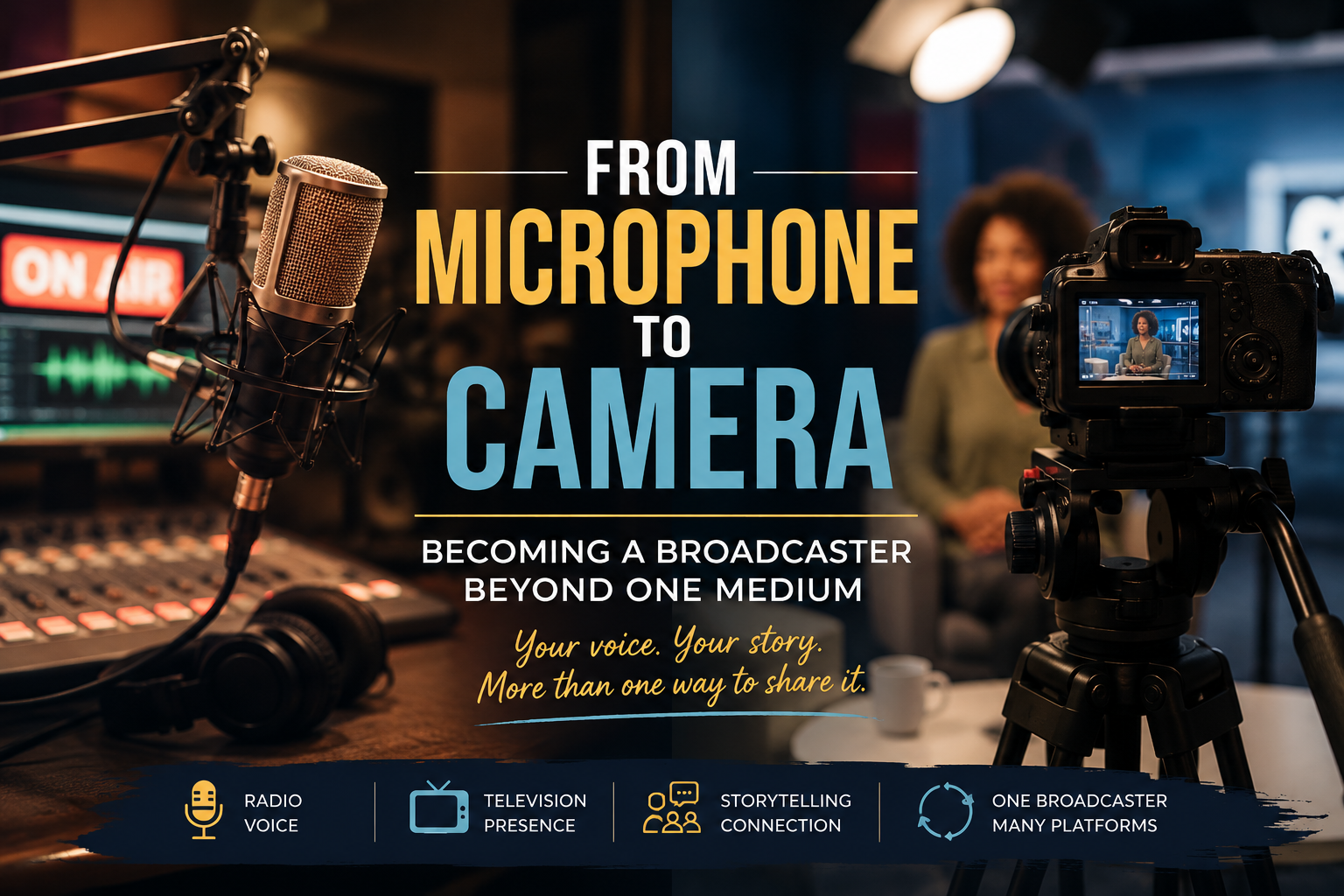
  • From Microphone to Camera: Becoming a Broadcaster Beyond One Medium

    From Microphone to Camera: Becoming a Broadcaster Beyond One Medium

    You may fall in love with radio first. You may dream of television. But in today’s changing media landscape, perhaps the bigger opportunity is learning how to become comfortable in both.

    There is something special about radio. You sit behind a microphone, put on your headphones and speak to people you cannot see. They don’t know what you’re wearing, what you’re doing with your hands or whether you glanced at your notes halfway through a sentence. All they have is your voice, and somehow you learn to use it to create pictures.

    For many aspiring broadcasters, that’s where the dream begins. They imagine themselves hosting a radio show, interviewing guests, introducing music and building a relationship with listeners. For others, the dream has always been television: the studio, the camera, the interviews and the opportunity to communicate with an audience that can both see and hear them.

    For a long time, we have treated these as fairly separate broadcasting paths. But the media landscape around us is changing, and perhaps the lines aren’t as clear as they once were.

    When Radio Meets Television

    Today, a radio interview can become a video clip. A television presenter can host a podcast. A radio personality may be expected to speak to followers through a phone camera, while a podcast can exist simultaneously as an audio programme and a video show.

    That doesn’t mean every broadcaster must do everything. There are exceptional radio broadcasters who may never want television, just as there are television presenters who have no desire to sit behind a radio microphone.

    But for an aspiring broadcaster, there is value in asking a slightly different question. Instead of only asking, “Do I want to work in radio or television?”, perhaps we should also ask:

    “How comfortable am I communicating when the medium changes?”

    Because being comfortable behind a microphone doesn’t automatically mean you’ll feel comfortable in front of a camera.

    I know that personally.

    When the Camera Comes On

    Give me a microphone, and I can talk. Audio feels familiar to me. I can concentrate on the conversation, the story and the person on the other side without thinking too much about myself.

    Put a camera in front of me, however, and something changes. Suddenly I become aware of where I’m looking, what I’m doing with my hands, how I’m sitting and what my face is doing. The communication hasn’t disappeared, but my awareness of being seen changes the experience completely.

    Ironically, being in front of the camera is exactly where I now want to grow. I want to talk about my projects visually. I want to explore video podcasting and become as comfortable communicating through a camera as I am through a microphone.

    And perhaps there is an important lesson in that:

    Experience in one medium doesn’t automatically remove the fear of another.

    Sometimes even an experienced broadcaster has to become a beginner again.

    Two Mediums, Different Muscles

    Radio asks you to create something the listener cannot see. Voice, tone, timing, listening and storytelling carry much of the experience. Television introduces another dimension because the audience can now see the communication happening.

    The skills aren’t completely separate, but neither are they identical.

    And this is where the changing media environment becomes interesting for anyone trying to enter broadcasting today. You may begin in community radio, online radio, television, podcasting, digital video or somewhere else entirely. Your first opportunity doesn’t necessarily have to determine the kind of broadcaster you eventually become.

    Perhaps the goal isn’t to master every platform.

    Perhaps it’s to become willing to stretch beyond the one that feels safest.

    Beyond the Platform

    There is something liberating about looking at broadcasting this way.

    If radio is where you feel at home, you don’t have to abandon it simply because video has become important. And if television is where you naturally shine, there may still be something valuable in discovering what happens when the pictures disappear and your voice has to carry the story.

    The point isn’t that one medium is better than the other.

    It’s that each one asks something different from the person communicating through it.

    And as radio, television, podcasting and digital content continue to overlap, versatility may become an increasingly valuable part of a broadcaster’s toolkit.

    For me, that means there is still another broadcasting challenge waiting.

    The camera.

    I’ve spent enough time being comfortable behind the microphone. Perhaps it’s time to discover what happens when I stop hiding behind it.

    And I suspect I’m not the only broadcaster who feels that way.

    The microphone and the camera may require different kinds of confidence, but perhaps becoming comfortable with both is a journey worth exploring.

    And that conversation?

    We’re only getting started.


    Continue the Conversation

    Are you more comfortable behind a microphone or in front of a camera?

    And if you’re a broadcaster who has successfully moved between radio, television, podcasting or digital video, what helped you become comfortable in a new medium?

    I’d love to hear your experience in the comments.

    If you enjoy reflections on broadcasting, career growth and navigating a changing media industry, subscribe to Reflections in Motion for new articles every Wednesday.

    Ready to Build Beyond the Microphone?

    If you’re beginning to think about how your broadcasting experience can create opportunities beyond one platform, my book From Broadcaster to Brand explores that journey—from professional identity and visibility to building something you own.

    📘 Explore From Broadcaster to Brand on Amazon:
    https://www.amazon.com/author/kgalalelontumelang

    And if podcasting is part of your next chapter, From Microphone to Money is a practical building guide, launching and monetising your podcast.

    🌐 Visit Reflections in Motion:
    https://reflectionsinmotion.blog

    Work With Me

    If you’d like to work with me around broadcasting, podcasting, content development, media training or communication, get in touch.

    📧 Email: lelon@reflectionsinmotion.blog
    🌐 Website: https://reflectionsinmotion.blog
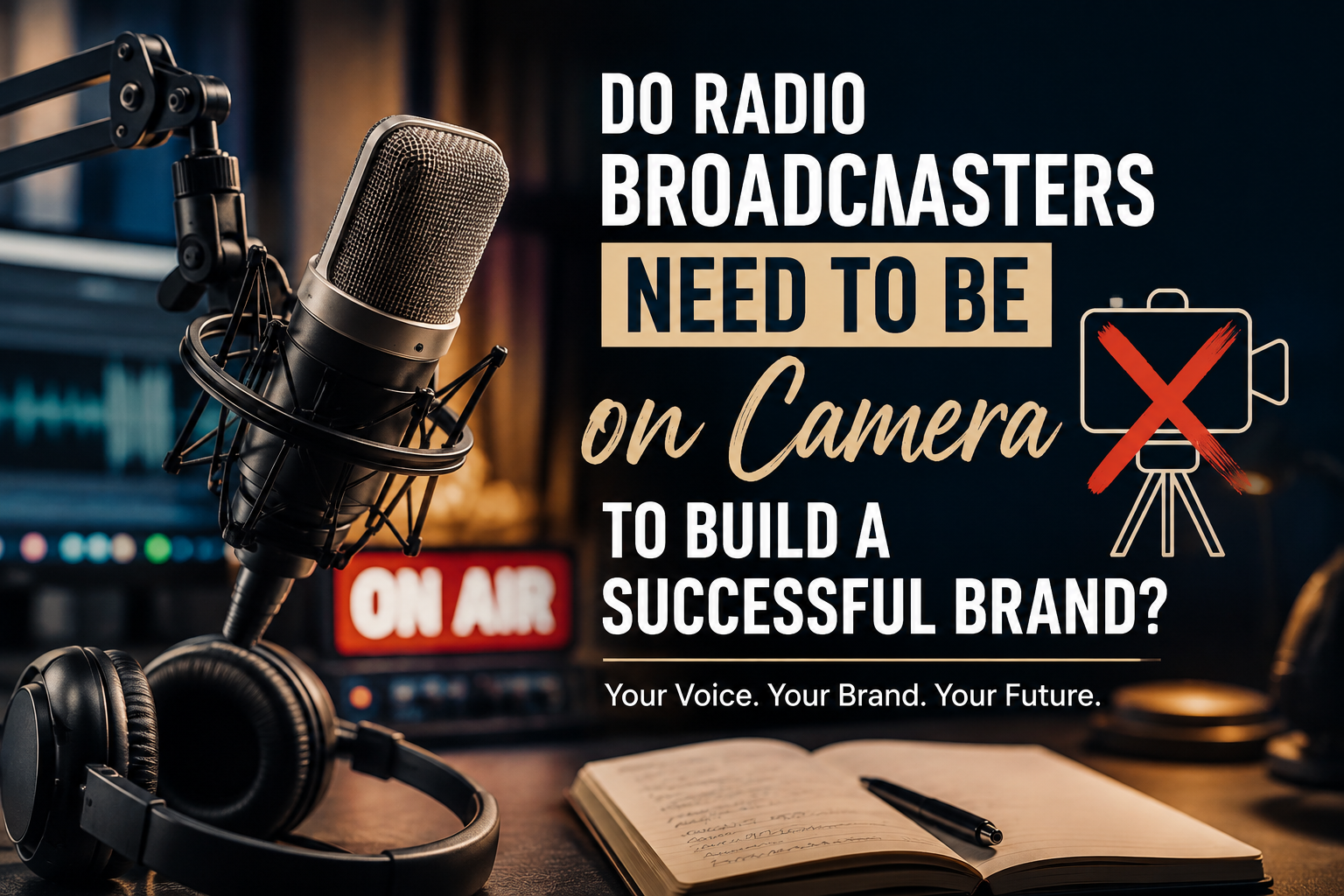

  • Do Radio Broadcasters Need to Be on Camera to Build a Successful Brand?

    Do Radio Broadcasters Need to Be on Camera to Build a Successful Brand?


    A Personal Reflection

    One of the biggest misconceptions about radio is that if you’re confident behind a microphone, you’ll naturally be confident in front of a camera.

    The truth is often very different.

    Many radio broadcasters are comfortable speaking to thousands of listeners every day, yet the moment a camera starts recording, their confidence disappears.

    For years, radio has been about imagination. Your audience hears your voice but never sees your face. You learn to paint pictures with words, connect through sound, and build relationships without ever stepping into the spotlight.

    Today’s digital world, however, seems to send a different message.

    “If you’re not on camera, you’re falling behind.”

    For many broadcasters, that’s an intimidating thought.

    It raises an important question:

    Can a radio broadcaster still build a successful brand without becoming a video personality?

    I believe the answer is yes.

    But like many things in broadcasting, the answer requires a shift in perspective.


    The Pressure to Be Seen

    Social media has changed the way audiences consume content.

    Everywhere you look, someone is encouraging creators to:

    • Start a YouTube channel.
    • Record video podcasts.
    • Go live on social media.
    • Post daily reels.
    • Share behind-the-scenes videos.

    It’s easy to conclude that video is now the only path to success.

    As a result, many talented radio broadcasters begin questioning themselves.

    “Maybe my career has reached its limit because I don’t enjoy being on camera.”

    That thought has stopped many people from sharing their expertise.

    Not because they lack talent.

    But because they believe they must become someone they’re not.


    Radio Has Always Been About Connection

    One of radio’s greatest strengths has never been the camera.

    It has always been connection.

    Listeners don’t return every day because they admire a broadcaster’s appearance.

    They return because they trust the voice.

    They feel understood.

    They enjoy the conversations.

    They value the stories.

    That ability to build trust through voice alone is a skill that many digital creators spend years trying to develop.

    Radio broadcasters already possess it.

    The challenge is learning how to use that strength beyond traditional broadcasting.


    Podcasts: A Natural Home for Radio Broadcasters

    If you’re a radio broadcaster who feels uncomfortable on camera, podcasting may be one of the most natural ways to expand your career.

    Podcasting allows you to build on the skills you’ve already developed:

    • interviewing
    • storytelling
    • scripting
    • active listening
    • audience engagement
    • voice presentation

    The format may be different, but the core skills remain the same.

    More importantly, podcasting gives you ownership.

    Unlike traditional broadcasting, where airtime belongs to an organisation, your podcast belongs to you.

    You choose the topics.

    You decide the format.

    You build the audience.

    And over time, you create an asset that continues to represent your expertise.


    Can You Really Make Money Without Being on Camera?

    This is one of the biggest questions broadcasters ask.

    The answer is yes—but perhaps not in the way many people imagine.

    A podcast doesn’t have to generate income directly to become financially valuable.

    Instead, it can become a platform that creates opportunities.

    Your podcast can help you:

    • attract speaking engagements
    • promote your books
    • introduce your coaching services
    • market training workshops
    • build trust with potential clients
    • grow an email newsletter
    • drive readers to your blog
    • create opportunities for sponsorships and partnerships

    In other words, your podcast becomes part of a larger personal brand.

    Sometimes the greatest value of a podcast isn’t the advertising revenue.

    It’s the credibility it builds.


    You Don’t Have to Choose Between Audio and Video

    One of the biggest mistakes creators make is believing they must choose one format forever.

    You don’t.

    Perhaps today your confidence lies behind the microphone.

    That’s perfectly acceptable.

    As your confidence grows, you might decide to record short video clips.

    Share behind-the-scenes moments.

    Film interviews.

    Or create educational content for social media.

    Growth doesn’t require abandoning your strengths.

    It requires building on them.


    Don’t Let Fear Make the Decision

    There is an important difference between making a strategic decision and making a fearful one.

    If audio is your preferred format because it aligns with your goals and your audience, that’s a strategic choice.

    If you’re avoiding every opportunity simply because you’re afraid of the camera, it may be worth asking yourself what is holding you back.

    Confidence isn’t built by waiting.

    It’s built by taking small, consistent steps outside your comfort zone.

    You don’t have to become a television presenter overnight.

    But you also don’t have to let fear decide the future of your career.


    Your Voice Is Still Your Greatest Asset

    Technology changes.

    Platforms evolve.

    Algorithms come and go.

    But one thing remains constant.

    People are drawn to authentic communication.

    As a broadcaster, your voice has always been more than a tool.

    It is how you educate.

    Encourage.

    Challenge.

    Inspire.

    Whether you use it on radio, in a podcast, on stage, or in a training room, your voice continues to have value.

    Never underestimate what years behind the microphone have taught you.


    A Quiet Reminder

    You don’t need to become someone else to build a successful broadcasting brand.

    The microphone that helped you connect with listeners yesterday can still help you build opportunities tomorrow.

    Your voice is not becoming less valuable. It simply has more places where it can be heard.


    Reflections in Motion

    Broadcasting is changing—but great communication never goes out of style.

    Through Reflections in Motion, I explore the lessons, challenges, and opportunities facing today’s broadcasters while encouraging professionals to build careers that extend beyond traditional media.


    Continue the Conversation

    If this reflection resonated with you, perhaps it’s time to start thinking beyond the microphone.

    My book, From Broadcaster to Brand, explores how broadcasters can transform their experience into sustainable opportunities by building a personal brand, creating multiple income streams, and taking ownership of their careers.

    📘 Get your copy on Amazon:
    https://www.amazon.com/author/kgalalelontumelang


    Work With Me

    If you’re a broadcaster, podcaster, media professional, or aspiring content creator looking to build your personal brand or create new opportunities beyond traditional broadcasting, I’d love to work with you.

    I offer:

    • 🎙️ Podcast coaching and launch guidance
    • 📻 Broadcasting and media career coaching
    • ✍🏽 Content writing and editing
    • 🎤 Voice-over services
    • 📚 Personal brand development for broadcasters

    🌐 Website: https://reflectionsinmotion.blog
    📧 Email: lelon@reflectionsinmotion.blog

    Let’s explore how your voice can become more than a career—it can become a brand.


    If you’ve enjoyed this article, subscribe to Reflections in Motion for weekly insights on broadcasting, personal branding, podcasting, and building a sustainable career beyond the microphone.

    💬 I’d love to hear your thoughts:

    If you’re a radio broadcaster, have you ever felt nervous about being on camera?

    Do you think podcasts give broadcasters a meaningful way to build their personal brands without relying entirely on video?

    Let’s continue the conversation in the comments.


    LELO

  • Is Broadcasting Still a Dream Career?

    Is Broadcasting Still a Dream Career?


    There was a time when becoming a broadcaster was the ultimate dream.

    For many, hearing their voice on the radio or seeing themselves on television represented success. It was a career filled with excitement, influence, and the opportunity to connect with thousands—sometimes millions—of people.

    It wasn’t simply a job.

    It was a calling.

    For many of us, broadcasting wasn’t something we accidentally stumbled into. It was the career we imagined long before we ever stepped behind a microphone or into a studio.

    Today, that dream still exists.

    But it looks very different from the one many broadcasters imagined years ago.

    Technology has transformed the media landscape. Audiences consume content differently. Career paths are less predictable, and opportunities now exist far beyond traditional radio and television.

    So, is broadcasting still a dream career?

    I believe the answer is yes.

    But today’s dream requires a different mindset.


    The Industry Has Changed

    Broadcasting is no longer the only place where audiences consume content.

    People listen to podcasts while commuting.

    They watch interviews on YouTube.

    They follow breaking news on social media.

    They subscribe to newsletters.

    They discover personalities through short-form video platforms.

    The microphone is no longer the only way to reach an audience.

    Today’s broadcasters operate within a much larger content ecosystem.

    That isn’t something to fear.

    It’s something to embrace.

    The good news is that the skills developed in broadcasting are more valuable than ever—they’re simply being used in more places than before.


    The Skills Still Matter

    Despite all the technological changes, the core skills of broadcasting remain timeless.

    Great broadcasters know how to:

    • communicate clearly
    • tell compelling stories
    • ask meaningful questions
    • listen with intention
    • connect emotionally with an audience

    Those abilities never go out of style.

    What has changed is where they can be applied.

    Today’s broadcasters are succeeding in:

    • podcasting
    • digital media
    • corporate communications
    • content strategy
    • public speaking
    • media training
    • entrepreneurship
    • consulting

    The opportunities are broader than ever before.

    The microphone is no longer the destination.

    It’s often the starting point.


    Success Looks Different Today

    Years ago, success was often measured by the station you worked for or the programme you hosted.

    Those achievements are still worth celebrating.

    But they are no longer the only measure of success.

    Today’s broadcasters are building:

    • personal brands
    • podcasts
    • newsletters
    • online communities
    • consulting businesses
    • training companies
    • digital publications

    Success is becoming less about where you work…

    …and more about what you create.

    Broadcasters building long-term careers are increasingly becoming owners rather than simply employees.


    Job Security Is No Longer Guaranteed

    One of the biggest changes in broadcasting is how we think about career security.

    In the past, many professionals expected to spend decades with one employer.

    Today, contracts end.

    Budgets change.

    Technology evolves.

    Entire departments can disappear almost overnight.

    That’s why the safest career is no longer built solely on a job title.

    It’s built on assets that stay with you wherever you go.

    Your reputation.

    Your expertise.

    Your relationships.

    Your credibility.

    Your personal brand.

    Those are assets no restructuring can take away.


    Adaptability Is the New Career Advantage

    Every generation of broadcasters has faced change.

    Some resisted it.

    Others embraced it.

    History has shown which group tends to thrive.

    The broadcasters building sustainable careers remain curious.

    They keep learning.

    They experiment with new platforms.

    They explore emerging technologies.

    They develop new skills before they become essential.

    Experience provides a strong foundation.

    Adaptability keeps that experience relevant.

    The industry will continue changing.

    The question is whether we’re willing to change with it.


    Broadcasting Is Bigger Than Broadcasting

    Perhaps one of the biggest mindset shifts is recognising that broadcasting itself is no longer the finish line.

    It can become the foundation for something much bigger.

    A broadcaster can become:

    • an author
    • a trainer
    • a consultant
    • a keynote speaker
    • a content strategist
    • a business owner
    • a digital creator

    The skills transfer.

    The influence expands.

    The opportunities multiply.

    When broadcasters stop seeing themselves only as presenters and begin seeing themselves as communicators, entirely new possibilities emerge.


    So, Is It Still a Dream Career?

    Absolutely.

    But perhaps the dream has evolved.

    The dream is no longer simply landing a job at a respected station.

    The dream is building a career that reflects your passion, your expertise, and your ability to evolve.

    It’s creating opportunities instead of waiting for them.

    It’s owning your voice instead of depending on one platform.

    It’s recognising that broadcasting is not the end of your journey.

    It may be the beginning of something even greater.


    A Different Way to Think

    Perhaps we should stop asking whether broadcasting is still a dream career.

    Instead, we should ask:

    “Am I building a career that can grow with the industry?”

    Because careers built on learning, adaptability, visibility, and ownership will always have a future.


    A Quiet Reminder

    Broadcasting is still one of the most rewarding professions in the world.

    But the broadcasters who will thrive tomorrow are those who understand that the microphone is only the beginning of their story.


    Work With Me

    If your organisation is looking to strengthen its communication, leadership, fundraising performance, or team development, I’d love to help.

    I work with organisations, fundraising teams, media professionals, and leaders through training, coaching, speaking engagements, and strategic communication support.

    Whether you’re developing confident communicators, building stronger fundraising teams, or helping broadcasters grow beyond traditional media, let’s start the conversation.

    Let’s work together to build people, strengthen teams, and create lasting impact.


    Want to Go Further?

    If you’re interested in using communication and real-world experience to create income, I share more practical strategies in my eBooks.

    📘 Explore here: https://www.amazon.com/author/kgalalelontumelang


    Join the Conversation

    If you’ve enjoyed this article, consider subscribing to Reflections in Motion for weekly insights on broadcasting, leadership, fundraising, communication, and personal growth.

    I’d also love to hear your thoughts.

    Do you believe broadcasting is still a dream career? What has changed the most since you first entered—or dreamed of entering—the industry?

    Let’s continue the conversation in the comments.

    LELO