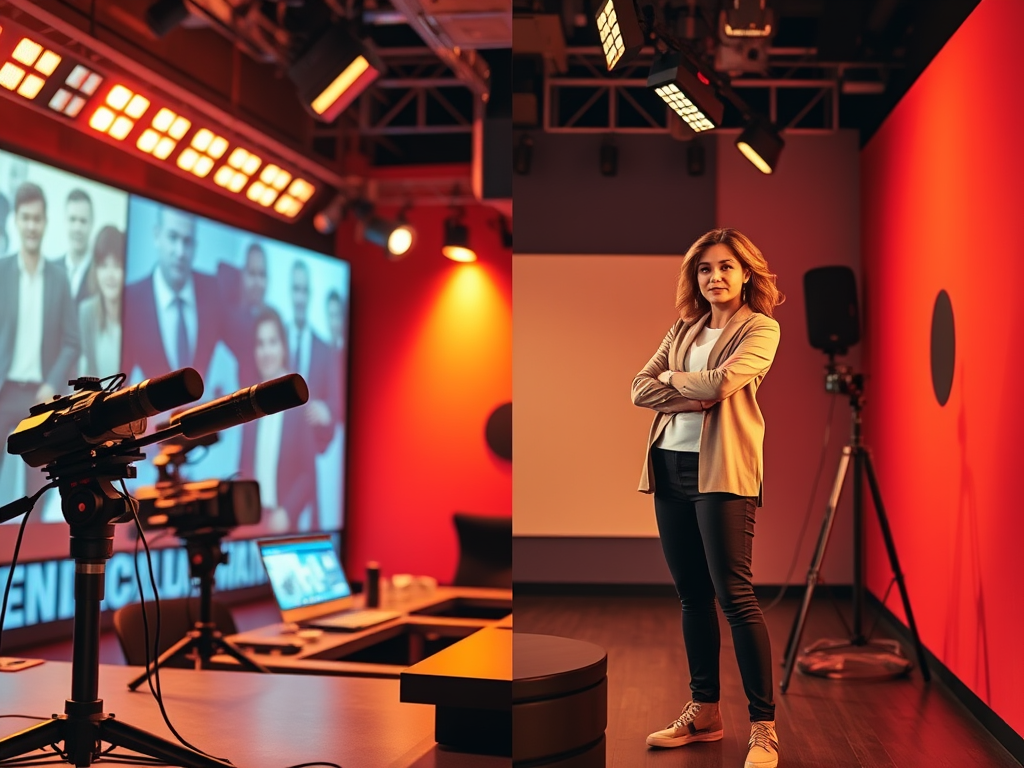
Tag: platform vs brand

  • What Broadcasters Lose When They Don’t Build Outside the Studio

    What Broadcasters Lose When They Don’t Build Outside the Studio

    Not building outside the studio doesn’t feel like a problem at first.

    You’re working.
    You’re visible.
    You’re growing within the platform.

    Everything feels stable.

    Until something shifts.

    And when it does, the loss is not always immediate—but it is real.


    The Loss of Control

    When your work exists entirely within one platform, your ability to move becomes limited.

    Decisions are made above you.
    Changes happen around you.
    Direction shifts without your input.

    And suddenly, you realise:

    You were present—but not in control.


    The Loss of Opportunity

    Broadcasting opens doors.

    But staying only within the studio can quietly close others.

    You may miss:

    • collaborations outside media
    • independent income streams
    • opportunities to expand your voice into new spaces

    Not because you lack ability.

    But because you never built beyond the platform.


    The Loss of Identity

    When everything you do is tied to where you work, your identity becomes location-based.

    People know:

    • your station
    • your show
    • your time slot

    But not always what you stand for.

    So when the platform changes, the recognition fades faster than it should.

    Because it was never anchored in you.


    The Loss of Continuity

    Audiences don’t disappear.

    But access does.

    If your connection to your audience only exists within one space, it becomes fragile.

    When the platform changes, people don’t know where to find you.

    And the relationship you spent years building becomes difficult to maintain.


    The Loss of Confidence

    Dependence can feel like stability.

    But over time, it creates hesitation.

    You begin to wonder:

    • Can I do this outside this space?
    • Will people still listen?

    Not because your ability has changed.

    But because you haven’t tested it beyond the platform.


    What This Really Means

    None of these losses happens overnight.

    They happen gradually.

    Quietly.

    Until one day, you realise you’ve built a career that works well—
    but only within a specific environment.

    And that environment is not guaranteed.


    A Different Way to Think

    Building outside the studio doesn’t mean leaving broadcasting.

    It means strengthening yourself within it.

    It means creating:

    • spaces you control
    • connections that move with you
    • a voice that is not dependent on one platform

    Because what you build outside the studio
    protects what you do inside it.


    A Quiet Reminder

    You don’t need to wait for something to go wrong to start building.

    The best time to create independence is while you still have access.


    A Quiet Invitation

    If this resonates, it may be because you’ve started to see the limits of staying in one space.

    From Broadcaster to Brand explores how to build beyond those limits—how to create identity, ownership, and sustainability in a way that doesn’t require you to abandon your career, but strengthens it.

    📘 Find From Broadcaster to Brand on Amazon here:
    👉🏽 https://www.amazon.com/author/kgalalelontumelang

    If you’d like more reflections like this, consider subscribing to the blog. It’s a space for broadcasters who want to grow with intention—and build something that lasts.

    💬 I’d love to hear from you:
    What is one thing you’ve been meaning to build outside the studio—but haven’t started yet?

    LELO

  • You Can Be Visible and Still Be Powerless

    You Can Be Visible and Still Be Powerless

    Visibility looks like power.

    People recognise you.
    They hear your voice.
    They engage with your content.

    From the outside, it seems like you’ve made it.

    But visibility can be misleading.

    Because being seen is not the same as being in control.


    The Illusion of Being “Out There”

    Broadcasting puts you in front of people.

    You’re heard.
    You’re followed.
    You’re part of conversations.

    And over time, it can feel like you’ve built something solid.

    But much of that visibility exists within systems you do not own.

    The station decides when you’re on air.
    The platform decides who sees your content.
    The structure shapes your reach.

    So while you are visible, your presence is still dependent.


    When Visibility Is Borrowed

    Most broadcasters operate within borrowed spaces.

    A radio station.
    A media platform.
    A social media account.

    These spaces give you reach—but they also define your limits.

    They can amplify you.
    But they can also reduce your visibility just as quickly.

    And when that happens, many realise something uncomfortable:

    The visibility was never fully theirs.


    Attention vs Power

    It’s easy to confuse attention with power.

    Attention means:

    • People are watching
    • People are listening
    • People are reacting

    Power means:

    • You can reach your audience directly
    • You control your message
    • You are not dependent on a single platform

    Attention is temporary.

    Power is sustainable.


    Why Some Visible Voices Still Feel Stuck

    Some broadcasters are widely recognised—but still feel uncertain about their future.

    Not because they lack talent.

    But because their visibility hasn’t translated into independence.

    They are known, but not in control.
    Heard, but not anchored.

    And that creates a quiet tension:

    “How can I be this visible… and still feel this limited?”


    The Shift From Being Seen to Being Positioned

    Visibility puts you in front of people.

    Positioning gives that visibility direction.

    It defines:

    • What you stand for
    • How people understand you
    • Why they should continue following you beyond one platform

    Without positioning, visibility fades when the platform changes.

    With positioning, your audience follows you—because they are connected to you, not just where you appear.


    Building Beyond Visibility

    The goal is not to reject visibility.

    It is to build beyond it.

    To move from:

    • being seen
      to
    • being established

    This is where ownership matters.

    When you create spaces where your voice lives independently—
    you begin to turn visibility into something more stable.

    Something that can grow with you.


    A Quiet Reminder

    Visibility can open doors.

    But it does not guarantee stability.

    Ownership, clarity, and direct connection are what turn visibility into something lasting.


    A Quiet Invitation

    If this resonates, it may be because you’ve experienced the gap between being seen and being in control.

    From Broadcaster to Brand explores how to move beyond visibility—towards ownership, positioning, and long-term sustainability in your career.

    📘 Find From Broadcaster to Brand on Amazon here:
    👉🏽 https://www.amazon.com/author/kgalalelontumelang

    If you’d like more reflections like this, consider subscribing to the blog. This is a space for broadcasters who want to build something that lasts—beyond attention, platforms, and temporary visibility.

    💬 I’d love to hear from you:
    Have you ever felt visible—but not in control?

    LELO

  • Why Broadcasters Need to Own Their Audience

    Why Broadcasters Need to Own Their Audience

    Many broadcasters believe they have an audience.

    But in reality, what they have is access.

    Access to listeners.
    Access to airtime.
    Access to a platform that connects them to people.

    And while that access is powerful, it can also be misleading.

    Because access is not ownership.


    The Illusion of Having an Audience

    When you’re on air, it feels like the audience belongs to you.

    They recognise your voice.
    They respond to your segments.
    They engage with your content.

    But the connection is built inside a system you do not control.

    The station owns:

    • the platform
    • the distribution
    • the relationship infrastructure

    So when your access ends, the connection weakens—sometimes instantly.

    Not because the audience disappeared.
    But because the channel did.


    Access vs Ownership

    Let’s make the distinction clear.

    Access means:

    • You can reach people through a platform
    • You can communicate within a structure
    • You benefit from an existing audience

    Ownership means:

    • You can reach your audience directly
    • You control how and when you communicate
    • Your connection does not depend on employment

    Most broadcasters build access.

    Very few build ownership.


    What Happens When You Don’t Own the Relationship

    When broadcasters rely only on platforms, they face a difficult reality when things change.

    Contracts end.
    Shows move.
    Formats shift.

    And suddenly, the question becomes:

    How do I reach the people who used to listen to me?

    Without ownership, that question has no clear answer.

    Because the connection was never fully yours to start with.


    Owning Your Audience Changes Everything

    When you begin to build direct connection, your position changes.

    You are no longer dependent on a single platform to be heard.

    You create continuity.

    Your audience can:

    • follow your thinking
    • engage with your ideas
    • grow with you beyond one space

    Ownership doesn’t mean leaving broadcasting.

    It means strengthening your independence within it.


    What Ownership Can Look Like

    Owning your audience doesn’t need a massive following.

    It requires intention.

    It can start with:

    • a personal blog
    • an email newsletter
    • a podcast you control
    • a professional platform where your ideas live

    These are not replacements for broadcasting.

    They are extensions of your voice.

    Places where your audience can find you—regardless of where you work.


    The Real Shift

    The goal is not just to be heard.

    It is to be reachable.

    Because being heard depends on the platform.

    But being reachable depends on you.


    A Quiet Invitation

    If this idea of ownership resonates, it may be because you’ve already sensed the limitations of relying only on platforms.

    From Broadcaster to Brand explores how broadcasters can move from access to ownership—building identity, connection, and sustainability beyond employment.

    📘 Find From Broadcaster to Brand on Amazon here:
    👉🏽 https://www.amazon.com/author/kgalalelontumelang

    If you’d like more reflections like this, consider subscribing to the blog. It’s a space for broadcasters who want to build something that lasts—beyond contracts, platforms, and changing industry dynamics.

    💬 I’d love to hear your thoughts:
    Can you share one method to start building a direct connection with your audience today?

    LELO

  • Understanding the Difference: Platform vs. Brand in Broadcasting

    Understanding the Difference: Platform vs. Brand in Broadcasting

    Many broadcasters confuse visibility with ownership.

    They believe that being on air means being established.
    That having a show means having a brand.
    That access equals security.

    It doesn’t.

    And that confusion is where most career panic begins.

    Before you can build sustainability in media, you must understand one foundational truth:

    A platform is where you are seen.
    A brand is what you are known for.

    They are not the same thing.


    What Is a Platform?

    A platform is the vehicle.

    It is:

    • The radio station
    • The television channel
    • The podcast network
    • The publication
    • The organisation that gives you access to an audience

    Platforms provides:

    • Reach
    • Structure
    • Distribution
    • Immediate visibility

    But platforms are owned by someone else.

    They can:

    • Change direction
    • Replace talent
    • Cancel shows
    • End contracts

    A platform can elevate you.
    But it does not belong to you.


    What Is a Brand?

    A brand is perception.

    It is:

    • The association people make when they hear your name
    • The consistent value you provide
    • The perspective you are known for
    • The trust you build over time

    A brand is portable.

    It moves with you:

    • From station to station
    • From media to business
    • From employment to independence

    If the platform disappears but people still seek you out, that is a brand.


    The Critical Differences

    Let’s simplify it.

    PlatformBrand
    Owned by employerOwned by you
    Gives you visibilityGives you identity
    Temporary accessLong-term perception
    Can be taken awayMoves with you
    Based on roleBased on value

    When broadcasters panic at the end of contracts, it is usually because they built platform strength, not brand strength.


    Why This Distinction Matters

    If you build only a platform presence:
    Your relevance is conditional.

    If you build a brand:
    Your relevance becomes transferable.

    That’s the difference between:

    • “I work at…”
      and
    • “I am known for…”

    The first depends on employment.
    The second depends on clarity.


    Signs You’ve Built a Platform But Not a Brand

    Be honest with yourself:

    • If your show ends, does your audience follow you?
    • If you change stations, does your credibility transfer?
    • If someone asks what you stand for, can you answer clearly?
    • Are you known for something specific beyond your job title?

    If those questions feel uncomfortable, it’s not criticism.

    It’s awareness.

    And awareness is where ownership begins.


    How to Start Building a Brand While on a Platform

    You don’t need to resign.
    You don’t need to rebel.
    You don’t need to compete with your employer.

    You need clarity and consistency.

    Start by defining:

    • What themes do I consistently speak about?
    • What problems do I care about?
    • What values shape my work?
    • What do people repeatedly compliment me for?

    Then build small assets you control:

    • A personal website
    • Thoughtful LinkedIn presence
    • Writing that carries your perspective
    • Projects outside your job description

    The platform can amplify you.

    But the brand must originate from you.


    The Real Goal

    The goal is not to leave broadcasting.

    The goal is to ensure that if the platform changes,
    you don’t disappear with it.

    A strong platform gives you reach.

    A strong brand gives you longevity.

    And longevity is what sustains careers.


    A Quiet Invitation

    If this distinction between platform and brand resonates, it’s because you’re already thinking beyond employment.

    From Broadcaster to Brand explores this shift in depth. It explains how to build identity, ownership, and sustainability. This is done without becoming performative or self-promotional.

    📘 You can find From Broadcaster to Brand on Amazon here:
    👉🏽 https://www.amazon.com/author/kgalalelontumelang

    If you’d like more reflections like this, subscribe to the blog. Join a growing community of broadcasters learning to build careers. Their careers don’t collapse when access changes.

    💬 I’d love to hear from you:
    Have you built more platform strength or brand strength so far?

    LELO