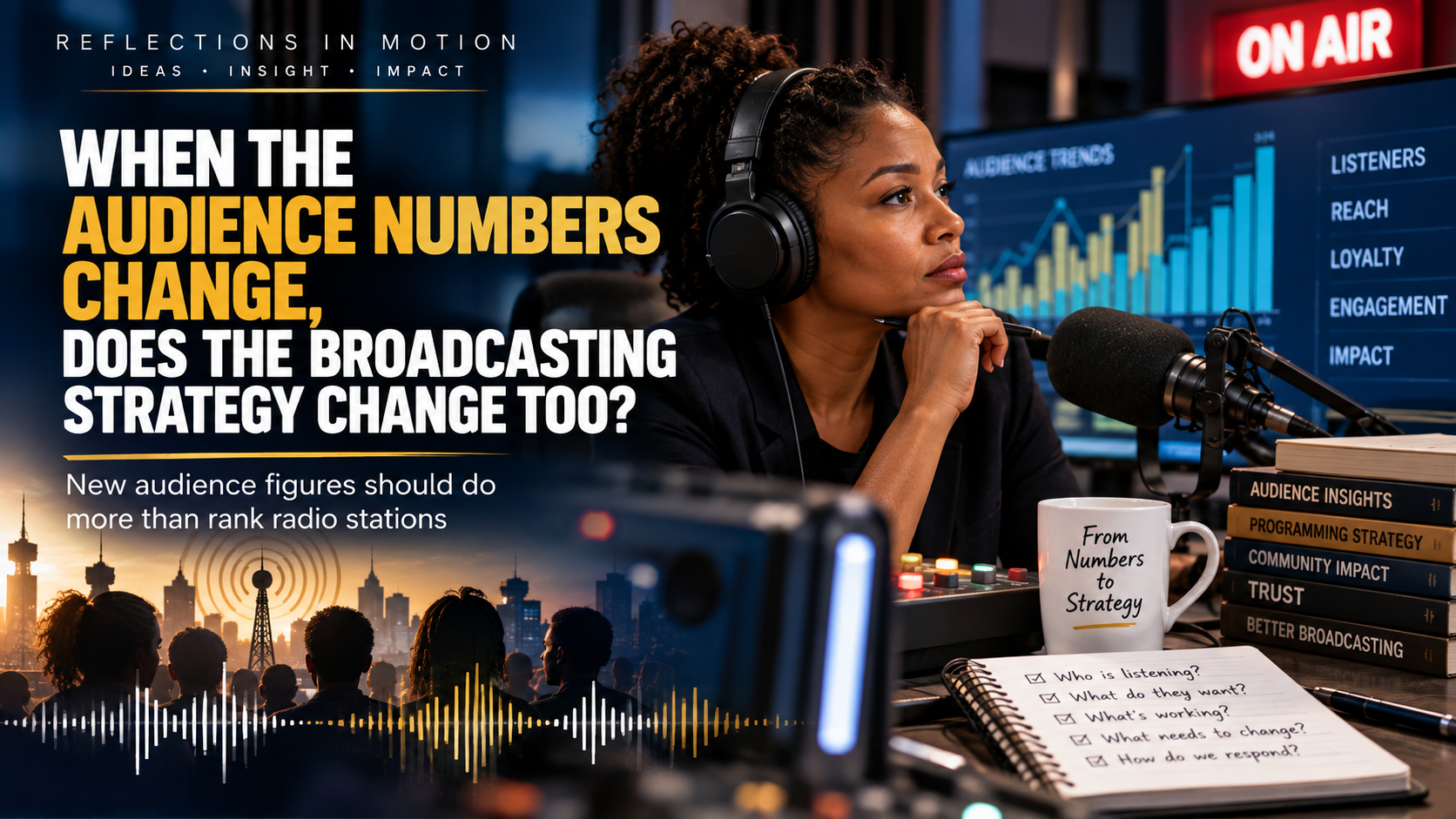
New audience figures should do more than rank radio stations
South Africa is reportedly approaching an important moment in radio audience measurement.
According to The Media Online, the Broadcast Research Council’s new Radio Audience Measurement Survey (RAMS) is moving closer to completing its first full annual sample. The publication reported that the first three waves had reached 29,380 respondents—more than 75% of the planned national sample of 36,000 people. The fourth wave was expected to complete the annual sample, followed by validation before detailed audience figures are released.
Once completed and validated, the research is intended to provide the industry with a new radio audience measurement currency.
But better numbers will matter only if broadcasters know what to do with them.
Audience Measurement Is Not Just a Scoreboard
Radio audience figures inevitably invite comparison. When the numbers rise, stations celebrate. When they fall, presenters, producers and programme managers may find themselves asking what changed—and what needs to change with it.
But audience research should do more than tell us who is ahead. It should help broadcasters understand their listeners: when they listen, how they listen, which programmes connect with them and how listening behaviour may be changing.
A large audience may look impressive, but reach alone does not always tell us about loyalty, trust or impact. A listener may tune in for a competition, a major interview or a controversial conversation and never return. Another programme may have a smaller audience but build a strong and consistent relationship with the community it serves.
The number tells us that someone arrived. It does not always tell us why they stayed—or why they left.
When Numbers Start Defining Success
It is easy to become emotionally attached to numbers, and radio is not alone in this. Television watches ratings, print media tracks circulation and readership, podcasters watch listeners and subscribers, while digital platforms track views, clicks and engagement. Different mediums use different measurements, but the temptation to allow the numbers to define success can be remarkably similar.
For radio, the danger comes when audience figures stop informing strategy and begin dictating it. If ratings become the only measure of success, stations may begin chasing temporary attention. Sensational topics can replace meaningful conversations. Familiar voices may be protected simply because they are known, while new ideas may be rejected because they appear too risky.
That can create visibility without necessarily creating better broadcasting.
Audience data matters. Broadcasters need to know whether people are listening and whether programming decisions are working. But the figures become more useful when they lead to better questions.
What are listeners responding to? Which programmes are building loyalty? Are audiences staying with the station beyond one popular show or personality? And when the numbers change, do we understand why before changing the strategy?
Numbers Should Lead to Better Broadcasting
When the new RAMS audience figures are eventually released, comparisons will be unavoidable. There will be interest in who gained listeners, who lost them and which stations or programmes appear strongest.
But perhaps the more valuable conversation begins after the rankings.
What will broadcasters learn from the information? Will it help stations understand changing listener behaviour? Will programme teams use it to strengthen what is already working? Will declining figures automatically trigger changes, or will broadcasters first look more closely at what those numbers actually represent?
Audience measurement should inform editorial and programming decisions. It should not replace editorial judgement.
Because a number can tell a station where it stands. Understanding the audience behind that number can help it decide where to go next.
Reflections In Motion — Ideas • Insight • Impact
Continue the Conversation
What should matter most when measuring a radio programme’s success: audience size, listener loyalty, community impact—or something else?
Share your thoughts in the comments.
From Broadcaster to Brand
Broadcasting is changing, and so are the opportunities available beyond the traditional platform. From Broadcaster to Brand explores how broadcasters can begin turning their experience, skills and knowledge into something they own.
Get From Broadcaster to Brand →
https://reflectionsinmotion.blog/shop/
Work With Me
I offer broadcasting, podcasting, content development and language editing services through REBIETH Productions and Entertainment.
📧 lelon@reflectionsinmotion.blog
🌐 https://reflectionsinmotion.blog
Source
The Media Online: BRC’s new RAMS survey moves closer to a new radio currency launch.