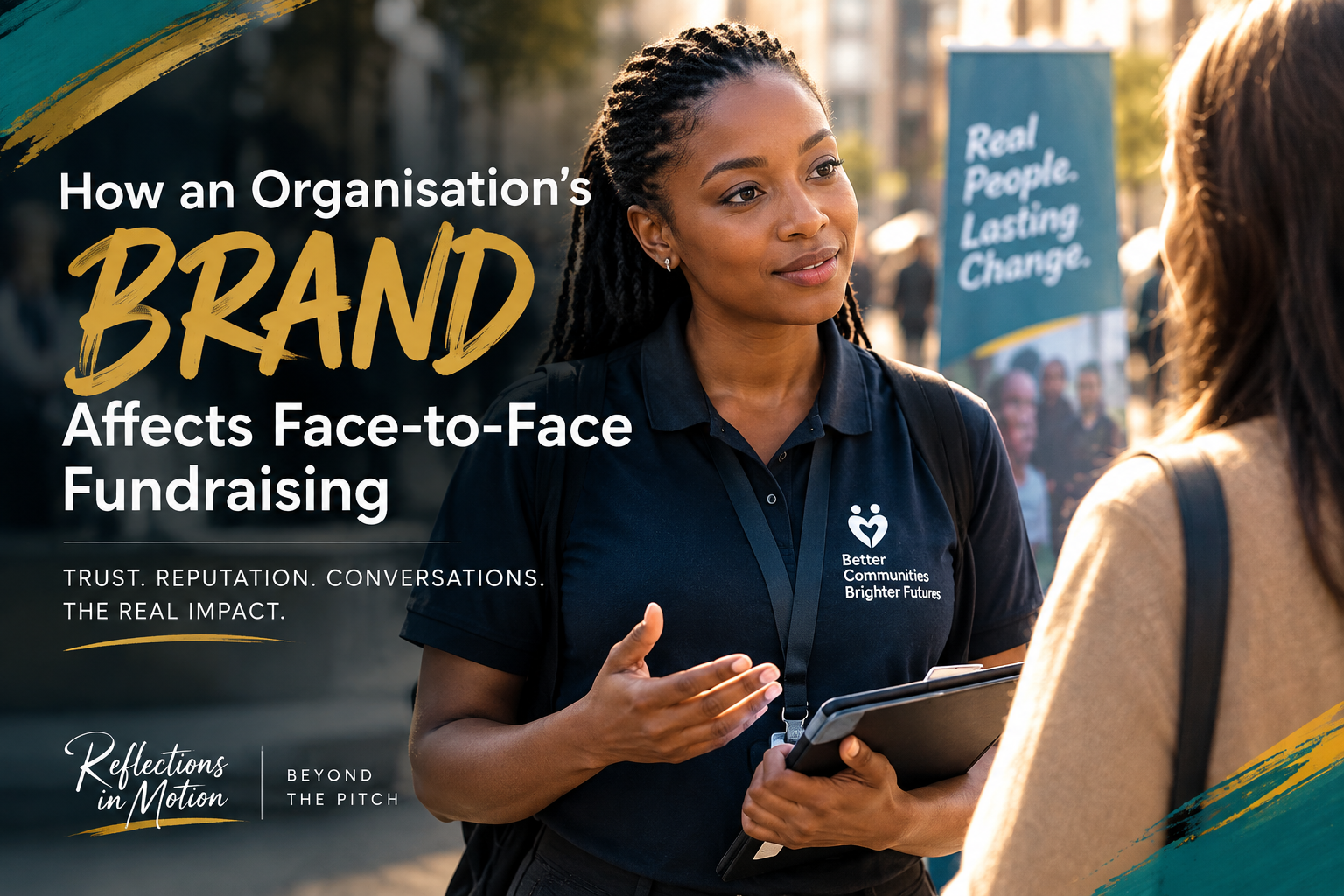
A fundraiser approaches someone in a shopping centre.
Before they can finish introducing themselves, the person notices the logo on their shirt.
“Oh, I know that organisation.”
Sometimes that recognition makes the conversation easier.
Sometimes it makes it much harder.
Because a face-to-face fundraiser never represents only themselves.
They carry the organisation’s brand into every conversation.
Long before the fundraiser says a word, the person standing in front of them may already have an opinion—shaped by news coverage, social media, advertising, personal experience or something they heard from someone else.
And on the frontline, that reputation matters.
Being Known Is Not the Same as Being Trusted
Working for a recognised organisation can be a tremendous advantage.
People may already understand the mission, have seen its work or even supported it before. The fundraiser doesn’t have to spend the first few minutes establishing who the organisation is.
Recognition creates familiarity.
And familiarity can help open the door to trust.
But there is an important distinction:
Being known does not necessarily mean being trusted.
A well-known organisation can also attract criticism.
A potential donor might ask:
“Where does the money actually go?”
“I heard something about your organisation.”
“Why should I donate when money is being spent on fundraising?”
Suddenly, the fundraiser is dealing with a conversation they did not create.
How they respond can either strengthen trust—or damage it further.
Don’t Fight the Donor
When someone criticises an organisation you represent, the instinct may be to defend it immediately.
That is understandable.
But fundraising is not about winning arguments.
Sometimes the most professional response begins with listening.
“I understand why you’d want to ask about that.”
Or:
“That’s a fair question. Let me explain what I know.”
Acknowledging someone’s concern doesn’t mean agreeing with everything they say.
It means recognising that donors have the right to ask questions before deciding where to put their money.
And sometimes, what sounds like criticism is actually a request for reassurance.
Never Invent an Answer
This is where good organisational training becomes essential.
Fundraisers need more than a strong pitch. They need enough knowledge to represent the organisation accurately.
But they also need to know the limits of that knowledge.
If you don’t know the answer, don’t invent one simply because you feel pressure to defend the organisation.
There is nothing wrong with saying:
“I don’t want to give you incorrect information. I can show you where to find the organisation’s official information.”
That isn’t weakness.
It is credibility.
Fundraisers should also avoid making promises or commenting on organisational decisions, investigations or financial matters they have not been authorised to discuss.
Sometimes the most professional answer is knowing when to refer the question.
What Happens When Nobody Knows the Brand?
For smaller or newer organisations, the challenge is different.
Instead of criticism, the fundraiser may hear:
“I’ve never heard of you.”
Now the fundraiser has another job to do.
They must establish credibility.
Who is the organisation? What does it do? Who does it serve? What difference has it made? Why should this person trust it?
This is where storytelling becomes especially important.
When the organisation’s name cannot create immediate recognition, the fundraiser begins building that recognition one conversation at a time.
The Relationship Works Both Ways
An organisation’s reputation affects the fundraiser.
But the fundraiser also affects the organisation’s reputation.
For some members of the public, a face-to-face fundraiser may be the only representative of that organisation they ever meet.
That interaction becomes part of the brand.
A fundraiser who is respectful, knowledgeable and professional can strengthen trust—even when the person chooses not to donate.
An aggressive, dismissive or poorly informed fundraiser can do the opposite.
One bad interaction may travel much further than that conversation.
That person can tell friends. They can post about it online. They can decide never to support the organisation again.
This means face-to-face fundraising is not only donor acquisition.
It is also brand experience.
Organisations Must Prepare the People Wearing Their Logo
Giving someone a branded shirt and teaching them a pitch is not enough.
Fundraisers should understand the organisation’s mission, programmes and impact. They should know how donations are used, the common questions donors ask and the criticism they are likely to encounter.
Most importantly, they should understand what they are authorised to explain—and when a question should be referred to an official source.
Because when an organisation sends a fundraiser into a public space wearing its name, that person becomes part of its public communication.
The fundraiser shouldn’t have to discover the organisation’s reputational challenges from a stranger in the middle of a pitch.
They should be prepared before they enter the field.
Final Thoughts
Face-to-face fundraising puts an organisation’s brand directly into the hands of people.
Not through an advertisement.
Not through a press release.
Not through a social media post.
Through another human being.
A strong reputation can open conversations. A damaged reputation can make those conversations more difficult. And an unknown brand requires fundraisers to work harder to establish trust.
But the responsibility cannot sit with the fundraiser alone.
Organisations must give their frontline teams the knowledge, training and support they need to represent the brand confidently and honestly.
Because every fundraiser standing in a public space is doing more than asking for donations.
They are representing your brand.
And every conversation is an opportunity either to strengthen it—or weaken it.
Beyond the Pitch
Face-to-face fundraising is about far more than asking for donations.
It’s about trust, communication, leadership, resilience and the human relationships behind every fundraising conversation.
Through Beyond the Pitch, I explore the realities of face-to-face fundraising and the lessons organisations, leaders and fundraisers can learn from the field.
Continue the Conversation
I’d love to hear from fundraisers and fundraising leaders:
Have you ever had a donor challenge you because of something they had heard about the organisation you represented? How did you handle the conversation?
Share your experience in the comments.
If you enjoy practical conversations about fundraising, leadership and developing stronger fundraising teams, subscribe to Reflections in Motion for more from Beyond the Pitch.
Want to Go Further?
My book, Beyond the Pitch: The Art of Face-to-Face Fundraising, explores the communication, psychology and human connection behind successful face-to-face fundraising.
Explore my books on Amazon:
https://www.amazon.com/author/kgalalelontumelang
Work With Me
If your organisation or fundraising team needs support with face-to-face fundraising, fundraiser development, team coaching, communication or leadership, I’d love to hear from you.
Email: lelon@reflectionsinmotion.blog
Website: https://reflectionsinmotion.blog