Tag: communication skills

  • Confidence vs. Competence: What Really Makes a Great Fundraiser?

    Confidence vs. Competence: What Really Makes a Great Fundraiser?

    In face-to-face fundraising, confidence is often seen as the defining trait of success.

    The ability to approach strangers.
    To speak clearly.
    To hold attention.
    To handle rejection without hesitation.

    It looks powerful.

    And for a long time, I believed the same thing:

    If I were more confident, I would perform better.

    But the field has a way of challenging what we think we know.

    Because over time, something becomes clear:

    Confidence is visible.
    But competence is what delivers results.


    The Confidence Illusion

    Confidence can be convincing.

    A confident fundraiser walks with certainty.
    Speaks smoothly.
    Approaches without hesitation.

    From the outside, it looks like they have everything under control.

    But confidence can sometimes create a false sense of effectiveness.

    Because being confident doesn’t always mean:

    • You’re listening
    • You’re adapting
    • You’re connecting

    It simply means you’re comfortable expressing yourself.

    And in fundraising, expression is only part of the work.


    What Competence Really Looks Like

    Competence is quieter.

    It doesn’t always stand out immediately.

    But it shows up in the way a fundraiser:

    • Reads body language
    • Adjusts their approach
    • Listens more than they speak
    • Knows when to pause
    • Respects when someone isn’t ready

    A competent fundraiser understands that every interaction is different.

    They don’t rely on one script.
    They respond to the moment.

    And that’s where real connection happens.


    A Lesson From the Field

    I remember a period where I focused heavily on sounding confident.

    I worked on my tone.
    My delivery.
    My approach.

    And while it helped me start more conversations, something felt off.

    Some interactions didn’t go beyond the surface.

    People listened — but they didn’t engage.

    That’s when I realised:

    I was focused on how I sounded,
    not on how the interaction felt.

    So I shifted.

    I started listening more.
    Observing more.
    Adjusting more.

    And slowly, the quality of my conversations changed.

    Not because I became more confident —
    but because I became more aware.


    How Confidence Is Actually Built

    Here’s the irony:

    Confidence doesn’t come first.

    It’s built through competence.

    Through:

    • Repeated conversations
    • Missed opportunities
    • Learning what works — and what doesn’t
    • Sitting with discomfort instead of avoiding it

    Real confidence is not loud.

    It’s steady.

    It comes from knowing:

    I may not control the outcome, but I understand the process.


    When Confidence Isn’t Enough

    There are moments in the field where confidence alone falls short.

    When someone challenges you.
    When a conversation becomes emotional.
    When someone hesitates or pushes back.

    In those moments, confidence without competence can feel empty.

    But competence gives you something to rely on:

    • Awareness
    • Patience
    • Adaptability

    It allows you to stay grounded, even when the interaction is uncertain.


    The Balance That Matters

    This is not about choosing one over the other.

    The best fundraisers develop both.

    Confidence helps you start.
    Competence helps you continue.

    Confidence opens the door.
    Competence builds the connection.

    And over time, they begin to support each other.


    Beyond Fundraising

    This lesson doesn’t stay in the field.

    In the workplace

    Confidence may get attention — but competence earns trust.

    In leadership

    People don’t follow confidence alone — they follow consistency and understanding.

    In everyday life

    How you engage matters more than how you appear.


    A Quick Reflection

    Take a moment to think about your own experience:

    • Have you ever felt confident but struggled to connect?
    • Have you ever doubted yourself but still handled a situation well?
    • What do you rely on more — how you present, or how you understand?

    These questions can reveal where your real strength lies.


    The Real Work

    Face-to-face fundraising teaches you something many environments don’t:

    Being good with people is not about performance.

    It’s about awareness.

    It’s about being present enough to respond, not just react.

    Confidence may draw people in.

    But competence is what makes the interaction meaningful.


    Final Thought

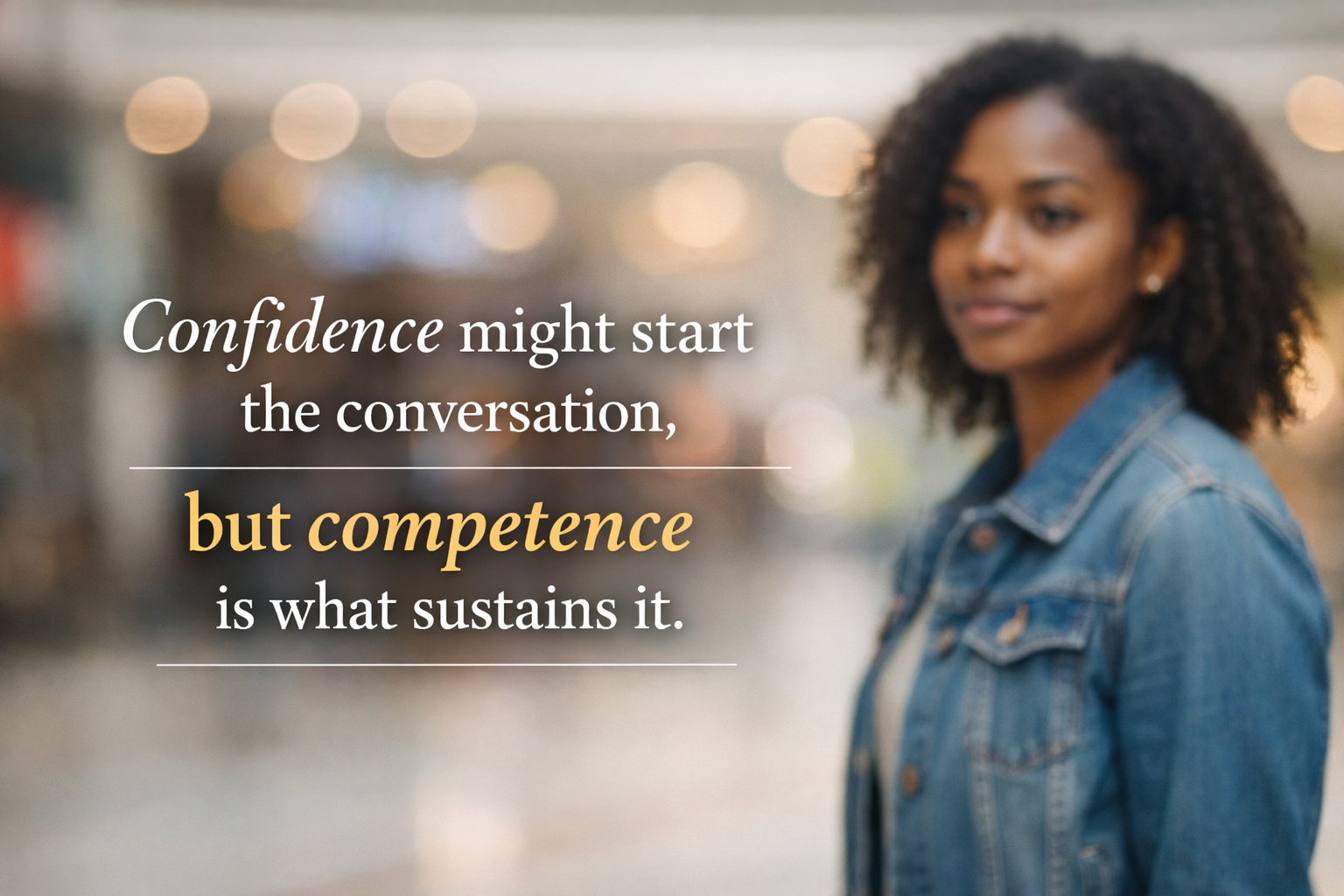
    Confidence might start the conversation.

    But competence is what sustains it.

    And in a space where human connection matters, that difference is everything.


    📘 Continue the Conversation

    If this resonates with you, these human-centered lessons are explored more deeply in my ebook:

    Beyond the Pitch: The Human Art of Face-to-Face Fundraising

    👉 Explore my books here:
    https://www.amazon.com/author/kgalalelontumelang

    If you enjoy reflections on communication, confidence, and the psychology behind human interaction, consider subscribing to the blog so you don’t miss future posts.

    And I’d love to hear from you:

    Do you think confidence or competence has shaped your journey more?

    Share your experience in the comments — your perspective might help someone else see their own growth differently.

    LELO

  • The Challenges Broadcasters Don’t Talk About

    The Challenges Broadcasters Don’t Talk About

    From the outside, broadcasting looks effortless.

    The voice is steady.
    The timing is precise.
    The energy feels natural.

    But behind the microphone, there’s a different reality—one that is rarely spoken about.

    Not because broadcasters are hiding it.
    But because the industry quietly expects you to handle it.

    These are the challenges broadcasters don’t talk about.


    The Pressure to Always Sound Okay

    No matter what is happening in your life, the mic goes on.

    And when it does, your voice must:

    • sound confident
    • sound present
    • sound in control

    There is no space for hesitation.

    Even on difficult days, you are expected to show up as though everything is fine.

    Over time, that creates a quiet pressure—
    to separate how you feel from how you sound.


    Being Recognised, But Not Really Known

    People know your voice.

    They may recognise your name.
    They may greet you with familiarity.

    But often, they only know the version of you that exists on air.

    There is a difference between:

    • being recognised
      and
    • being understood

    And many broadcasters live in that gap.

    Visible, but not always truly seen.


    The Fear of Becoming Replaceable

    Broadcasting is fast-moving.

    Formats change.
    Stations evolve.
    New voices are constantly emerging.

    No one says it directly, but the awareness is always there:

    You can be replaced.

    That awareness can either push growth—or quietly create anxiety.

    Especially when your identity becomes tied to your role.


    Creative Burnout

    Broadcasting demands consistency.

    You show up daily.
    You deliver content.
    You engage an audience.

    But creativity doesn’t always follow a schedule.

    There are days when:

    • You feel uninspired
    • Ideas don’t flow easily
    • Energy feels forced

    And yet, the expectation remains the same.

    So you learn to perform even when you don’t feel creative.


    Attaching Your Worth to Response

    In broadcasting, feedback is constant—sometimes loud, sometimes silent.

    Ratings.
    Listener reactions.
    Social media engagement.

    It becomes easy to measure your value based on how people respond.

    But the response is unpredictable.

    And when your sense of worth is tied to it, your confidence becomes unstable.


    The Unspoken Question: What Happens Next?

    At some point, every broadcaster thinks about it.

    Maybe quietly.
    Maybe briefly.
    But it’s there.

    What happens when this ends?

    Contracts change.
    Opportunities shift.
    Life moves.

    And if your entire identity has been built around one platform, that question becomes heavier than it should be.


    Why These Conversations Matter

    These challenges are not signs of weakness.

    They are part of the profession.

    But when they remain unspoken, they become isolating.

    When they are acknowledged, they become manageable.

    Because then you realise:

    You’re not the only one navigating them.


    A Quiet Invitation

    If this resonates, it’s because you’ve likely experienced some of these moments yourself.

    From Broadcaster to Brand was written to help broadcasters think beyond the surface of the industry. They need to look beyond the mic, the platform, and the expectations. It’s about building identity, ownership, and sustainability in a space that is constantly changing.

    📘 Find From Broadcaster to Brand on Amazon here:
    👉🏽 https://www.amazon.com/author/kgalalelontumelang

    If you’d like more reflections like this, consider subscribing to the blog. It’s a space for honest conversations about broadcasting, communication, and building a career that can evolve with you.

    💬 I’d love to hear from you:
    Which of these challenges do you think is talked about the least?

    LELO

  • Unlocking Invisible Skills in Broadcasting

    Unlocking Invisible Skills in Broadcasting

    When people think about broadcasting, they see the obvious.

    The voice.
    The confidence.
    The ability to speak clearly and hold attention.

    But what they don’t see are the skills being developed quietly, consistently, and often under pressure.

    Skills that don’t appear on a job description.
    Skills that are rarely articulated.
    Skills that are incredibly valuable far beyond the studio.

    These are the invisible skills of broadcasting.

    And many broadcasters underestimate just how powerful they are.


    Thinking While Speaking

    Broadcasting forces you to think in real time.

    There’s no pause button.
    No long moments to gather your thoughts.

    You learn to:

    • process information quickly
    • structure ideas instantly
    • Respond without losing clarity

    Over time, this builds a rare ability:
    clear thinking under pressure.

    In boardrooms, interviews, and business settings, this becomes a superpower.


    Reading People Without Seeing Them

    In radio, especially, your audience is invisible.

    You don’t see their reactions.
    You don’t hear immediate feedback.

    Yet, you learn to sense:

    • When something connects
    • When energy drops
    • When a message lands

    This sharpens your instinct.

    It teaches you to understand people beyond words—through tone, timing, and intuition.

    That is emotional intelligence in action.


    Managing Pressure Quietly

    Things go wrong in broadcasting.

    Links get dropped.
    Guests don’t show up.
    Scripts change at the last minute.

    And yet, the audience often hears… nothing unusual.

    Because broadcasters learn to recover without panic, becoming public.

    You learn composure.

    Not loud confidence—but controlled, steady presence.


    Listening Beyond Words

    Broadcasting is often associated with speaking.

    But great broadcasters know that listening is the real work.

    You listen for:

    • What is being said
    • What is being avoided
    • What is about to be said

    This level of listening changes how you communicate in every area of life.

    It makes conversations deeper.
    More intentional.
    More human.


    Controlling Tone and Energy

    Your voice carries more than words.

    It carries mood.
    Emotion.
    Authority.

    Broadcasters learn to adjust:

    • tone
    • pace
    • intensity

    Depending on the moment.

    That awareness becomes invaluable in leadership, storytelling, and personal branding.

    Because people don’t just respond to what you say.

    They respond to how you make them feel.


    Showing Up Consistently

    Broadcasting teaches discipline.

    You show up whether you feel inspired or not.
    You deliver whether you feel ready or not.

    That consistency builds trust with audiences.

    And over time, it builds something even more important:

    self-trust.


    Why These Skills Matter More Than You Think

    Many broadcasters leave the industry believing they are starting from scratch.

    They focus on what they lack:

    • new qualifications
    • different experience
    • unfamiliar industries

    But they overlook what they already have.

    These invisible skills are:

    • transferable
    • valuable
    • relevant in multiple industries

    The challenge is not learning new skills.

    It is recognising and owning the ones you already have.


    The Real Shift

    The moment you begin to see these skills clearly, something changes.

    You stop introducing yourself only by your job title.

    You start understanding your value beyond the studio.

    And that is where real career flexibility begins.


    A Quiet Invitation

    If this reflection resonates, it may be because you’re starting to see your experience differently.

    From Broadcaster to Brand was written for broadcasters who want to translate their skills into something more sustainable. This transformation happens without losing their identity in the process.

    📘 Find From Broadcaster to Brand on Amazon here:
    👉🏽 https://www.amazon.com/author/kgalalelontumelang

    If you’d like more reflections like this, consider subscribing to the blog. It’s a space for broadcasters to learn to recognise their value. They can build with intention and create careers that extend beyond a single platform.

    💬 I’d love to hear from you:
    Which invisible skill do you think broadcasting has taught you the most?

    LELO

  • Mastering First Impressions in Fundraising

    Mastering First Impressions in Fundraising

    In face-to-face fundraising, something important happens long before the pitch begins.

    It happens in seconds.

    Sometimes even less.

    Before you say hello…
    Before you explain the cause…
    Before you even finish your first sentence…

    People have already made a decision about you.

    Should they stop?
    Should they trust you?
    Or should they keep walking?

    This is the 10-second judgment — the quiet psychological moment where people decide whether you are worth their attention.

    And it has very little to do with your script.


    The Moment Before the Conversation

    Anyone who has worked in face-to-face fundraising understands this moment.

    You notice someone approaching.
    They notice you.

    There’s a brief exchange of eye contact.

    In that split second, both of you are reading signals.

    You are thinking:

    Do they seem open to conversation?

    They are thinking:

    Is this someone I feel comfortable talking to?

    No words have been spoken yet.
    But a decision is already forming.

    Sometimes people stop.
    Sometimes they walk past.

    And often, that decision happens before the pitch even begins.


    What People Notice Before You Speak

    Human beings are incredibly good at reading subtle signals.

    In public spaces like malls, people are constantly assessing their surroundings. Safety, trust, and comfort are evaluated quickly.

    When someone approaches you, they are often noticing things like:

    • Your posture
    • Your facial expression
    • Your energy
    • Your eye contact
    • The way you approach their space

    A tense posture can create distance.

    A relaxed smile can create openness.

    A rushed approach can make someone feel pressured.

    But a calm presence invites curiosity.

    Most of the time, people aren’t rejecting your cause.
    They’re reacting to how the interaction feels.


    A Lesson I Learned on the Field

    There was a day I remember clearly while fundraising in a mall.

    I focused heavily on my pitch. I made sure the words were right. I ensured I explained the cause well.

    But my results were inconsistent.

    At some point, I noticed something interesting.

    People were responding before I even started speaking.

    Some would smile and slow down.

    Others would avoid eye contact and continue walking.

    That’s when it clicked.

    The conversation was starting before the conversation.

    It wasn’t just about what I said.
    It was about how I showed up.

    My energy, my posture, my presence — all of that was communicating something long before the pitch began.

    And once I became aware of that, everything changed.


    Presence Is More Powerful Than the Perfect Pitch

    Many fundraisers spend a lot of time perfecting the script.

    But presence matters just as much — sometimes more.

    Presence is the combination of:

    • Calm confidence
    • Approachability
    • Genuine interest in people
    • Respect for someone’s space

    When people sense that you are grounded and respectful, they feel safer engaging.

    And when people feel safe, they listen.

    Not every conversation will lead to a sign-up.
    But presence creates the opportunity for a real interaction.


    This Happens Far Beyond Fundraising

    The 10-second judgment doesn’t only happen on fundraising shifts.

    It happens everywhere.

    In Job Interviews

    People form impressions within the first moments of meeting you.

    In Leadership

    Teams respond to a leader’s presence long before formal authority takes effect.

    In Networking

    Your energy often determines whether someone wants to continue a conversation.

    In Media and Broadcasting

    Audiences sense authenticity quickly — often before they consciously process what is being said.

    First impressions may not tell the whole story, but they often determine whether the story gets heard.


    A Quick Reflection

    Think about your own experiences.

    • When have you instantly trusted someone you just met?
    • What signals made you feel comfortable?
    • When have you felt hesitant about someone before they even spoke?

    These small moments shape our interactions more than we realise.

    Becoming aware of them can change how we show up in the world.


    The Real Art Behind the Pitch

    Face-to-face fundraising is often misunderstood as simply delivering a persuasive message.

    But the real work begins earlier.

    It begins in the moment someone sees you.

    It lives in the way you approach people. It is also in the energy you carry. The respect you show before a single word is spoken matters as well.

    The pitch matters.

    But the human connection that comes before it matters even more.


    📘 Continue the Conversation

    If reflections like this resonate with you, you’ll find many of these lessons explored more deeply in my ebook:

    Beyond the Pitch: The Human Art of Face-to-Face Fundraising

    👉 Explore my books here:
    https://www.amazon.com/author/kgalalelontumelang

    If you enjoy reflections on communication, confidence, and the psychology behind human interactions, consider subscribing to the blog. This way, you won’t miss future posts.

    And I’d love to hear from you:

    Have you ever formed an instant impression about someone before they spoke?

    What made you feel comfortable — or uncomfortable — in that moment?

    Share your thoughts in the comments. Your perspective might help someone else think differently about how they show up.

    LELO

  • The Power of Silence in Broadcasting

    The Power of Silence in Broadcasting

    When people think about broadcasting, they think about talking.

    The voice.
    The energy.
    The ability to fill the air with sound.

    But experienced broadcasters know something the audience rarely notices:

    Some of the most powerful moments on air are not created by words.

    They are created by silence.

    That brief pause between sentences.
    The moment after a difficult question.
    The quiet space that allows a story to land.

    Silence is not empty.

    In broadcasting, silence is intentional communication.


    When Silence Becomes Powerful

    Think about a powerful interview moment.

    A guest shares something deeply personal. It might be the loss of a loved one. It could involve a difficult life decision or a moment of vulnerability.

    An inexperienced broadcaster might rush in with another question.

    But a skilled broadcaster allows the moment to breathe.

    That pause tells the guest and the audience something important:

    This moment matters.

    Listeners feel the weight of what was said.

    And suddenly, the conversation becomes more than content.
    It becomes human.


    The Discipline of the Pause

    Early in broadcasting, silence feels like danger.

    Dead air is treated like a mistake — something to avoid at all costs.

    So beginners fill every gap with extra words:

    • unnecessary commentary
    • repeating information
    • explaining what listeners already understand

    But with experience comes a different kind of confidence.

    You begin to realise that not every moment needs sound.

    Sometimes the most professional thing you can do is pause.

    Silence gives your words room to matter.


    What Great Broadcasters Understand

    Many respected broadcasters have spoken about the power of listening and restraint.

    The legendary interviewer Larry King once said:

    “I remind myself every morning: Nothing I say this day will teach me anything. So if I’m going to learn, I must do it by listening.”

    That principle shaped his interviewing style.

    Instead of dominating conversations, he allowed guests to speak fully.
    He let silence invite deeper responses.

    Veteran journalist Christiane Amanpour has often emphasised the importance of patience in interviews. She believes in allowing moments to unfold rather than forcing them.

    These broadcasters understood that communication is not just about speaking.

    It is about creating space for truth to appear.


    Silence Builds Authority

    There is also a quiet confidence in restraint.

    When someone speaks constantly, audiences eventually stop hearing the words.

    But when someone speaks thoughtfully — allowing pauses and moments of quiet — each sentence carries more weight.

    This applies beyond broadcasting.

    Great communicators, leaders, and storytellers know that presence is not measured by how much you say.

    It is measured by how intentionally you say it.


    Listening Is the Real Skill

    Broadcasting teaches you how to speak.

    But the longer you stay in the industry, the more you realise that the real skill is listening.

    Listening for:

    • emotion in a voice
    • hesitation in a response
    • the moment when someone has more to say

    That kind of listening can’t happen if you are constantly preparing your next sentence.

    It requires stillness.

    And stillness naturally creates silence.


    The Space Between Words

    Broadcasting is often described as the art of speaking to thousands of people you can’t see.

    But it is also the art of respecting the audience’s attention.

    Silence gives listeners time to:

    • absorb a story
    • reflect on a point
    • emotionally connect with what they have heard

    Without those spaces, communication becomes noise.

    And noise rarely builds connection.


    A Quiet Invitation

    If reflections like this resonate with you, it’s probably because broadcasting is about far more than microphones and studios. It’s about voice, presence, and the greater skills that shape meaningful communication.

    I explore many of these ideas in my ebook From Broadcaster to Brand. I reflect on how broadcasters can build identity and create lasting relevance beyond the platform.

    📘 Find the book on Amazon here:
    👉🏽 https://www.amazon.com/author/kgalalelontumelang

    If you enjoy thoughtful reflections on broadcasting, communication, and building sustainable careers, consider subscribing to the blog.

    It’s a space for broadcasters and communicators who believe their voice can matter beyond a single platform.

    💬 I’d love to hear from you:
    As a listener, have you ever noticed a moment of silence in an interview? Did it make the conversation more powerful?

    LELO

  • The Fine Line Between Persuasion and Pressure

    The Fine Line Between Persuasion and Pressure

    There’s a question that quietly follows every face-to-face fundraiser:

    “Isn’t this just pressure?”

    It’s a fair question.
    And if we’re honest, it’s one we should never avoid.

    Because there is a line.

    A thin one.

    And crossing it changes everything.


    The Day I Almost Crossed It

    I remember a particular afternoon on the field.

    It had been a slow day. Conversations were short. Rejections were piling up. My energy was dipping — and so was my confidence.

    Then someone stopped.

    They listened carefully. Asked thoughtful questions. They clearly cared about the cause. I could see the possibility of a “yes.”

    But when it came time to commit, they hesitated.

    And I felt it — that internal urge to push just a little harder.

    To emphasize urgency.
    To lean into the emotional weight.
    To secure the sign-up.

    Instead, I paused.

    And I said, “It’s completely okay if today isn’t the right time.”

    They exhaled. Smiled. Thanked me.

    And walked away.

    I didn’t get the sign-up.
    But I kept something far more important — my integrity.

    That moment taught me this:

    You can win a sign-up and lose your integrity.
    Or lose a sign-up and strengthen your integrity.

    Only one builds a sustainable career.


    Persuasion Invites. Pressure Controls.

    Let’s define the difference clearly.

    Persuasion:

    • Respects autonomy
    • Shares information honestly
    • Creates space for reflection
    • Accepts “no” without resistance

    Pressure:

    • Leans on guilt
    • Creates urgency that overrides comfort
    • Minimizes hesitation
    • Treats “no” as something to overcome

    The words may sound similar.
    The intention is not.

    One says:
    “Here is something meaningful. Would you like to be part of it?”

    The other says:
    “You should feel uncomfortable if you don’t.”

    That subtle shift changes the emotional atmosphere of the entire interaction.


    The Pressure No One Talks About

    Here’s what makes this complicated.

    Sometimes the pressure doesn’t come from the public.

    It comes from:

    • Targets
    • Performance metrics
    • Team expectations
    • Slow days
    • Internal fear of failure

    And this is where emotional maturity is tested.

    Because ethical fundraising isn’t just about how you manage other people.
    It’s about how you manage yourself.

    Can you separate:

    • Your need to perform
      from
    • Their right to choose?

    That separation requires discipline.


    A Self-Check Before Every Conversation

    If you work in fundraising, try this quick internal audit before you speak. This applies to any field that involves influence.

    Before You Persuade, Ask Yourself:

    • Am I here to inform — or to push?
    • Would I feel comfortable if this interaction were recorded?
    • If they say no, will I respect it immediately?
    • Am I speaking from clarity — or from anxiety?

    If your answer to any of these questions makes you pause, that pause is valuable.

    It protects you.


    When I Saw the Line Crossed

    I once observed a colleague continue pushing after someone had clearly declined.

    The tone shifted.
    The energy tightened.
    The conversation stopped feeling mutual.

    The potential donor grew visibly uncomfortable.

    Nothing dramatic happened. But something subtle did: trust eroded.

    That interaction reminded me that persuasion is delicate. Once it turns into pressure, people don’t just reject the offer — they reject the experience.

    And in face-to-face fundraising, experience is everything.


    Why This Matters Beyond Fundraising

    The persuasion versus pressure line exists everywhere.

    In Leadership

    Pressure creates compliance.
    Persuasion builds buy-in.

    One produces short-term obedience.
    The other produces long-term commitment.

    In Parenting

    Pressure produces fear.
    Persuasion builds understanding.

    In Media & Broadcasting

    Pressure pushes narratives.
    Persuasion builds trust.

    Trust is slower.
    But it lasts longer.

    In every discipline, integrity is the multiplier.


    The Power of Letting People Walk Away

    Here’s the irony.

    The moment you become truly comfortable with “no,” your persuasion becomes stronger.

    Why?

    Because people feel when they are safe.

    When someone knows:

    • They won’t be judged
    • They won’t be cornered
    • They won’t be guilted

    They relax.

    And relaxed people think clearly.

    Safety builds trust.
    Trust builds commitment.
    Commitment outlasts pressure every time.


    Reflection: Where Do You Stand?

    Take a moment to consider your own experiences.

    • Have you ever felt pressured into a decision?
    • What made it uncomfortable — the message or the lack of space?
    • Have you ever realised you were the one applying pressure?
    • What was driving that behavior — fear, urgency, insecurity?

    There’s no judgment here. Only awareness.

    And awareness is where growth begins.


    The Bigger Picture

    The art of face-to-face fundraising is not about mastering scripts.

    It’s about mastering intention.

    It’s about recognising that every interaction shapes public trust — not just in you, but in the cause you represent.

    Integrity may cost you short-term numbers.

    But it builds long-term credibility.

    And credibility compounds.


    Final Thought

    Persuasion is powerful.

    But pressure is loud.

    One invites participation.
    The other demands compliance.

    And in human-centered work — whether fundraising, leadership, media, or relationships — how you influence is important. It matters just as much as the outcome you achieve.


    📘 Continue the Conversation

    These ethical tensions — the psychology, the internal battles, the unseen emotional discipline behind the work — are explored more deeply in my ebook:

    Beyond the Pitch: The Human Art of Face-to-Face Fundraising

    👉 Explore my books here:
    https://www.amazon.com/author/kgalalelontumelang

    If this resonated with you, I invite you to subscribe to the blog. You will find more reflections on confidence, communication, and the human side of influence.

    And I genuinely want to hear from you:

    Where have you seen the line between persuasion and pressure crossed — either by someone else or by yourself?

    Share your experience in the comments.
    Your story might help someone else reflect more honestly about theirs.

    LELO

  • Preparing Broadcasters for Life Beyond Contracts

    Preparing Broadcasters for Life Beyond Contracts

    For many broadcasters, preparation only begins when the contract is already ending.

    That’s when the panic starts.
    That’s when the networking begins.
    That’s when the CV is updated.

    But by then, you’re reacting — not building.

    The truth is uncomfortable:
    The best time to prepare for life after broadcasting is now. It is essential to do so while you are still comfortably inside it.

    Not because something is wrong.
    But because nothing in the media is permanent.


    1. Separate Your Identity from the Station

    Your employer is a platform.
    You are the asset.

    When you confuse the two, you attach your relevance to access.

    Start asking yourself:

    • What do I represent beyond this frequency?
    • What perspective do I consistently bring?
    • What problems do I solve?

    If your value disappears when the logo disappears, it was never fully yours.

    Preparation begins with ownership.


    2. Document What You Know

    Broadcasters accumulate experience quietly:

    • Interview techniques
    • Audience psychology
    • Storytelling rhythm
    • Crisis management
    • Script structuring

    But very few document this knowledge.

    Start writing.
    Start sharing.
    Start packaging insights.

    Your lived experience is intellectual property. Treat it that way.


    3. Build a Personal Platform — Even a Small One

    You do not need millions of followers.

    You need a space you control.

    That could be:

    • A simple website
    • A blog
    • A newsletter
    • A podcast
    • A professional LinkedIn presence

    The goal is not visibility for ego.
    The goal is ownership for sustainability.

    When the contract ends, your voice should still have somewhere to land.


    4. Develop Transferable Income Streams

    Most broadcasters only monetize airtime.

    But your skills extend beyond the studio:

    • Voice-over work
    • Moderation
    • Media training
    • Public speaking
    • Editing
    • Consulting

    Start small. Quietly. Ethically.

    Diversification is not disloyalty.
    It is maturity.


    5. Shift from Being Chosen to Choosing Yourself

    Broadcasting conditions you to wait for permission.

    But sustainable careers are built by people who create, not only audition.

    Pitch your own ideas.
    Start your own projects.
    Collaborate independently.

    The confidence to choose yourself is the greatest preparation you can build.


    6. Build Relationships Beyond the Industry

    When contracts end, many broadcasters realise their network was limited to colleagues.

    Expand intentionally:

    • Entrepreneurs
    • Creatives
    • Educators
    • Business owners

    Your next opportunity might not come from radio at all.

    And that is not failure — that is evolution.


    Preparation Is Not Paranoia

    Preparing for life beyond broadcasting does not mean you expect to fail.

    It means you respect the reality of the industry.

    Contracts end.
    Formats change.
    Leadership shifts.

    But when you have built something portable — your brand, your voice, your perspective — change becomes transition, not collapse.

    The goal is not to leave broadcasting.

    The goal is to never feel trapped by it.


    A Quiet Invitation

    If this resonates, it’s because you already sense that your voice carries value beyond one platform.

    From Broadcaster to Brand was written for broadcasters who want to build relevance and sustainability without becoming performative or self-promotional. It explores how to separate identity from employment and build something that lasts beyond contracts.

    📘 You can find From Broadcaster to Brand on Amazon here:
    👉🏽 https://www.amazon.com/author/kgalalelontumelang

    If you’d like more reflections like this, subscribe to the blog. You can join a growing community of broadcasters. They are learning to choose themselves intentionally and ethically.

    💬 I’d love to hear from you in the comments:
    What is one thing you could start building today that does not depend on your contract?

    LELO

  • Fear of Rejection: How Fundraising Forces You to Face It

    Fear of Rejection: How Fundraising Forces You to Face It

    The fear of rejection doesn’t always arrive dramatically.
    Sometimes it shows up quietly. It appears in the breath you take before speaking. It is in the second thoughts before approaching someone. It happens in the way your body hesitates, even when your mind says go.

    Face-to-face fundraising doesn’t allow you to hide from that fear. It places you in public spaces. You stand in front of strangers. It asks you to start conversations with people who didn’t plan to talk to you that day.

    And in doing so, it forces you to meet rejection head-on.

    My First Rejection Wasn’t Cruel — Just Honest

    I still remember one of my earliest days on the field.

    I had rehearsed my pitch.
    Straightened my posture.
    Smiled before I even opened my mouth.

    The person stopped, listened for a few seconds, then calmly said, “No, thank you,” and walked away.

    No anger.
    No explanation.
    No apology.

    Just a no.

    What surprised me wasn’t the rejection itself—it was how loudly my inner voice reacted.
    Did I sound foolish? Did I do something wrong? Should I have said it differently?

    That moment taught me something important very early on: rejection feels personal even when it isn’t.

    Fundraising Removes the Illusion of Control

    In many parts of life, rejection is softened.

    Emails go unanswered.
    Applications disappear quietly.
    Opportunities fade without explanation.

    Fundraising removes that buffer.

    You get an answer instantly.
    You don’t get to edit.
    You don’t get to hide behind silence.

    At first, this feels brutal. But over time, it becomes clearer. You stop obsessing over outcomes and start focusing on what you can control:

    • How you show up
    • How you speak
    • How you listen
    • How to exit a conversation with dignity

    Your job is no longer to convince.
    Your job is to invite.

    When Rejection Stops Feeling Like a Verdict

    After dozens—then hundreds—of interactions, something shifts.

    You start to recognize patterns:

    • The rushed no from someone late for work
    • The polite no from someone already stretched financially
    • The hesitant maybe from someone who wants to help but is unsure
    • The yes that surprises both of you

    You realise rejection has layers.
    Context.
    Emotion.

    And slowly, fear loosens its grip—not because rejection disappears, but because you stop attaching your self-worth to it.

    A Simple Exercise: Reframing Rejection

    Here’s a practice fundraising taught me that applies far beyond the street:

    After a rejection, ask yourself three questions:

    1. What actually happened (fact, not feeling)?
    2. What story am I telling myself about it?
    3. What other explanation could also be true?

    Most of the time, rejection has nothing to do with your value, intelligence, or ability. This exercise trains you to separate emotion from reality.

    Confidence Is Built in Public, Not in Theory

    There is no private way to build public confidence.

    Standing in front of strangers teaches you things no workshop can:

    • You can recover from awkwardness
    • You can keep going after being ignored
    • You can speak even when your voice shakes
    • You can reset and try again

    Confidence doesn’t come from getting it right.
    It comes from surviving getting it wrong.

    Emotional Resilience Is the Real Skill

    One of the most underrated lessons in face-to-face fundraising is emotional regulation.

    You learn how to:

    • Shake off a difficult interaction
    • Stay attentive instead of defensive
    • Treat people with respect, even when they dismiss you
    • Carry yourself professionally despite disappointment

    These skills don’t stay on the pavement.
    They follow you into interviews, negotiations, leadership spaces, and personal relationships.

    Fundraising trains you to remain human under pressure.

    Why This Matters Beyond Fundraising

    Fear of rejection keeps many people stuck:

    • Afraid to pitch ideas
    • Afraid to ask for opportunities
    • Afraid to be visible
    • Afraid to start

    Face-to-face fundraising forces you to confront that fear daily—and in doing so, it breaks its power slowly, honestly, and permanently.

    You don’t become fearless.
    You become braver.

    A Reflection for You

    Take a moment and think about this:

    • Where has fear of rejection stopped you from speaking up?
    • What conversation have you been avoiding?
    • What’s one small “approach” you can make this week?

    Growth often begins with a single uncomfortable step.

    Final Thought

    Rejection in fundraising is not proof that you are failing.
    It is proof that you are participating.

    Sometimes, the greatest thing you gain from the work isn’t money.
    It’s courage.


    📘 Continue the Conversation

    If this resonated with you, you’ll find these themes explored more deeply in my ebook. It is called Beyond the Pitch: The Human Art of Face-to-Face Fundraising.

    👉 Explore my books here:
    https://www.amazon.com/author/kgalalelontumelang

    If you enjoy reflections on confidence, communication, and the human side of work, subscribe to the blog. This way, you won’t miss future posts.

    And I’d really love to hear from you 👇
    How have you experienced rejection—and what did it teach you?
    Share your thoughts in the comments.

    LELO

  • Building Confidence Through Conversations

    Building Confidence Through Conversations

    Confidence is often treated like a personality trait.

    Something you either have or you don’t.

    But that idea falls apart the moment you look closely at how confidence is actually formed. It doesn’t arrive fully built. It doesn’t switch on overnight. And it definitely doesn’t come from thinking about yourself harder.

    Confidence is built quietly—one conversation at a time.


    The Myth of the Confident Person

    We admire people who speak clearly, hold eye contact, and seem comfortable taking up space. From the outside, it looks effortless.

    What we don’t see are the hundreds of small interactions that came before that moment:

    • The awkward introductions
    • The conversations that didn’t land
    • The times they stumbled, hesitated, or said the wrong thing

    Confidence isn’t the absence of fear. It’s familiarity.

    And familiarity is built through repetition.


    Conversations Are Practice Grounds

    Every conversation is a low-stakes rehearsal for the next one.

    I learned this early on, long before I felt confident.

    My voice tightened during certain conversations. I rushed my words, replayed everything afterwards, and wondered why I hadn’t said it better. But something interesting happened: the next conversation was always slightly easier.

    When you speak, you start to notice patterns:

    • How your voice sounds when you’re unsure
    • What happens when you slow down instead of filling the silence
    • How people respond when you’re honest rather than impressive

    Confidence doesn’t come from getting it right the first time. It comes from recognition—from knowing what you sound like under pressure and realising you can survive it.

    Each conversation leaves a trace. And those traces add up.


    Confidence Grows in the Ordinary

    Most confidence isn’t built on stages or behind microphones.

    It’s built in:

    • Casual chats
    • Work meetings
    • Difficult conversations
    • Small moments where you choose to speak instead of staying silent

    Each time you express a thought, ask a question, or clarify your point, you’re reinforcing a simple message to yourself:

    I can handle this.

    And that message compounds.


    When Conversations Feel Uncomfortable

    Discomfort isn’t a sign that you’re doing something wrong.

    It’s often a sign that you’re doing something new.

    I’ve found that the conversations that build the most confidence are rarely dramatic. They’re ordinary—but intentional:

    • Saying no without over-explaining
    • Asking for clarity instead of pretending you understand
    • Sharing an idea before it feels finished

    Each time you stay in a conversation like this, you quietly prove something to yourself:

    I can hold my ground.

    That proof matters. Because confidence isn’t built by avoiding discomfort—it’s built by meeting it and realising it doesn’t undo you.


    Listening Builds Confidence Too

    Confidence isn’t only about speaking more.

    It’s also about listening well.

    In conversations where I felt least confident, listening became my anchor. It reminded me that I didn’t have to act. I just had to be there.

    When you listen, you learn:

    • You don’t have to carry the conversation alone
    • Silence isn’t failure
    • Understanding creates more impact than sounding clever

    Strong communicators aren’t loud. They’re grounded.

    And that grounding builds a quiet, durable confidence.


    From Conversation to Self-Trust

    Over time, these small interactions change how you see yourself.

    You stop asking: Do I sound confident enough?

    And start asking: Am I being clear? Am I being honest?

    That shift—from performance to purpose—is where real confidence lives.


    When Conversations Become Capital

    Over time, I realised something important: confidence doesn’t stop at personal growth.

    It becomes transferable.

    Every conversation sharpened my clarity. Every difficult exchange strengthened my self-trust. Slowly, what began as internal work turned into something practical—something I could teach, share, and build with.

    That’s where my ebooks come in.

    They translate lived conversations—broadcast rooms, fundraising pavements, editorial meetings—into frameworks readers can use. Not theory, but reflection. Not hype, but grounded practice.

    They are designed to help you:

    • Trust your voice under pressure
    • Navigate difficult conversations with integrity
    • Turn communication into confidence you can rely on

    If you’re ready to deepen this work, you can find both ebooks here:

    👉 From Broadcaster to Brand – available on Amazon: https://www.amazon.com/author/kgalalelontumelang

    👉 Beyond the Pitch – available on Amazon: https://www.amazon.com/stores/Kgalalelo-Ntumelang/author/B0GCX86L2W

    Because confidence that’s built honestly doesn’t disappear when the room gets quiet.


    Final Thoughts

    You don’t need to reinvent yourself to become confident.

    *You just need to stay in the conversation.

    *Speak a little more honestly.

    *Listen a little more closely.

    *Have the conversation you’ve been rehearsing in your head.

    Confidence isn’t built in isolation.

    It’s built—patiently, imperfectly—one conversation at a time.


    Start Where You Are

    If you want to build confidence through conversation, start small:

    • Ask one clarifying question this week
    • Say what you mean without softening it unnecessarily
    • Stay present in a conversation you’d usually avoid

    Then notice what changes.


    P.S. If confidence is something you’re actively building, my ebooks were written as companions for that journey. They go deeper into how voice, trust, and communication translate into opportunity—without forcing you to become someone you’re not.


    LELO

  • “Face-to-Face Fundraising Taught Me More Than Media Ever Did”

    “Face-to-Face Fundraising Taught Me More Than Media Ever Did”

    For years, media shaped how I understood communication.

    I learned how to speak clearly, structure stories, ask the right questions, and hold an audience’s attention. Broadcasting trained me to be composed, articulate, and intentional with words.

    And then I stepped into face-to-face fundraising — and everything I thought I knew about communication was tested.


    Media Gives You a Platform. Fundraising Removes It.

    In media, you are protected by structure.

    There’s a microphone.
    A script.
    A role.
    An audience that has already chosen to listen.

    Face-to-face fundraising strips all of that away.

    There’s no platform — only presence.
    No script — only responsiveness.
    No guaranteed audience — only a human being deciding, in real time, whether to engage or walk away.

    That’s when communication becomes honest.


    Rejection Becomes Immediate — and Personal (At First)

    In media, feedback is delayed or filtered.
    In fundraising, rejection happens in your face.

    People say no with their words, their body language, and their silence. At first, it feels personal. Uncomfortable. Exposing.

    But over time, something shifts.

    You start to understand that rejection isn’t about you — it’s about timing, context, priorities, and capacity. It becomes information, not failure.

    That lesson alone reshapes how you communicate everywhere else.


    Presence Matters More Than Performance

    Media rewards performance.

    Fundraising rewards presence.

    You can’t hide behind polished delivery in a face-to-face interaction. People sense when you’re reciting instead of listening, pushing instead of connecting.

    The most effective fundraisers aren’t the most persuasive. They’re the most attentive.

    They notice tone.
    They adjust their pace.
    They respond instead of react.

    This is emotional intelligence in motion.


    Curiosity Builds Trust Faster Than Confidence

    One of the biggest lessons fundraising taught me is this:
    confidence doesn’t build trust — curiosity does.

    When you approach someone with genuine interest rather than an agenda, the interaction changes. People soften. Conversations deepen.

    Selling stops feeling like taking.
    It starts feeling like understanding.

    That lesson reshaped how I communicate — not just in fundraising, but in writing, teaching, and everyday conversations.


    Fundraising Turns Communication Into a Life Skill

    Media taught me how to communicate well.
    Fundraising taught me how to communicate humanely.

    It accelerated my emotional awareness, resilience, and empathy in ways no studio environment ever could. It forced me to regulate myself, read people accurately, and respect boundaries.

    These aren’t just sales skills.
    They’re life skills.

    And they apply everywhere — branding, leadership, relationships, and work.


    What This Changed for Me

    Face-to-face fundraising reframed communication from performance to connection.

    It reminded me that persuasion isn’t about control — it’s about trust. That listening is more powerful than speaking. And that presence is the most underrated communication skill we have.

    That lesson stayed with me.


    Want to Go Deeper?

    I explore these lessons in detail — including practical techniques and mindset shifts — in my ebook
    Beyond the Pitch: The Art of Face-to-Face Fundraising, available on Amazon.

    👉 [Buy Beyond the Pitch on Amazon](https://www.amazon.com/author/kgalalelontumelang)

    Stay Connected

    If you enjoy reflections on communication as a practical life skill — from personal branding to face-to-face persuasion — you can subscribe to get new posts directly in your inbox.

    No spam. Just thoughtful writing, sent occasionally.

    Let’s Talk

    Have you ever had an experience that challenged how you thought about communication, confidence, or selling?

    I’d love to hear what it taught you — feel free to share your thoughts in the comments.

    Lelo