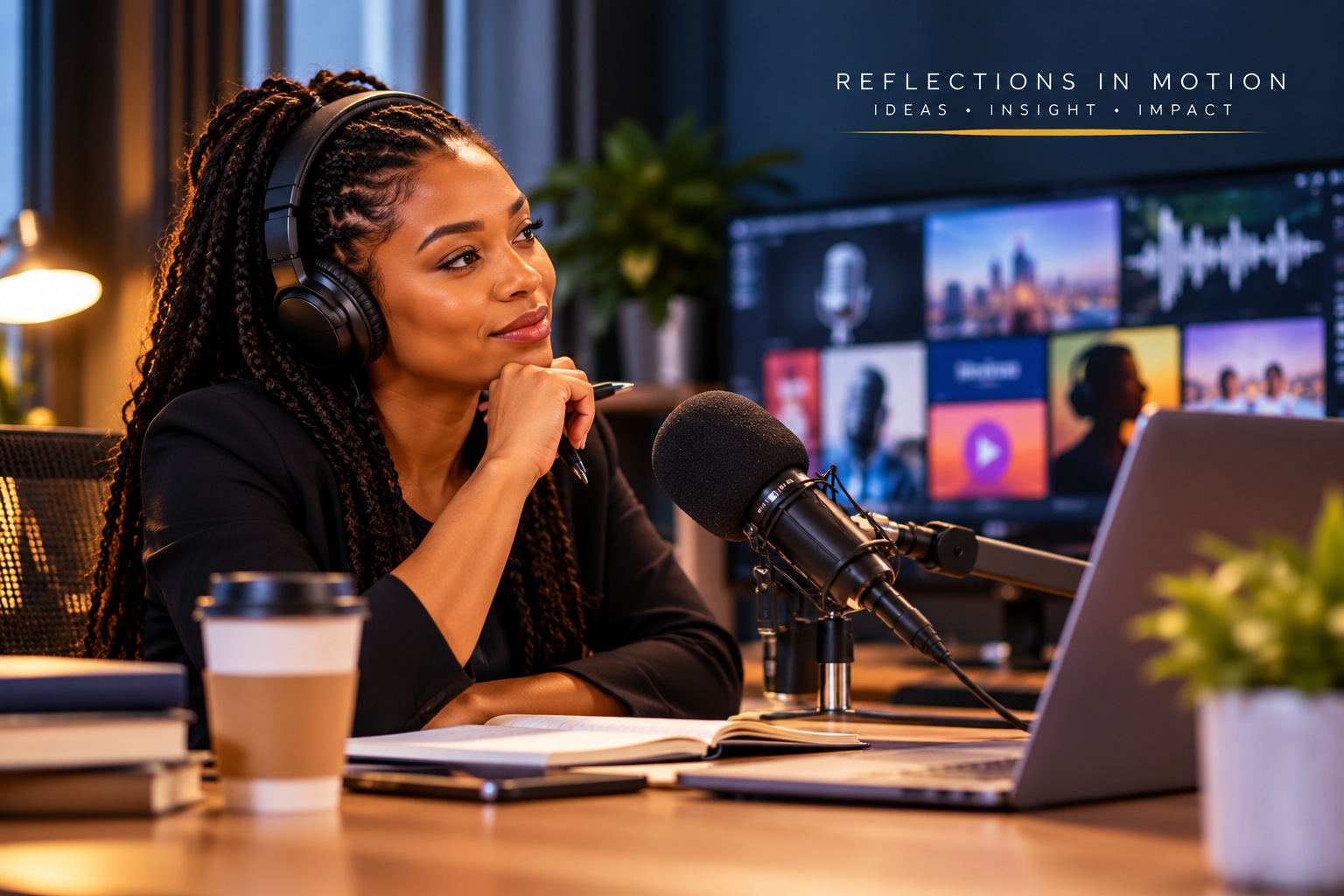
As recommendation systems increasingly influence discovery, creating something worth listening to may only be half the battle.
There was a time when one of the most important pieces of advice given to anyone starting a podcast was simple: create good content.
Have something worth saying. Know your audience. Tell compelling stories. Produce the programme well and give people a reason to return. That advice still matters.
But there is another question facing today’s podcaster: what happens if you create an excellent podcast and the people who would love it never discover it?
We are creating in an environment where listeners do not necessarily choose everything they encounter. Platforms recommend. Homepages are personalised. The next video appears. The next podcast is suggested. Increasingly sophisticated recommendation systems help determine what gets placed in front of particular audiences.
So perhaps creating a good podcast is no longer the whole challenge. Being discoverable is becoming part of the work too.
BROADCASTING HAS ALWAYS HAD GATEKEEPERS
In some ways, this is not entirely new. Traditional broadcasting has always had people making decisions about what audiences would hear or watch. Programme managers decided what went on air. Music compilers influenced which songs entered rotation. Editors decided which stories made the bulletin. Commissioners decided which programmes were produced.
Broadcasting has always had gatekeepers.
The difference is that today’s gatekeeper may not be sitting in an office.
On digital platforms, recommendation systems can help decide which podcast, video or creator appears in front of a particular person. YouTube explains that its recommendations use signals such as viewing and search history, subscriptions, likes, dislikes and viewer satisfaction. Spotify similarly explains that many recommendations are personalised using algorithms, alongside human editorial curation.
For audiences, this can make discovery remarkably convenient. For creators, however, it introduces another layer to an already crowded environment.
ARE WE CREATING FOR PEOPLE OR FOR THE SYSTEM?
A podcaster ultimately wants to reach people — real people who may laugh at the conversation, learn something, disagree, return next week or recommend the programme to someone else.
But before that relationship can begin, the programme often needs to be discovered.
That creates an uncomfortable question: are creators now producing for two audiences — the human being they want to reach and the system that may help that human being find them?
It is easy to see how this can influence creativity. Titles become more strategic. Thumbnails become more important. Opening moments need to capture attention quickly. Creators watch retention, clicks, engagement and listening behaviour.
None of those things automatically make content worse. Understanding how audiences discover and respond to content can help creators communicate better.
The danger comes when being recommended becomes more important than being worth listening to.
If every creative decision is made primarily to satisfy what we think a system wants, we may eventually become very good at attracting attention while becoming less certain about what we actually want to say.
GOOD AND DISCOVERABLE ARE NOT THE SAME THING
Perhaps this is the distinction independent podcasters need to understand: a good podcast and a discoverable podcast are not necessarily the same thing.
Excellent content can struggle to find an audience. Highly visible content is not automatically excellent. Sometimes something genuinely valuable simply needs enough visibility for the right audience to find it.
That means today’s creator may need to think beyond production — not by abandoning quality in pursuit of an algorithm, but by understanding that creating the programme and helping people discover the programme have become two different parts of the job.
The microphone still matters. The conversation still matters. The storytelling still matters.
But so does what happens after we press publish.
QUALITY STILL HAS THE FINAL WORD
Recommendation technology will continue to evolve. Platforms will change. Algorithms will change. The ways audiences search, watch and listen will change with them.
But there is one thing technology cannot guarantee: that someone will care about what they find.
A recommendation might place a podcast in front of a listener. A clever title might persuade them to click. A strong opening might convince them to stay.
But eventually, the content has to deliver.
Perhaps that is where good podcasting remains powerful.
Discovery may get someone through the door. Quality gives them a reason to stay.
So the question may not really be whether good podcasts are enough. Perhaps the bigger challenge for today’s podcaster is learning how to create something worth discovering — and then making sure it has a chance to be found.
WHAT DO YOU THINK?
When choosing what to listen to or watch, how much of your decision is really yours — and how much begins with what a platform recommends to you?
Share your thoughts in the comments.
FROM MICROPHONE TO MONEY
A good podcast needs more than a microphone.
From Microphone to Money explores the journey from building and launching a podcast to growing an audience and thinking about monetisation.
Get From Microphone to Money →
https://reflectionsinmotion.blog/shop/
WORK WITH ME
I offer broadcasting, podcasting, content-development and language-editing services through REBIETH Productions and Entertainment.
Email: lelon@reflectionsinmotion.blog
Website: https://reflectionsinmotion.blog
Reflections In Motion — Ideas • Insight • Impact
SOURCES
YouTube Help — YouTube’s Recommendation System
https://support.google.com/youtube/answer/16533387
Spotify — Understanding Recommendations
https://www.spotify.com/safetyandprivacy/understanding-recommendations/plain