Category: Broadcasting

  • When Journalism Graduates Face the Microphone and the Camera: Are They Ready?

    When Journalism Graduates Face the Microphone and the Camera: Are They Ready?

    From classroom theory to live broadcasting, are journalism institutions preparing students for the realities of radio and television?

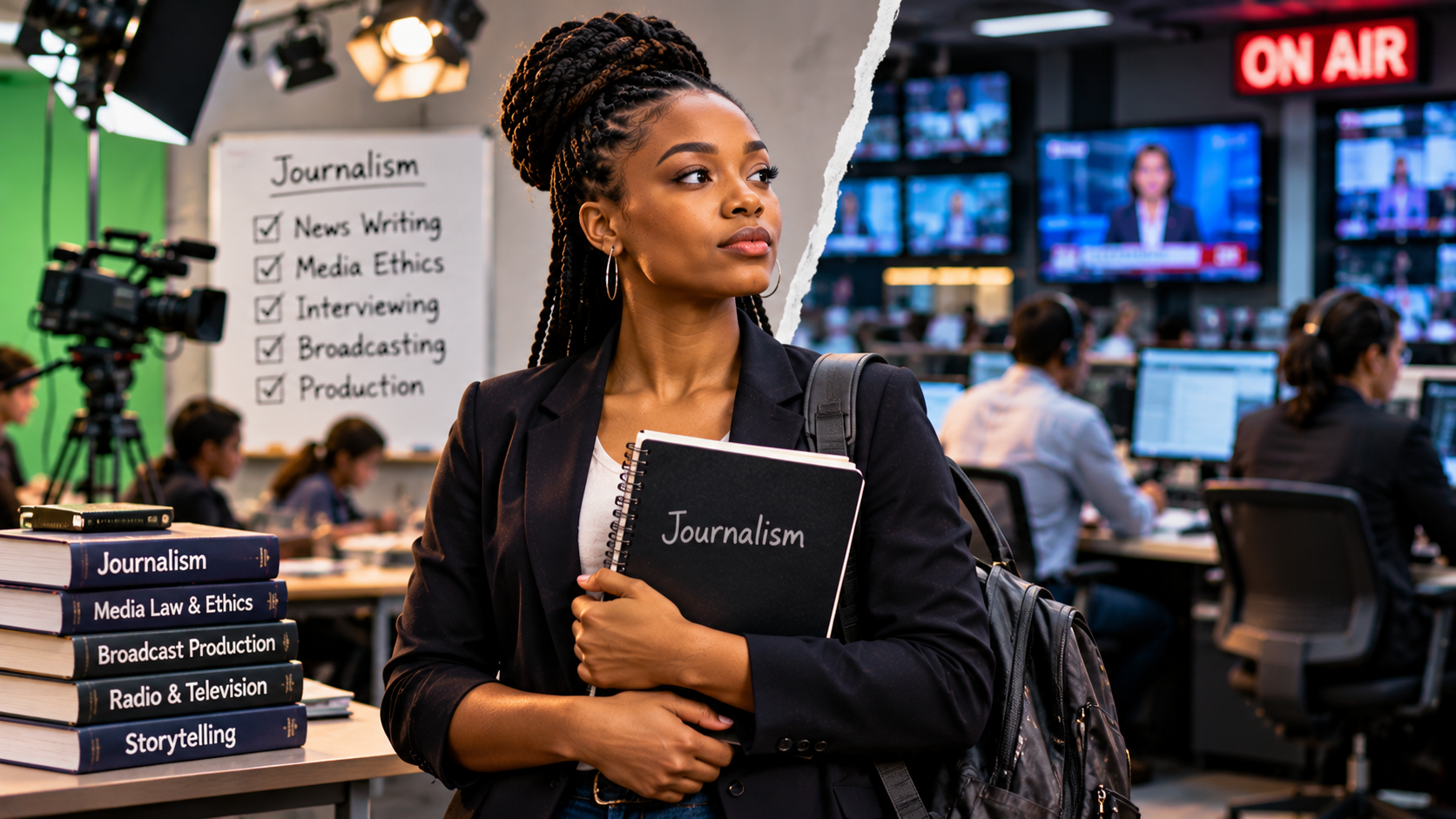
    A journalism graduate walks into a radio studio for the first time.

    They have studied news values, media ethics, interviewing techniques and the principles of journalism. They understand what makes a story newsworthy and why accuracy matters.

    But now the microphone is live.

    The bulletin is approaching, the producer is counting down, and suddenly the graduate must communicate clearly, confidently and accurately while managing the pressure of a working broadcast.

    Elsewhere, another graduate is preparing for a television news presentation. There are cameras, studio lights, an autocue and instructions coming through an earpiece. The script is ready, but delivering it naturally while looking into a camera is proving more difficult than expected.

    Both graduates may understand journalism. But are they prepared for the practical demands of broadcasting?

    And perhaps the more important question is whether we have given them enough opportunities to become prepared.

    When Theory Meets the Studio

    Journalism education provides an important foundation for understanding the profession.

    Students learn about ethics, research, news writing, interviewing, verification and the responsibilities that come with informing the public. These are essential skills.

    But broadcasting also requires the ability to apply that knowledge in environments where decisions must sometimes be made within seconds.

    In radio, a presenter or reporter must communicate through voice, timing and sound. They must listen carefully, respond naturally and remain composed when an interview takes an unexpected turn.

    Television introduces another dimension. A reporter may need to deliver information while standing in front of a camera, manage visual presentation, respond to production cues and maintain concentration despite the activity happening around them.

    And behind both radio and television broadcasts are producers, researchers, editors and technical teams making decisions under equally demanding conditions.

    These are skills that develop through practice.

    A student can understand the principles of broadcasting without yet having the confidence to perform under professional pressure.

    That does not necessarily mean their education has failed. It may mean the transition between learning and doing requires greater attention.

    The First Broadcast Should Not Be the First Real Test

    Imagine learning about live reporting without having opportunities to practise delivering a report under realistic conditions.

    Or studying television production without experiencing the pressure of coordinating a programme as it approaches transmission.

    The challenge is not simply whether students have access to microphones, cameras or editing software. It is whether they have meaningful opportunities to use those tools in situations that resemble the realities of professional broadcasting.

    Can they respond when a planned interview falls through? Can they adjust when breaking news changes the running order? Can they recognise when information has not been sufficiently verified, even when a deadline is approaching?

    And can they recover professionally when something goes wrong during a recording or live production?

    These are not questions that can always be answered through written assessments alone.

    Practical exercises, student productions, simulations and workplace exposure can help bridge the distance between academic understanding and professional performance.

    But practical preparation should not be reduced to confidence in front of a microphone or camera.

    Not every journalism graduate will become a presenter. Some will become exceptional reporters, producers, researchers, editors or investigative journalists whose work is rarely seen by the audience.

    Workplace readiness must recognise those roles too.

    Whose Responsibility Is Workplace Readiness?

    It would be unfair to place the entire responsibility on educational institutions.

    Many journalism programmes already incorporate practical assignments, production facilities and workplace learning opportunities.

    At the same time, broadcasting organisations have a role to play in developing the professionals they hope to employ.

    A graduate entering a newsroom should arrive with foundational knowledge and an understanding of professional expectations. But employers must also recognise that an entry-level journalist is still developing.

    There is a difference between being prepared to enter the profession and having the experience to perform every responsibility independently.

    Internships, mentorship and meaningful workplace exposure can help graduates make that transition.

    Experienced journalists and producers often become an important part of this learning process, helping newcomers understand newsroom routines, editorial decisions and the pressures that cannot always be recreated in a classroom.

    Their contribution deserves recognition, just as graduates deserve structured opportunities to learn.

    Perhaps stronger relationships between journalism educators and broadcasting organisations could help ensure that students understand not only what the profession requires, but what working within it actually feels like.

    The classroom and the newsroom should not be treated as entirely separate worlds.

    They are part of the same professional journey.

    Preparing Journalists for the Reality of Broadcasting

    The broadcasting industry continues to change.

    Radio and television journalists are increasingly expected to understand digital platforms, multimedia storytelling and the different ways audiences consume information.

    But even as technology evolves, the fundamental demands of journalism remain.

    Accuracy matters. Editorial judgement matters. Preparation matters. And the ability to communicate responsibly under pressure matters.

    A qualification may demonstrate that someone has acquired the knowledge required to enter the profession.

    Practical experience helps them develop the confidence and judgement to apply that knowledge.

    Neither should be dismissed.

    Perhaps the question is not whether journalism graduates are good enough for the workplace.

    It is whether the journey from education to employment gives them a fair opportunity to develop the skills the workplace will demand.

    Because the first time a journalism graduate experiences the pressure of a live microphone or television camera should not have to be the first day their professional reputation is on the line.


    Continue the Conversation

    Are journalism graduates receiving enough practical preparation for the realities of radio and television broadcasting?

    And what more could educational institutions and broadcasting organisations do to make the transition into professional newsrooms easier?

    Share your thoughts in the comments.

    So You Want to Be a News Producer?

    Behind every successful news bulletin is a process that requires preparation, editorial judgement and production skills.

    So You Want to Be a News Producer? explores the work, responsibilities and professional thinking involved in news production.

    Explore the book and other broadcasting resources:

    Reflections In Motion Shop:
    https://reflectionsinmotion.blog/shop/

    Amazon Author Page — Lelo:
    https://www.amazon.com/author/lelo

    Work With Me

    I offer broadcasting, podcasting, content development, and language-editing services through Rebieth Productions and Entertainment.

    Email: lelon@reflectionsinmotion.blog

    Website: https://reflectionsinmotion.blog

    Reflections In Motion — Ideas • Insight • Impact
  • When Everyone Has a Microphone, Who Is Still a Broadcaster?

    When Everyone Has a Microphone, Who Is Still a Broadcaster?

    In an age of podcasts, livestreams and digital creators, what really defines a broadcasting professional?

    There was a time when getting behind a microphone meant entering a broadcasting institution. For many aspiring broadcasters, the journey involved auditions, training, newsroom experience, production teams and learning the standards that governed what went on air.

    The microphone was not simply a piece of equipment. It represented access to an industry that was difficult to enter.

    Today, that has changed.

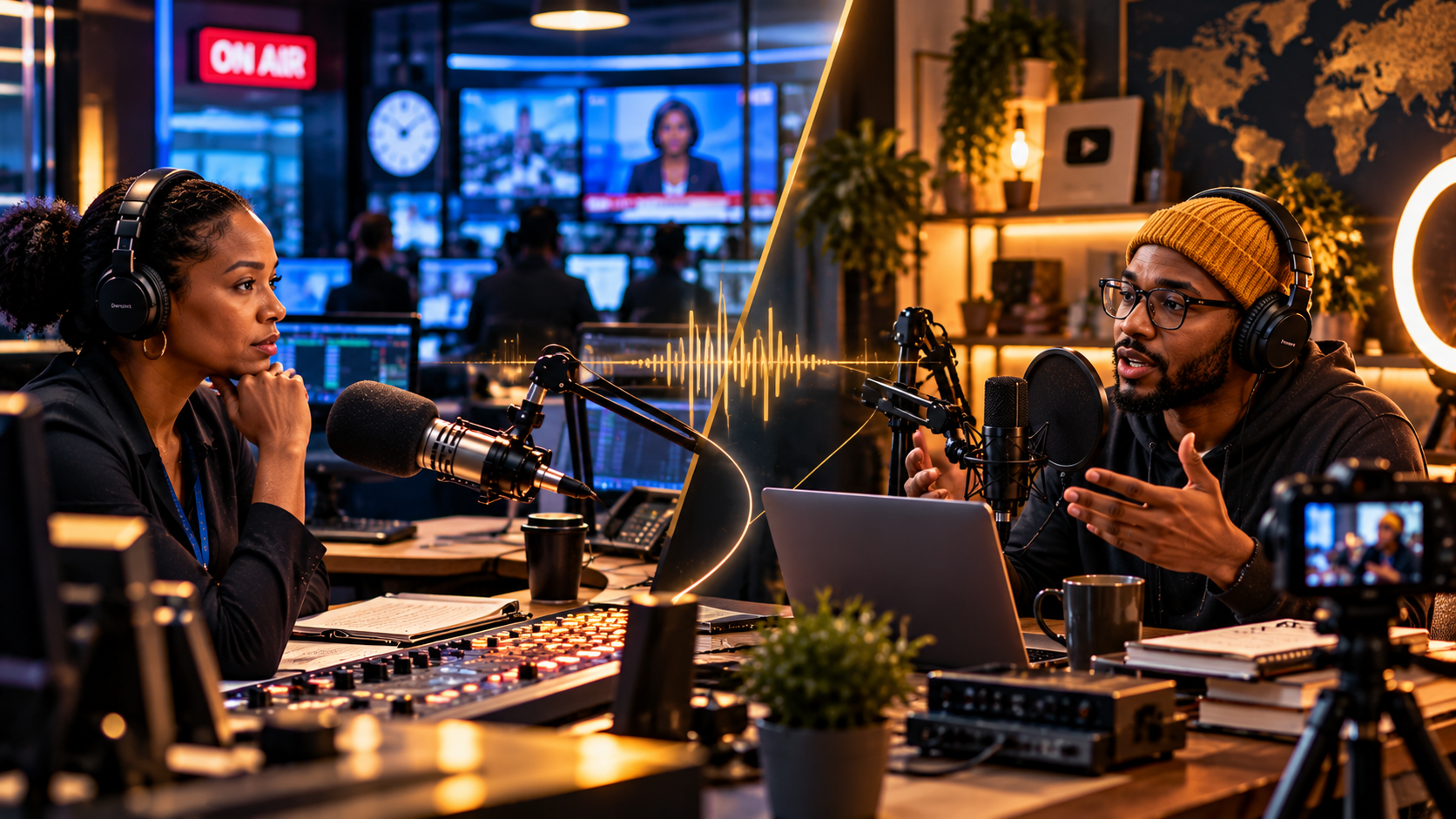
    Someone can purchase a microphone, record a podcast from their bedroom, start a YouTube channel or host a livestream and potentially reach an audience far beyond their immediate community.

    The barriers to publishing audio and video have fallen dramatically. And that is something worth celebrating.

    But as more people gain access to platforms that allow them to inform, entertain and influence audiences, an interesting question emerges.

    When almost everyone can broadcast, what does it actually mean to be a broadcaster?

    The Microphone Is No Longer the Gatekeeper

    Traditional broadcasting was built around institutions that controlled access to frequencies, studios, equipment and distribution. Getting an opportunity often meant convincing someone that you belonged behind the microphone or in front of the camera.

    Digital platforms have changed that relationship.

    Independent podcasters can produce compelling interviews. YouTube creators can develop investigative programmes. Livestreamers can build communities around conversations that traditional broadcasters may never have considered.

    Some have developed remarkable production, storytelling and interviewing skills without ever working for a radio or television station. Their contribution cannot simply be dismissed because they entered the industry through a different door.

    In many ways, digital media has demonstrated that talent does not always need institutional permission to find an audience.

    But access to a platform and mastery of a profession are not necessarily the same thing.

    When Reach Becomes a Measure of Credibility

    In today’s media environment, popularity can sometimes be mistaken for professional authority. A creator with hundreds of thousands of followers may attract more attention than a journalist with years of reporting experience.

    A controversial interview may travel further than a carefully researched conversation. And a compelling personality may become influential long before questions about accuracy, fairness or editorial responsibility are considered.

    Yet these concerns are not exclusive to digital creators. Traditional broadcasting has also experienced sensationalism, poor editorial judgement and programmes that prioritise attention over substance.

    Working inside an established institution does not automatically guarantee professionalism. Similarly, working independently does not mean someone lacks it.

    Perhaps the distinction we should be examining is not where someone broadcasts from, but how they approach the responsibility that comes with reaching an audience.

    Do they verify information before presenting it as fact? Do they understand the consequences of what they publish? Can they distinguish opinion from reporting? Do they respect the people whose stories they tell?

    These questions matter whether the programme is produced inside a major broadcasting organisation or recorded in a home studio.

    The Profession Is Bigger Than the Platform

    Broadcasting has never been defined by the microphone alone. Behind a successful programme are decisions about research, preparation, storytelling, production, language, audience understanding and editorial judgement.

    These are skills that develop through learning, experience and practice.

    Technology can make recording easier. It can simplify editing, improve sound and distribute content across multiple platforms. But it cannot automatically provide the judgement required to handle a sensitive interview or recognise when an unverified claim could cause harm.

    At the same time, traditional broadcasters have something to learn from independent creators.

    Many digital professionals understand audience engagement, creative freedom, community building and changing consumption habits in ways that established media organisations are still learning to navigate.

    Perhaps the future of broadcasting lies less in defending the boundaries between traditional and digital media, and more in recognising the professional standards that should travel across both.

    Broadcasting Is More Than Being Heard

    The democratisation of media has created opportunities that previous generations of broadcasters could only imagine. More voices can participate. More stories can be told. More communities can represent themselves.

    That is progress.

    But the ability to reach an audience also carries responsibility.

    Having a microphone gives someone the opportunity to speak. Having followers means people may be listening. Neither automatically establishes the quality, credibility or value of what is being communicated.

    And perhaps that is where the conversation about modern broadcasting should begin.

    Not with who deserves to call themselves a broadcaster, but with what it means to practise broadcasting well.

    Because in a world where almost anyone can be heard, the real distinction may no longer be who has access to the microphone, but what they choose to do with it.


    Continue the Conversation

    Should broadcasting professionalism be defined by formal training, industry experience, editorial standards or the quality of the work itself?

    And can independent digital creators and traditional broadcasters learn from one another?

    Share your thoughts in the comments.

    From Broadcaster to Brand

    The broadcasting industry is changing, and professional opportunities are no longer limited to traditional media platforms.

    From Broadcaster to Brand: Turning Your Skills into a Creative Business explores how broadcasters can begin turning their experience, knowledge and skills into something they own.

    Explore From Broadcaster to Brand:

    https://reflectionsinmotion.blog/shop

    Work With Me

    I offer broadcasting, podcasting, content development, and language-editing services through Rebieth Productions and Entertainment CC.

    Email: lelon@reflectionsinmotion.blog

    Website: https://reflectionsinmotion.blog

    Reflections In Motion — Ideas • Insight • Impact

  • When the Newsroom Loses Its Memory

    When the Newsroom Loses Its Memory

    What happens when experienced broadcasters leave — and take years of institutional knowledge with them?

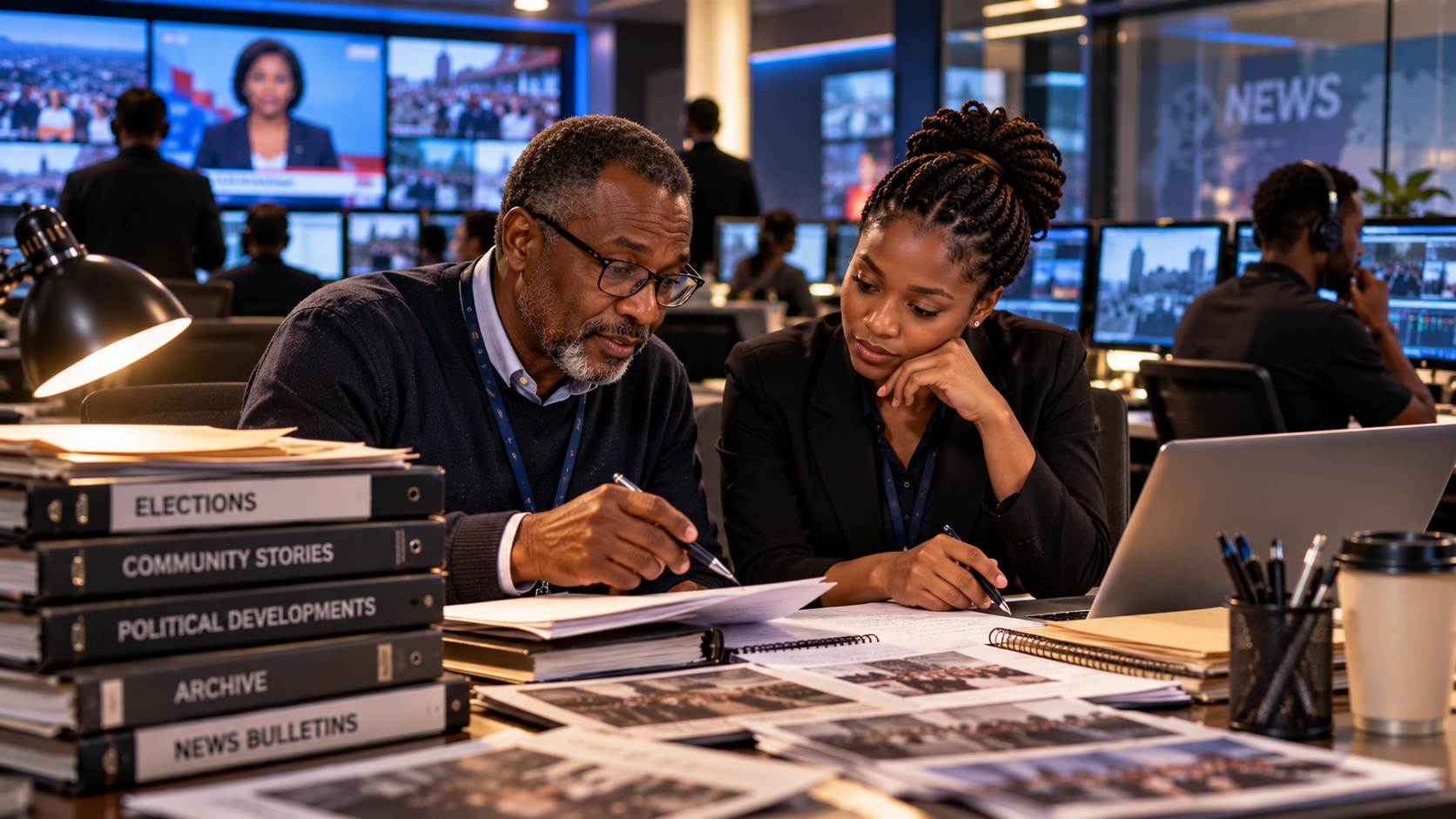
    A news producer spends fifteen years in a newsroom. Over those years, they cover elections, breaking news, community protests, political developments and stories that shape the lives of the people they serve.

    They learn which sources can be trusted, which stories require greater sensitivity and why certain editorial decisions were made years before. They remember the stories that made headlines and those that never reached the bulletin.

    Then one day, they leave.

    The organisation advertises the position, appoints a replacement and continues broadcasting. But something else may have left with that employee. Something that cannot simply be included in a job description.

    Institutional memory.

    The Knowledge That Never Makes It Into a Handover Report

    Broadcasting organisations depend on systems, policies, archives and editorial procedures to maintain continuity. But not everything that makes a newsroom function effectively is written down.

    Some knowledge develops through years of experience.

    An experienced producer may remember the background to a community dispute that resurfaces years later. A journalist may recognise when a public official’s statement contradicts something previously reported. A language editor may understand the cultural nuances that can completely change the meaning of a story.

    These are not necessarily skills that belong exclusively to older broadcasters. They are forms of knowledge developed through exposure, experience and continued engagement with the communities being served.

    And when people leave without opportunities to share that knowledge, newsrooms risk losing more than employees.

    They risk losing context.

    When Experience Walks Out of the Door

    Staff movement is a normal part of any industry. People retire, pursue new opportunities, change careers or move into different areas of broadcasting.

    New professionals bring fresh perspectives, technological skills and ideas that can strengthen the newsroom.

    The challenge is not that experienced broadcasters leave. The challenge is what happens to their knowledge when they do.

    A newsroom may have access to years of archived material, but an archive does not always explain the thinking behind an editorial decision.

    A previous bulletin may tell us what was reported. It may not explain why certain information was excluded, how a difficult source was handled or what lessons emerged from covering a particularly sensitive story.

    That understanding often lives in the people who were there. Unless it is deliberately shared, it can disappear from the organisation’s everyday practice.

    Who Is Passing the Knowledge On?

    In broadcasting, learning has never happened exclusively in classrooms or training workshops. Some of the most valuable lessons happen during ordinary working days.

    A junior producer watches how a senior colleague handles a developing story. A reporter learns how to approach a sensitive interview. An editor explains why a particular angle needs reconsideration.

    These exchanges may seem small, but over time they help shape professional judgement.

    Yet in busy newsrooms, mentorship can easily become something everyone values, but nobody has time to prioritise. Deadlines must be met. Bulletins must go out. Programmes must continue.

    And the opportunity to transfer knowledge is often postponed until somebody is preparing to leave.

    By then, there may be very little time left.

    Perhaps broadcasting organisations need to think about institutional knowledge as something that should be shared continuously, rather than something transferred during a final handover.

    A Newsroom Should Remember More Than Its Headlines

    Technology has made it easier to preserve recordings, scripts, interviews and historical material. But preserving information is not quite the same as preserving understanding.

    An archive can tell a new journalist what happened. An experienced colleague may help explain why it mattered.

    Both have value.

    The future of broadcasting needs fresh voices, new ideas and professionals who understand emerging technologies. But it also needs the perspective that comes from years of reporting, producing, editing and serving audiences.

    These strengths should complement one another.

    The purpose of institutional memory is not to keep newsrooms trapped in the past. It is to help them make better decisions in the present.

    A newsroom can replace a position.

    Replacing the knowledge that occupied it is another matter.

    And perhaps the real question broadcasting organisations should be asking is not simply who will fill the next vacancy.

    It is what knowledge must remain when the person who held that position moves on.


    Continue the Conversation

    When an experienced broadcaster leaves a newsroom, what should the organisation do to ensure that valuable knowledge and experience are not lost?

    Have you witnessed important institutional knowledge disappearing when experienced colleagues left?

    Share your thoughts in the comments.

    From Broadcaster to Brand

    Your broadcasting experience has value beyond the organisation you work for.

    From Broadcaster to Brand: Turning Your Skills into a Creative Business explores how broadcasters can begin turning their professional skills, experience and knowledge into something they own.

    Explore From Broadcaster to Brand →

    https://reflectionsinmotion.blog/shop

    Work With Me

    I offer broadcasting, podcasting, content development, and language-editing services through Rebieth Productions and Entertainment CC.

    Email: lelon@reflectionsinmotion.blog

    Website: https://reflectionsinmotion.blog

    Reflections In Motion — Ideas • Insight • Impact
  • Still on Air at 60. What’s Next?

    Still on Air at 60. What’s Next?

    When broadcasting has been your life, preparing for its next chapter can be harder than you think.

    You are 55. Perhaps 60.

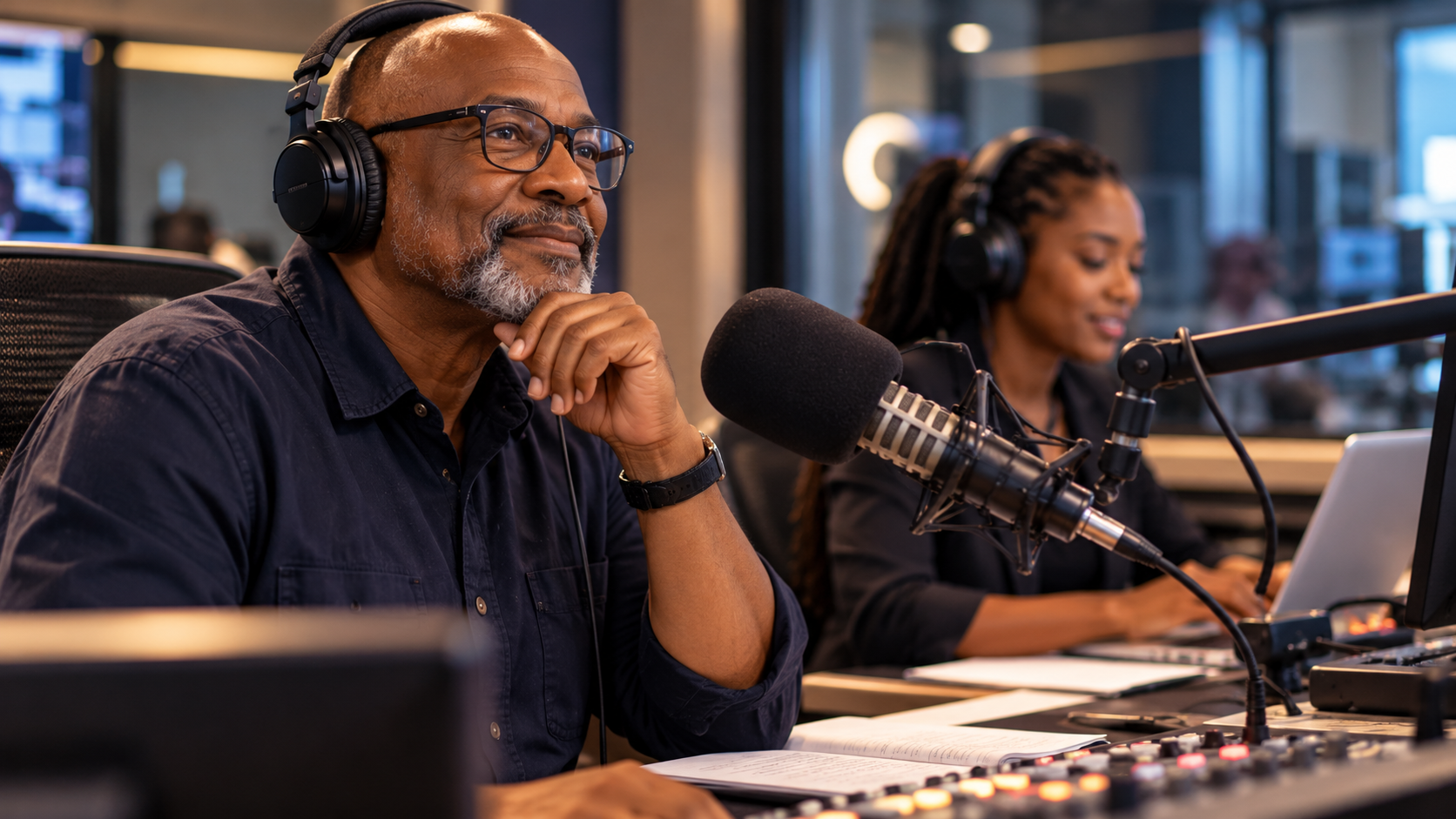
    You have spent most of your working life behind a microphone or in front of a television camera. You have interviewed presidents, covered elections, reported on tragedies, celebrated national victories and shared ordinary moments with audiences who have grown older alongside you.

    You have watched young broadcasters arrive, develop their confidence and become established names. Some have even become your managers.

    And then, one day, a question begins to occupy your thoughts.

    What happens when I am no longer the person behind this microphone?

    Perhaps your station manager has suggested a different role. Perhaps your contract is approaching its end. Or perhaps nobody has said anything at all, but you know that retirement is getting closer.

    For someone who has spent decades in broadcasting, the thought of leaving can be unsettling. Because broadcasting has never been just a job. For many, it has become an identity.

    When the Industry Begins to Move On

    There are broadcasters who remain active and relevant well into their sixties and seventies. Their experience, credibility and connection with audiences continue to make them valuable. Age does not automatically make someone less capable of presenting a programme or contributing meaningfully to broadcasting.

    But the industry changes.

    Stations introduce younger voices. Television channels reposition their programming. Management structures change, contracts are reviewed and new technologies reshape how content is produced and distributed.

    Sometimes experienced broadcasters find themselves being encouraged to move into different roles. Others begin to wonder whether their opportunities are narrowing.

    And when that happens, an uncomfortable reality can emerge.

    You may have spent thirty years building a broadcasting career without spending enough time preparing for life beyond it.

    The question is not whether older broadcasters should make way for younger ones. It is whether experienced broadcasters are preparing themselves for a future that may look different from the careers they have known.

    Thirty Years of Experience. What Have You Built With It?

    Think about everything you know.

    You understand how to handle a difficult interview. You know how to manage a live broadcast when something goes wrong. You have learned how to communicate with audiences, develop programmes, tell stories and make decisions under pressure.

    Perhaps you have trained younger colleagues informally, corrected their mistakes or guided them through challenging assignments.

    But have you ever considered how much that knowledge is worth outside your current workplace?

    Have you documented it? Have you considered teaching, mentoring or developing training programmes? Could your experience become a book, a workshop, a podcast, a production company or a consulting service?

    Not every broadcaster needs to start a business. Some may prefer to mentor, volunteer, teach or contribute to professional development within the industry.

    But after decades of broadcasting, surely there should be something more to show than a collection of programmes you once presented.

    What knowledge will remain available to others when you are no longer there to share it?

    That is a question worth asking long before retirement arrives.

    Don’t Wait for Someone to Tell You It’s Time

    Perhaps the most difficult part of preparing for retirement in broadcasting is accepting that a familiar professional identity may eventually change.

    When you have been introduced as a radio presenter, television personality or news anchor for decades, imagining yourself doing something different can feel like losing a part of who you are.

    But preparing for another chapter does not mean surrendering the one you are still enjoying.

    You can remain an active broadcaster while developing other interests, transferring knowledge and exploring opportunities that may eventually support you beyond your current role. You can begin mentoring while you are still presenting, document your experiences while the memories are fresh and develop a business or educational project without immediately leaving your job.

    Financial preparation matters, of course. But retirement planning is also about purpose, professional identity and what you intend to do with the experience you have accumulated.

    Because when the final broadcast comes, you should not have to begin discovering your value from scratch.

    What Will You Leave Behind?

    Perhaps you have another ten or fifteen years behind the microphone. Perhaps you are approaching your final contract. Or perhaps you are one of those broadcasters who intends to remain on air for as long as your health, passion and opportunities allow.

    Whatever your situation, the question remains.

    What are you doing today to prepare for the day broadcasting is no longer your daily occupation?

    And just as importantly, what are you doing to ensure that the next generation benefits from everything you have learned?

    A successful broadcasting career should not only be remembered for the programmes presented, the awards received or the audiences attracted. It should also be remembered for the knowledge shared, the talent developed and the contribution made to the profession.

    You may still have years of broadcasting ahead of you. But perhaps now is the time to begin thinking about what comes next.

    Because one day, the microphone may be switched off. Your contribution to broadcasting does not have to end with it.


    What Do You Think?

    If you are an experienced broadcaster approaching retirement, have you started preparing for your next chapter?

    And if you are still early in your career, what are you doing now to build a future beyond your current broadcasting role?

    Share your thoughts in the comments.

    From Broadcaster to Brand

    Your broadcasting experience is valuable beyond the platform that employs you.

    From Broadcaster to Brand: Turning Your Skills into a Creative Business explores how broadcasters can recognise the value of their professional knowledge and begin building opportunities around their experience.

    Explore From Broadcaster to Brand →

    https://reflectionsinmotion.blog/shop

    Work With Me

    I offer broadcasting, podcasting, content-development and language-editing services through REBIETH Productions and Entertainment.

    Email: lelon@reflectionsinmotion.blog

    Website: https://reflectionsinmotion.blog

    Reflections In Motion — Ideas • Insight • Impact

  • WHEN AI CHOOSES WHAT WE HEAR AND WATCH: WILL GOOD PODCASTS BE ENOUGH?

    WHEN AI CHOOSES WHAT WE HEAR AND WATCH: WILL GOOD PODCASTS BE ENOUGH?

    As recommendation systems increasingly influence discovery, creating something worth listening to may only be half the battle.

    There was a time when one of the most important pieces of advice given to anyone starting a podcast was simple: create good content.

    Have something worth saying. Know your audience. Tell compelling stories. Produce the programme well and give people a reason to return. That advice still matters.

    But there is another question facing today’s podcaster: what happens if you create an excellent podcast and the people who would love it never discover it?

    We are creating in an environment where listeners do not necessarily choose everything they encounter. Platforms recommend. Homepages are personalised. The next video appears. The next podcast is suggested. Increasingly sophisticated recommendation systems help determine what gets placed in front of particular audiences.

    So perhaps creating a good podcast is no longer the whole challenge. Being discoverable is becoming part of the work too.

    BROADCASTING HAS ALWAYS HAD GATEKEEPERS

    In some ways, this is not entirely new. Traditional broadcasting has always had people making decisions about what audiences would hear or watch. Programme managers decided what went on air. Music compilers influenced which songs entered rotation. Editors decided which stories made the bulletin. Commissioners decided which programmes were produced.

    Broadcasting has always had gatekeepers.

    The difference is that today’s gatekeeper may not be sitting in an office.

    On digital platforms, recommendation systems can help decide which podcast, video or creator appears in front of a particular person. YouTube explains that its recommendations use signals such as viewing and search history, subscriptions, likes, dislikes and viewer satisfaction. Spotify similarly explains that many recommendations are personalised using algorithms, alongside human editorial curation.

    For audiences, this can make discovery remarkably convenient. For creators, however, it introduces another layer to an already crowded environment.

    ARE WE CREATING FOR PEOPLE OR FOR THE SYSTEM?

    A podcaster ultimately wants to reach people — real people who may laugh at the conversation, learn something, disagree, return next week or recommend the programme to someone else.

    But before that relationship can begin, the programme often needs to be discovered.

    That creates an uncomfortable question: are creators now producing for two audiences — the human being they want to reach and the system that may help that human being find them?

    It is easy to see how this can influence creativity. Titles become more strategic. Thumbnails become more important. Opening moments need to capture attention quickly. Creators watch retention, clicks, engagement and listening behaviour.

    None of those things automatically make content worse. Understanding how audiences discover and respond to content can help creators communicate better.

    The danger comes when being recommended becomes more important than being worth listening to.

    If every creative decision is made primarily to satisfy what we think a system wants, we may eventually become very good at attracting attention while becoming less certain about what we actually want to say.

    GOOD AND DISCOVERABLE ARE NOT THE SAME THING

    Perhaps this is the distinction independent podcasters need to understand: a good podcast and a discoverable podcast are not necessarily the same thing.

    Excellent content can struggle to find an audience. Highly visible content is not automatically excellent. Sometimes something genuinely valuable simply needs enough visibility for the right audience to find it.

    That means today’s creator may need to think beyond production — not by abandoning quality in pursuit of an algorithm, but by understanding that creating the programme and helping people discover the programme have become two different parts of the job.

    The microphone still matters. The conversation still matters. The storytelling still matters.

    But so does what happens after we press publish.

    QUALITY STILL HAS THE FINAL WORD

    Recommendation technology will continue to evolve. Platforms will change. Algorithms will change. The ways audiences search, watch and listen will change with them.

    But there is one thing technology cannot guarantee: that someone will care about what they find.

    A recommendation might place a podcast in front of a listener. A clever title might persuade them to click. A strong opening might convince them to stay.

    But eventually, the content has to deliver.

    Perhaps that is where good podcasting remains powerful.

    Discovery may get someone through the door. Quality gives them a reason to stay.

    So the question may not really be whether good podcasts are enough. Perhaps the bigger challenge for today’s podcaster is learning how to create something worth discovering — and then making sure it has a chance to be found.

    WHAT DO YOU THINK?

    When choosing what to listen to or watch, how much of your decision is really yours — and how much begins with what a platform recommends to you?

    Share your thoughts in the comments.

    FROM MICROPHONE TO MONEY

    A good podcast needs more than a microphone.

    From Microphone to Money explores the journey from building and launching a podcast to growing an audience and thinking about monetisation.

    Get From Microphone to Money →
    https://reflectionsinmotion.blog/shop/

    WORK WITH ME

    I offer broadcasting, podcasting, content-development and language-editing services through REBIETH Productions and Entertainment.

    Email: lelon@reflectionsinmotion.blog
    Website: https://reflectionsinmotion.blog

    Reflections In Motion — Ideas • Insight • Impact
    SOURCES

    YouTube Help — YouTube’s Recommendation System
    https://support.google.com/youtube/answer/16533387

    Spotify — Understanding Recommendations
    https://www.spotify.com/safetyandprivacy/understanding-recommendations/plain

  • You Know My Voice. Should You Know Me Too?

    You Know My Voice. Should You Know Me Too?

    Should broadcasters take the listener relationship beyond the microphone?

    There is something unusual about meeting someone who already feels as though they know you.

    A listener walks up to a radio presenter and says, “I’ve been listening to you for years.”

    They know the broadcaster’s laugh. They recognise the expressions they use on air. They may remember stories about their family, their career or something funny that happened during a show years ago.

    For the listener, this is not an introduction. It feels like meeting someone familiar.

    For the broadcaster, however, it may be the first time they have ever seen this person.

    That is one of the fascinating relationships broadcasting creates.

    But perhaps there is another question worth asking: should that relationship always remain behind the microphone?

    When an Audience Starts to Feel Like a Community

    The entertainment industry has long understood the value of bringing audiences closer to the people they follow. Musicians meet supporters at concerts and signings. Actors interact with audiences at premieres, festivals and conventions. Authors hold book launches and readings. These moments allow people to experience the person behind the work.

    Broadcasting has its own version of this through outside broadcasts, station activations and community events. But perhaps there is room to think more intentionally about the relationship between individual broadcasters and the people who spend so much time listening to them.

    Radio, in particular, creates an intimacy that is difficult to replicate. A listener may wake up with the same breakfast presenter every weekday. Another may drive home with the same afternoon show for years. The broadcaster becomes part of routines, conversations and sometimes significant moments in people’s lives.

    Last week, we reflected on audience measurement and what the numbers really tell broadcasters.

    But behind every one of those numbers is a person.

    Perhaps sometimes broadcasters need opportunities to meet them.

    Beyond the Station

    This becomes even more interesting when we think about the broadcaster as a brand.

    Today, a broadcasting career does not necessarily begin and end with the programme. A presenter may also host a podcast, write a book, speak at events, create digital content or build a business around their expertise.

    That means the relationship built through broadcasting can travel with the broadcaster beyond the station.

    Could there be more listener meet-ups? Live conversations? Podcast recordings with an audience? Book signings? Small events where broadcasters and the communities that have followed them can actually meet?

    Not every broadcaster will want that kind of relationship, and not every programme needs it. But for those building a personal brand beyond the microphone, perhaps audience connection should be considered as carefully as social media presence.

    Because building a brand is not only about being visible.

    It is also about building relationships.

    Connection Does Not Mean Complete Access

    There is, however, an important distinction.

    A listener feeling connected to a broadcaster does not mean they are entitled to every part of that broadcaster’s life. The intimacy created through radio can sometimes blur that boundary. Social media can blur it even further.

    A broadcaster can be warm, accessible and genuinely interested in the people who support their work while still maintaining a private life.

    And perhaps that is why broadcaster-audience engagement needs to be approached differently from simply creating a “fan culture”.

    The goal does not have to be celebrity. It can be community.

    Nor does every interaction have to become an opportunity to sell something. If every meeting becomes “buy my book”, “subscribe to my podcast” or “come to my event”, something genuine can easily become transactional.

    Sometimes meeting the audience should simply mean meeting the audience.

    From Audience to Community

    Perhaps broadcasters have spent so much time learning how to speak to audiences that we have not always thought about what happens when we step out from behind the microphone and meet them.

    The relationship is already there.

    The question is what we choose to do with it.

    For some broadcasters, keeping that relationship on air may be enough. For others, particularly those building careers and brands beyond traditional broadcasting, there may be value in creating meaningful spaces where listeners become more than audience figures.

    Not customers. Not followers. Not statistics.

    People.

    Because the person listening may feel as though they have known your voice for years. Perhaps, every now and then, there is something powerful about giving them the opportunity to meet the person behind it.

    And maybe the future of broadcaster branding is not simply about building a bigger audience.

    Maybe it is also about building a community.


    What Do You Think?

    Should broadcasters create more opportunities to meet and engage with their listeners beyond the programme, or should the relationship remain primarily on air?

    Share your thoughts in the comments.

    From Broadcaster to Brand

    A broadcasting career can become more than the platform you work on. From Broadcaster to Brand explores how broadcasters can begin turning their experience, skills and knowledge into something they own.

    Get From Broadcaster to Brand →
    https://reflectionsinmotion.blog/shop/

    Work With Me

    I offer broadcasting, podcasting, content development and language editing services through REBIETH Productions and Entertainment.

    📧 Email: lelon@reflectionsinmotion.blog
    🌐 Website: https://reflectionsinmotion.blog

    Reflections In Motion — Ideas • Insight • Impact
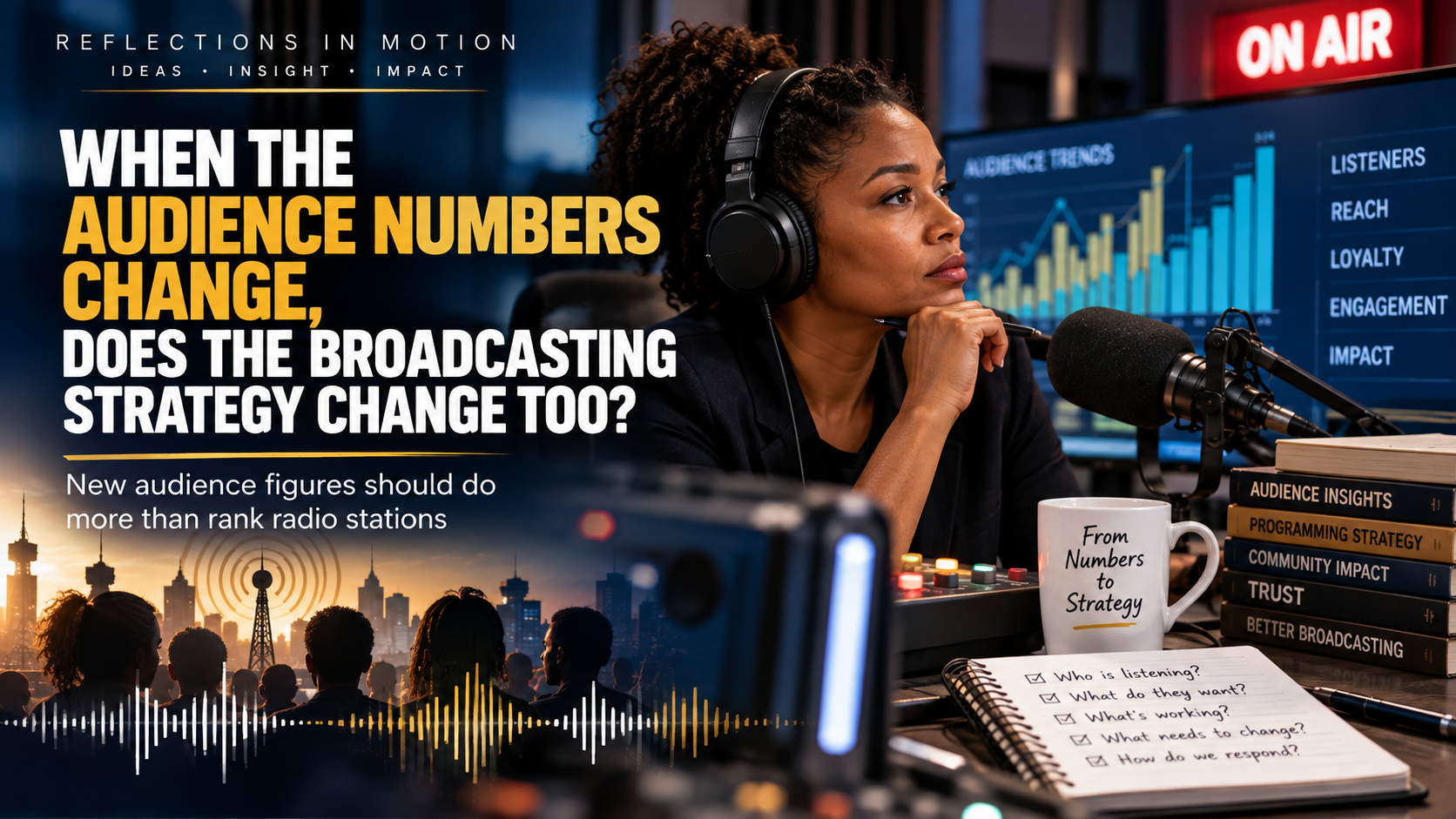

  • When the Audience Numbers Change, Does the Broadcasting Strategy Change Too?

    When the Audience Numbers Change, Does the Broadcasting Strategy Change Too?

    New audience figures should do more than rank radio stations

    South Africa is reportedly approaching an important moment in radio audience measurement.

    According to The Media Online, the Broadcast Research Council’s new Radio Audience Measurement Survey (RAMS) is moving closer to completing its first full annual sample. The publication reported that the first three waves had reached 29,380 respondents—more than 75% of the planned national sample of 36,000 people. The fourth wave was expected to complete the annual sample, followed by validation before detailed audience figures are released.

    Once completed and validated, the research is intended to provide the industry with a new radio audience measurement currency.

    But better numbers will matter only if broadcasters know what to do with them.

    Audience Measurement Is Not Just a Scoreboard

    Radio audience figures inevitably invite comparison. When the numbers rise, stations celebrate. When they fall, presenters, producers and programme managers may find themselves asking what changed—and what needs to change with it.

    But audience research should do more than tell us who is ahead. It should help broadcasters understand their listeners: when they listen, how they listen, which programmes connect with them and how listening behaviour may be changing.

    A large audience may look impressive, but reach alone does not always tell us about loyalty, trust or impact. A listener may tune in for a competition, a major interview or a controversial conversation and never return. Another programme may have a smaller audience but build a strong and consistent relationship with the community it serves.

    The number tells us that someone arrived. It does not always tell us why they stayed—or why they left.

    When Numbers Start Defining Success

    It is easy to become emotionally attached to numbers, and radio is not alone in this. Television watches ratings, print media tracks circulation and readership, podcasters watch listeners and subscribers, while digital platforms track views, clicks and engagement. Different mediums use different measurements, but the temptation to allow the numbers to define success can be remarkably similar.

    For radio, the danger comes when audience figures stop informing strategy and begin dictating it. If ratings become the only measure of success, stations may begin chasing temporary attention. Sensational topics can replace meaningful conversations. Familiar voices may be protected simply because they are known, while new ideas may be rejected because they appear too risky.

    That can create visibility without necessarily creating better broadcasting.

    Audience data matters. Broadcasters need to know whether people are listening and whether programming decisions are working. But the figures become more useful when they lead to better questions.

    What are listeners responding to? Which programmes are building loyalty? Are audiences staying with the station beyond one popular show or personality? And when the numbers change, do we understand why before changing the strategy?

    Numbers Should Lead to Better Broadcasting

    When the new RAMS audience figures are eventually released, comparisons will be unavoidable. There will be interest in who gained listeners, who lost them and which stations or programmes appear strongest.

    But perhaps the more valuable conversation begins after the rankings.

    What will broadcasters learn from the information? Will it help stations understand changing listener behaviour? Will programme teams use it to strengthen what is already working? Will declining figures automatically trigger changes, or will broadcasters first look more closely at what those numbers actually represent?

    Audience measurement should inform editorial and programming decisions. It should not replace editorial judgement.

    Because a number can tell a station where it stands. Understanding the audience behind that number can help it decide where to go next.


    Reflections In Motion — Ideas • Insight • Impact

    Continue the Conversation

    What should matter most when measuring a radio programme’s success: audience size, listener loyalty, community impact—or something else?

    Share your thoughts in the comments.

    From Broadcaster to Brand

    Broadcasting is changing, and so are the opportunities available beyond the traditional platform. From Broadcaster to Brand explores how broadcasters can begin turning their experience, skills and knowledge into something they own.

    Get From Broadcaster to Brand →
    https://reflectionsinmotion.blog/shop/

    Work With Me

    I offer broadcasting, podcasting, content development and language editing services through REBIETH Productions and Entertainment.

    📧 lelon@reflectionsinmotion.blog
    🌐 https://reflectionsinmotion.blog

    Source

    The Media Online: BRC’s new RAMS survey moves closer to a new radio currency launch.

    Read the report


  • When the Audience Knows Before the Broadcaster Does

    When the Audience Knows Before the Broadcaster Does

    Revisiting an old broadcasting conversation in an information environment that keeps changing

    This is not a new conversation.

    For years, broadcasters and journalists have discussed what happens when social media moves faster than the newsroom. We have debated citizen journalism, misinformation, verification, the pressure to break stories first and the changing relationship between traditional media and audiences.

    So perhaps the question is no longer whether social media has changed broadcasting.

    We already know that it has.

    The more interesting question, after years of living with that change, is what we now expect the broadcaster to contribute.

    Because the audience no longer necessarily waits for the bulletin.

    A video may already be circulating. WhatsApp groups may already be discussing it. Social media users may have identified the people involved, offered explanations and reached conclusions before a newsroom has confirmed the first details.

    None of this is particularly new anymore.

    And perhaps that is precisely why it deserves another look.

    Maybe We Have Been Asking the Wrong Question

    Much of the earlier conversation centred on whether traditional media could keep up with social media.

    But years later, perhaps keeping up is not the most useful measure.

    A newsroom with editorial processes, verification requirements and accountability structures will not always move at the same speed as someone holding a smartphone at the scene.

    Nor should speed automatically be treated as evidence that one is doing journalism better than the other.

    The question becomes less about who told us first and more about what the broadcaster added once they arrived.

    Did we verify what was circulating?

    Did we provide context the original post couldn’t?

    Did we distinguish confirmed information from speculation?

    Did we help the audience understand the story rather than simply repeat what they had already seen?

    That is where this old broadcasting conversation starts to feel different.

    Information Is Everywhere. Journalism Still Has a Job.

    Social media has given audiences extraordinary access to events as they unfold.

    Someone at the scene can record a video and publish it within seconds. Communities that once depended almost entirely on traditional media to tell their stories can now document events themselves. Eyewitness accounts, photographs and videos can reach thousands of people before a reporter has even arrived.

    That has changed journalism in important ways.

    But seeing something happen is not always the same as understanding what happened.

    A video may capture thirty seconds of an event without showing what happened before the recording started. A screenshot may be genuine while the explanation attached to it is false. An old photograph can resurface during a new event and suddenly be presented as current.

    The audience may therefore know about the story before the broadcaster does without necessarily knowing the whole story.

    This is where broadcasting still has something important to offer:

    Context. Verification. Questions. Accountability.

    And sometimes the willingness to say:

    This is what we know. This is what we don’t know. And this is what we have been able to verify.

    In an information environment where certainty can travel faster than evidence, there is value in being clear about what has not yet been established.

    The Pressure Has Not Disappeared

    None of this removes the pressure on broadcasters to move quickly.

    If thousands of people are discussing a developing story online while a radio or television station appears silent, audiences may reasonably wonder why.

    A broadcaster cannot simply ignore the information environment in which its audience now lives.

    But rushing to repeat what is already circulating does not necessarily add value either.

    If the audience has already seen the video, repeating that the video exists tells them very little.

    Journalism has to bring something more.

    Perhaps that is one of the biggest shifts in this conversation:

    The broadcaster is no longer always introducing the audience to the story. Sometimes the broadcaster is entering a conversation that has already started.

    And that requires a different kind of confidence.

    There is no shame in saying that details are still emerging. There is no weakness in refusing to turn speculation into fact simply because everyone else appears to be repeating it.

    Credibility is built not only through what a broadcaster tells an audience, but also through what they are prepared not to say until they know.

    So What Is the Broadcaster For Now?

    Perhaps that is the question worth revisiting.

    Not whether radio, television and traditional newsrooms can outrun social media. That race was never particularly useful.

    The more meaningful question is what audiences should receive from professional broadcasting that they cannot always get from an endless stream of posts, videos, comments and forwarded messages.

    The answer may be less glamorous than being first.

    It is judgement.

    It is context.

    It is verification.

    It is knowing the difference between what appears to have happened and what can actually be established.

    The tools have changed. The audience has changed. The speed of information has changed.

    But perhaps the fundamental responsibility has not.

    Years after we first began discussing social media’s disruption of traditional broadcasting, we are still returning to the same tension between speed and accuracy.

    Maybe that does not mean the conversation has become outdated.

    Maybe it means we have discovered just how important it is.

    The audience may know about the story before the broadcaster does.

    But the internet may beat the broadcaster to the story. It should not beat the broadcaster to the truth.


    Reflections In Motion — Ideas. Insight. Impact.

    Continue the Conversation

    Has social media changed what you expect from professional broadcasters?

    When you already know about a developing story from social media, what do you expect the newsroom to add?

    Share your thoughts in the comments.

    Want to Go Further?

    Behind every credible news bulletin is someone making decisions about stories, sources, verification, interviews and what is ready to go on air.

    My practical guide So You Want to Be a News Producer? explores the work behind the broadcast and the skills involved in producing news audiences can trust.

    📘 Get So You Want to Be a News Producer?
    https://reflectionsinmotion.blog/product/so-you-want-to-be-a-news-producer/

    🌐 Explore Reflections In Motion:
    https://reflectionsinmotion.blog

    Work With Me

    I work across broadcasting, media, content development and communication, drawing on years of experience in radio news production, editing and storytelling.

    For broadcasting-related training, media projects, content development or collaboration:

    📧 lelon@reflectionsinmotion.blog

    🌐 https://reflectionsinmotion.blog


  • When the Story Shouldn’t Become Entertainment

    When the Story Shouldn’t Become Entertainment

    The responsibility of broadcasting someone else’s worst day

    There are stories that arrive in a newsroom already carrying pain.

    A family has lost someone. A survivor is trying to make sense of what happened. A community is grieving. A person has experienced violence, loss or trauma and, suddenly, that experience becomes part of a public conversation.

    For broadcasters and journalists, these stories matter. They may expose failures, document injustice, give communities a voice or help the public understand the human cost behind a headline.

    But they also come with a difficult question:

    When does telling the story become using someone’s pain to create compelling content?

    The Person Behind the Story

    Broadcasting is built around questions.

    We ask what happened, why it happened, who is responsible and what happens next.

    But when the person in front of the microphone is living through one of the worst moments of their life, the usual rhythm of an interview can change.

    A grieving parent is not simply a source. A survivor is not simply a soundbite. A family standing outside a home where something terrible has happened is not simply visual material for a bulletin.

    The story may belong in the public domain, but the pain still belongs to the person experiencing it.

    That distinction matters.

    Sometimes the pressure to make a story emotionally powerful can push broadcasters towards questions designed to produce a reaction rather than understanding. We may replay the most painful moment repeatedly, search for the most dramatic quote or linger on someone’s grief because it makes the story feel more compelling.

    And somewhere along the way, journalism can begin to look uncomfortably close to spectacle.

    Compassion Does Not Mean Avoiding Difficult Journalism

    There is another side to this conversation.

    Being humane does not mean avoiding hard questions.

    Some stories require difficult interviews. Some truths are uncomfortable. Sometimes the emotional reality of what happened is precisely what helps an audience understand the seriousness of an issue.

    The answer is not to remove emotion from journalism.

    The answer is to remember why the emotion is there.

    The purpose should be to help the audience understand the story more deeply, not simply to create a dramatic moment.

    A broadcaster can be compassionate and still be rigorous. A producer can pursue an important story and still recognise when a person needs space. A newsroom can report tragedy without turning grief into a performance.

    Those things are not opposites.

    The Language We Use Matters

    Sometimes the difference between responsible storytelling and exploitation sits in something as small as a question.

    We have all heard the familiar:

    “How do you feel?”

    It may seem natural, but imagine being asked that question minutes after receiving devastating news.

    There are moments when a person’s emotions are obvious. Asking them to explain those emotions immediately may add very little to the public’s understanding of what happened.

    Perhaps the better question is not always the most dramatic one.

    Sometimes it is the one that allows the person to speak without being pushed towards a particular reaction.

    That requires judgement.

    And judgement is part of the craft.

    When the Broadcast Ends

    One of the strange things about broadcasting is that stories move quickly.

    Today’s tragedy becomes tomorrow’s follow-up and eventually disappears from the running order.

    But for the people inside the story, life does not move at newsroom speed.

    When the cameras leave, the family is still grieving. When the microphone is packed away, the survivor still has to live with what happened. When the clip stops circulating, the person whose pain was shared publicly may still be processing the experience.

    That is worth remembering before we press record.

    The microphone gives us access.

    It does not give us ownership of someone’s pain.

    Some of the most important stories we will ever tell will come from people’s darkest moments. Our responsibility is not to make those moments more dramatic.

    It is to tell them truthfully, carefully and with enough humanity to remember that when the broadcast ends, the person in the story still has to live with what happened.

    A Quiet Reminder

    A powerful interview is not always the one that produces tears.

    A powerful story is not always the one with the most dramatic soundbite.

    Sometimes good journalism is demonstrated by the question we choose not to ask, the image we choose not to use, or the moment we decide a person has given enough.

    That restraint is not weakness.

    It is part of the responsibility that comes with being trusted to tell someone else’s story.


    Reflections In Motion — Ideas. Insight. Impact.

    Continue the Conversation

    Where do you think journalism should draw the line when reporting grief, trauma and tragedy?

    Can a story be emotionally powerful without becoming exploitative?

    Share your thoughts in the comments.

    Want to Go Further?

    If you are interested in what happens behind the broadcast—from finding and developing stories to preparing interviews, verifying information and helping shape the programme audiences eventually hear—my practical guide, So You Want to Be a News Producer? takes you behind the microphone and into the work of the producer.

    📘 Get So You Want to Be a News Producer?
    https://reflectionsinmotion.blog/product/so-you-want-to-be-a-news-producer/

    🌐 Explore Reflections In Motion:
    https://reflectionsinmotion.blog

    Work With Me

    I work across broadcasting, media, content development and communication, drawing on years of experience in radio news production, editing and storytelling.

    For media projects, content development, broadcasting-related training or collaboration:

    📧 lelon@reflectionsinmotion.blog

    🌐 https://reflectionsinmotion.blog

  • From Broadcaster to Brand: From Microphone to Money

    From Broadcaster to Brand: From Microphone to Money

    From an idea to a podcast that can become a business

    In Part One, we asked a simple but important question:

    Why do you want to start a podcast?

    We explored your idea, your audience, your voice and the skills you already carry as a broadcaster.

    But once you’ve made the decision to start, another question appears:

    What happens next?

    Having a podcast idea is exciting.

    Building the podcast is where the real journey begins.

    From idea to actual show

    At some point, the idea in your head has to become something listeners can actually experience.

    That means making decisions about your show’s identity, structure and format.

    And those decisions matter more than many first-time podcasters realise.

    A podcast can take many forms.

    But which one is right for your idea?

    That’s where the real work begins.

    See From Microphone to Money for the framework that helps you turn the idea into a show.

    The microphone isn’t the whole story

    Then there is the equipment.

    Microphones. Headphones. Recording software. Audio quality. Recording spaces.

    It’s easy to become overwhelmed by the technical side of podcasting before you’ve even recorded an episode.

    But what do you actually need?

    And what can you leave for later?

    See From Microphone to Money for a closer look at building your podcast without overcomplicating the technical side.

    Your first episode

    Then comes the moment when the idea has to become an episode.

    What should you say?

    How do you open?

    How do you keep someone listening?

    And how do you make sure your first episode actually sounds like the beginning of a podcast rather than simply a recording?

    Your first episode sets a tone.

    See From Microphone to Money for the practical approach to planning your first episode.

    From recording to publishing

    Recording is only one part of the journey.

    An episode still needs to be shaped, edited and prepared before it reaches an audience.

    Then comes publishing.

    Where does your podcast live?

    How does it reach listeners?

    What needs to happen before you press publish?

    The process can seem complicated from the outside.

    It becomes much clearer when you understand the journey.

    See From Microphone to Money for the step-by-step process.

    But who is going to listen?

    This is where many new podcasters become discouraged.

    You create the episode.

    You publish it.

    And then you wait.

    The numbers may be small at first.

    That’s normal.

    The bigger question is not simply how to get people to press play.

    It’s how to find the right people and give them a reason to come back.

    See From Microphone to Money for the next stage: finding listeners and building an audience.

    Your podcast doesn’t have to stay inside the podcast

    One episode can travel further than its original recording.

    A conversation can create new content.

    A strong idea can open another conversation.

    A podcast can connect with your website, social media, books, services and other creative work.

    Suddenly, you’re not simply producing episodes.

    You’re building something bigger.

    See From Microphone to Money to explore how your podcast can become part of a larger creative ecosystem.

    And then comes the money

    This is where the conversation changes.

    A podcast can create visibility.

    Visibility can create relationships.

    Relationships can create opportunities.

    And opportunities can become income.

    But podcast monetisation is more than simply finding a sponsor.

    There are different ways your voice, knowledge and audience can create value.

    The question is:

    Which opportunities make sense for what you’re building?

    See From Microphone to Money for the possibilities.

    From broadcaster to business owner

    For broadcasters, podcasting offers something particularly powerful.

    You already have skills that took years to develop.

    Your voice.

    Your interviewing ability.

    Your storytelling.

    Your research.

    Your understanding of audiences.

    Your production experience.

    The opportunity is no longer simply to use those skills for somebody else’s platform.

    You can begin using them to build something of your own.

    And that is where the journey becomes bigger than podcasting.

    From microphone to money.

    The journey doesn’t end with the first episode

    Starting a podcast is not the destination.

    It can be the beginning of a brand.

    A platform.

    A community.

    A business.

    A new chapter in your creative career.

    But knowing that these possibilities exist is one thing.

    Knowing how to turn them into reality is another.

    That’s why we created From Microphone to Money: How to Build, Launch and Monetise Your Podcast.

    The guide takes you beyond the idea and into the practical journey of creating, launching, growing and monetising your podcast.

    Part One was about deciding to start.

    Part Two is about seeing what’s possible.

    The next step is yours.

    Ready to go from microphone to money?

    Your broadcasting skills already have value.

    Your voice already has value.

    Your ideas already have value.

    Now it’s time to explore what you can build around them.

    Take the next step with From Microphone to Money: How to Build, Launch and Monetise Your Podcast.

    Get the guide →

    Reflections In Motion — Ideas. Insight. Impact.